Successful inference trendActivity
Not enough data yet

GPT Image 2 is OpenAI's image-generation model. OpenAI documents image generation and editing with flexible sizes; Flatkey exposes the image routes and request controls shown below.

Preview only. Sign in to submit this request to Flatkey.
{
  "model": "gpt-image-2",
  "prompt": "Design a high-end e-commerce pastry packaging solution for [Brand Name] that can be mass-produced. The product name is [Product Name], the product type is [Pastry Type], the brand positioning is [Brand Positioning], and the target audience is [Target Users]. Packaging types include [Heaven-and-Earth Lid Gift Box / Drawer Box / Window Color Box / Handheld Gift Box / Magnetic Gift Box / Color Box / Paper Tube / Soft Bag / E-commerce Shipping Gift Box]. The finished product dimensions are [Length × Width × Height mm]. Internal specifications are [quantity] pieces or [combination pack], and each piece is specified as [Single Weight or Size].    \n\nPlease design a professional-grade high-end e-commerce pastry packaging design proposal board. Overall, it must meet international packaging design award-level standards, combining brand recognition, main e-commerce image appeal, shelf display effect, gift value, structural rationality, printability, transportation protection, and factory mass production feasibility.\n\nThe overall style is [Oriental New Luxury / Minimalist and Sophisticated / Natural Organic / Young National Trend / New Chinese Elegance / Vintage Collection / Holiday Gifts / Light Luxury Souvenirs / French Dessert Style / Japanese Minimalist / Regional Culture Style]. The visual temperament should be high-end, refined, clean, appetizing, and have brand memorability, avoiding a sense of cheapness, clutter, and template-like feeling. The color scheme should focus on the main color, paired with auxiliary colors and accent colors. The overall color should match the product's taste, brand positioning, and gifting scenario.\n\nThe image is a horizontal professional packaging design proposal board, clearly divided into zones, with advanced layout, reasonable white space, and complete information. It includes: main visual 3D packaging rendering, front of packaging, back of packaging, left left, right right, top top, bottom bottom, internal structure of unboxing, cake tray display, complete unfolding knife pattern diagram, dimensioning, line pattern legend, material description, printing process description, partial process enlargement drawing, color scheme, font scheme, and manufacturer production information.\n\nThe main visual 3D packaging rendering should show the packaging box from a 45° stereoscopic perspective, with authentic packaging materials, delicate paper texture, clear box thickness, reasonable structure, and soft, high-end light and shadow. Surrounding items can be arranged with real pastries, ingredients, tea sets, plates, wooden trays, ribbons, flowers, grains, nuts, fruits, cream, sesame, egg yolks, red beans, cocoa, honey, wheat ears, festive elements, or regional cultural elements to create a high-end e-commerce main image. The color and shape of the pastries must match the specific product type and are not limited to green.\n\nThe front design must include the brand name, product name, English auxiliary name, core selling points, net content, specification information, brand symbol, and main visual design. The main visual can use pastry photography, illustrations, patterns, window structures, oriental graphics, regional cultural symbols, raw material graphics, abstract brand symbols, or holiday designs. The composition needs to be strongly memorable, suitable for e-commerce thumbnail clicks.\n\nThe back design must include the product name, ingredient list, allergen warnings, nutrition facts sheet, production information, storage methods, consumption recommendations, standards, production license number, manufacturer information, barcode, QR code, environmental label, and a reserved area for the production batch number. The information hierarchy is clear, and the layout is authentic and trustworthy. The left and right sides should include the brand slogan, product series name, flavor label, unboxing direction, decorative patterns, or brand auxiliary graphics. The top displays brand symbols, gift box opening methods, sealing structures, or main visual extension patterns. The bottom displays the folded structure, production batch number location, environmental label, or simplified information area.\n\nThe internal structure display must include food-grade PET trays, eco-friendly pulp trays, paper card partitions, individual small boxes, individual packaging bags, or greaseproof paper linings. Each pastry is placed independently, ensuring shock resistance, pressure resistance, flavor transfer, oil stain resistance, and e-commerce transportation safety. The pastries have realistic shapes and appetizing appeals, with naturally sophisticated colors.\n\nThe unfolding tool diagram must show the complete packaging unfolding structure, including front, back, left and right sides, top, bottom, tongue insert, latch, adhesive position, window area, internal tray diagram, barcode QR code position, size marking, and process layout. The die diagram must resemble the actual packaging engineering drawing, with accurate proportions and clear lines, making it suitable for manufacturer sample reference.\n\nThe die drawing must be clear, professional, and mass-producible, with all units in mm. Line type legends must be annotated: Red solid line = cutting line / cutting line; Blue dashed line = indentation line / polyline; Green line = bleeding line; Purple line = safety line; Gray line = reference line, not printed; Yellow area = adhesive position; Translucent light blue area = food-grade PET window area; Gold area = hot stamping edition; Bright white area = partial UV version; Embossed shadow area = bump / recess area.\n\nSize standard: bleeding 3 mm per side; Safety margin 5 mm; Dimensional tolerance ±1 mm; Die-cutting tolerance ±0.5 mm; Printing nest tolerance ±0.3 mm; Barcode areas must be clearly marked with a white background; QR codes must be reserved in the scanning safe area; The food label information area must be clear and legible; All folds, tongue inserts, adhesive points, and window areas must be clearly marked.\n\nMaterial recommendations: [350g food-grade white card paper / 400g food-grade white card paper / specialty paper / grayboard mounting / kraft paper / eco-friendly pulp / biodegradable paper tray / food-grade PET / food-grade oilproof paper / aluminum foil inner bag / individual small packaging]. The food-contact section must use food-grade materials, and e-commerce transportation must consider pressure resistance, shock resistance, moisture resistance, oil stain resistance, and odor transfer.\n\nPrinting method: CMYK four-color printing, with Pantone spot colors, metal spot colors, and special plate processes available. Surface Processing: [Matte Film / Glossy Film / Tactile Film / Localized UV / Hot Stamping / Silver Hot Stamping / Rose Gold Hot Stamping / Embossing / Embossing / Embossing / Pearlescent Ink / Spot Color Printing / Food-Grade Eco-friendly Ink].\n\nThe partial process enlargement should display the logo stamping, brand name accents, product name partial UV exposure, paper embossing, illustration details, window PET frame, lock structure, inner tray details, and food label information area. The color scheme should display the main color, secondary color, accent color, and indicate the Pantone color code, CMYK value, RGB value, or approximate color value. The font scheme should display the brand's Chinese font, product name font, English auxiliary font, numeric font, and information font.\n\nOverall image requirements: award-winning pastry packaging design, premium bakery packaging, high-end confectionery packaging, luxury e-commerce dessert gift box, production-ready packaging blueprint, manufacturer-ready dieline layout, structural packaging engineering drawing, realistic paper texture, refined typography, premium brand identity system, elegant food packaging design, photorealistic 3D packaging mockup, detailed printing process annotations, CMYK print-ready layout, Pantone color system, gold foil stamping, embossed logo, debossed texture, spot UV details, food-grade PET window, inner tray structure, sustainable food packaging, premium gift box design, clean white studio background, soft natural lighting, ultra detailed, high resolution, commercial product design board",
  "n": 1,
  "size": "1024x1024",
  "quality": "high",
  "output_format": "png",
  "background": "opaque",
  "moderation": "auto"
}
Performance
Live Flatkey request telemetry appears here when enough image-generation traffic is available.
Activity
This chart reflects live Flatkey generation requests and remains unreported until enough traffic is collected.
Pricing
Prices below are calculated from Flatkey pricing data for this model and the visible groups currently returned by our pricing API.
Use the same Flatkey balance and API key across image, video, audio, and text models.
Use the documented image workflows for new visuals, reference-led edits, and production-ready creative variants.
Generate new product, editorial, and campaign visuals from a structured natural-language prompt.
Supply an image input to revise an existing visual while preserving important subject and composition details.
Create square, portrait, or landscape assets with flexible image sizes for different placements and channels.
Combine text and image context in one workflow for richer visual direction; audio and video inputs are not supported by this model.
Compare
GPT Image 1 values are not verified in this fact set, so only documented GPT Image 2 fields are shown.
| Capability | GPT Image 1 | GPT Image 2 |
|---|---|---|
| Endpoints | Unknown here | /v1/images/generations; /v1/images/edits |
| Sizes | Unknown here | 1024x1024, 1536x1024, 1024x1536, auto |
| Formats | Unknown here | PNG, JPEG, WebP |
| Quality/background/moderation | Unknown here | Documented above |
| Image quality ranking | Not asserted | Not asserted |
Review the supported workflows, live cost for the current setup, and the exact parameter contract used by Flatkey.
Calculated from the current Playground settings and the live catalog rate when a fixed unit price is available.
The final charge follows the submitted request and your account group. Token-priced or tiered requests cannot be reduced to one fixed estimate.
Use only the workflows marked available. Flatkey keeps one public model ID while the request body selects the input workflow.
Generate a new image from a text prompt and output controls.
gpt-image-2/v1/images/generationsUse reference images for edits, variations, or identity and composition guidance.
gpt-image-2/v1/images/generationsThese values come from the same model configuration used by the Playground and request preview.
nImages1–10
Default: 1sizeSize1024x1024 · 1536x1024 · 1024x1536 · auto
Default: 1024x1024qualityQualityauto · high · medium · low
Default: highoutput_formatOutput formatpng · jpeg · webp
Default: pngbackgroundBackgroundopaque · auto
Default: opaquemoderationModerationauto · low
Default: autoimageReference limit4 files
Endpoint: /v1/images/generationsUse the same request contract in the Playground and API, then handle validation, balance, task state, and output retrieval explicitly.
Validate the model, prompt, references, and output settings.
POST the image request with the documented fields.
Read the generated output or asynchronous task result returned by the route.
Store the generated file and request metadata in your own workflow.
Reject unsupported sizes, durations, ratios, formats, or reference counts before submitting.
Handle invalid keys, insufficient balance, rate limits, and account-group pricing separately.
Surface the rejected prompt or asset clearly so the user can replace only the failing input.
Keep the task ID, use bounded retries, and never treat a timeout as a successful generation.
Prompt library
Start with a concrete subject, composition, output size, and brand constraint; adjust the request fields separately.
Generated with Image 2
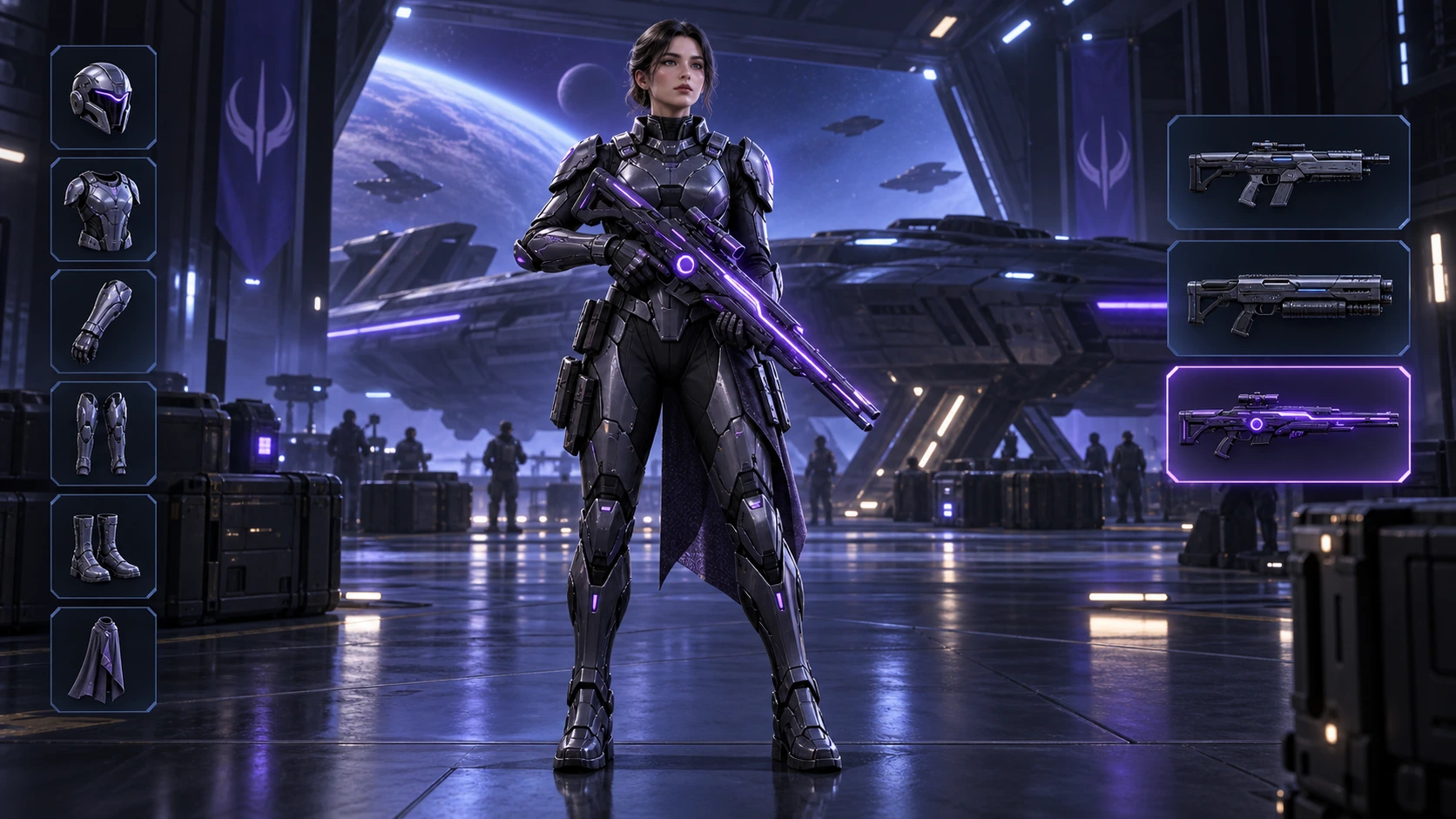
Scene: A 16:9 sci-fi game loadout screen in a blue-purple spaceship hangar. A female armored character stands centered with a glowing violet rifle; armor slots line the left, three weapon slots line the right, and the lower slot is highlighted. Keep the HUD hierarchy, pose, lighting, and equipment geometry fixed for an exact equipment-switch frame. No readable words, logos, invented stats, or watermark. Composition and rendering: Deliver one 16:9 game-interface keyframe. Separate the character, held equipment and HUD into clear depth layers; keep slot spacing and icon scale consistent, with the selected item visually dominant. Preserve the scene-specific game art style. Let material edges catch the existing light without letting interface glow obscure the silhouette. Keep all equipment fully inside the frame. Avoid: warped perspective, malformed anatomy, merged objects, inconsistent shadows, excessive sharpening and watermarks. Follow the scene-specific text and branding restrictions above.
Generated with Image 2
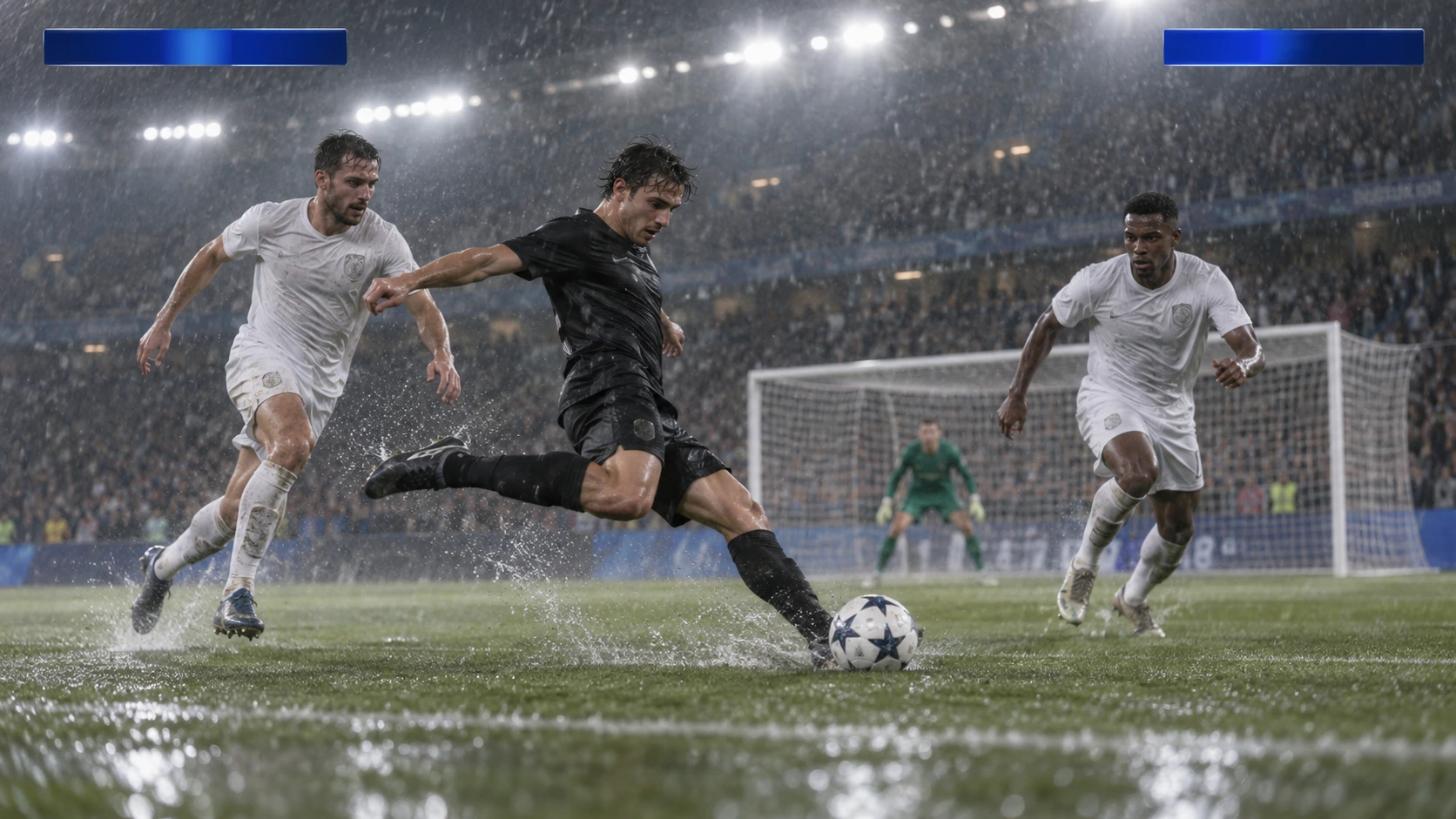
Scene: A rainy night soccer broadcast frame under bright stadium floodlights. A black-uniform player strikes the ball while two white-uniform defenders close in, with the goal and a blurred crowd behind. Keep the broadcast camera angle, blank blue score bars, spray, and motion blur consistent; leave overlays abstract and text-free. No real teams, athletes, logos, or watermark. Composition and rendering: Deliver one 16:9 broadcast still at the decisive instant. Use coherent perspective for the playing surface and equipment, readable separation between competitors, and a softer crowd behind the action. Keep the principal subject sharp, with directional blur limited to fast extremities and spray. Preserve the specified broadcast angle and reserve overlay areas clear of the action. Avoid: warped perspective, malformed anatomy, merged objects, inconsistent shadows, excessive sharpening and watermarks. Follow the scene-specific text and branding restrictions above.
Generated with Image 2
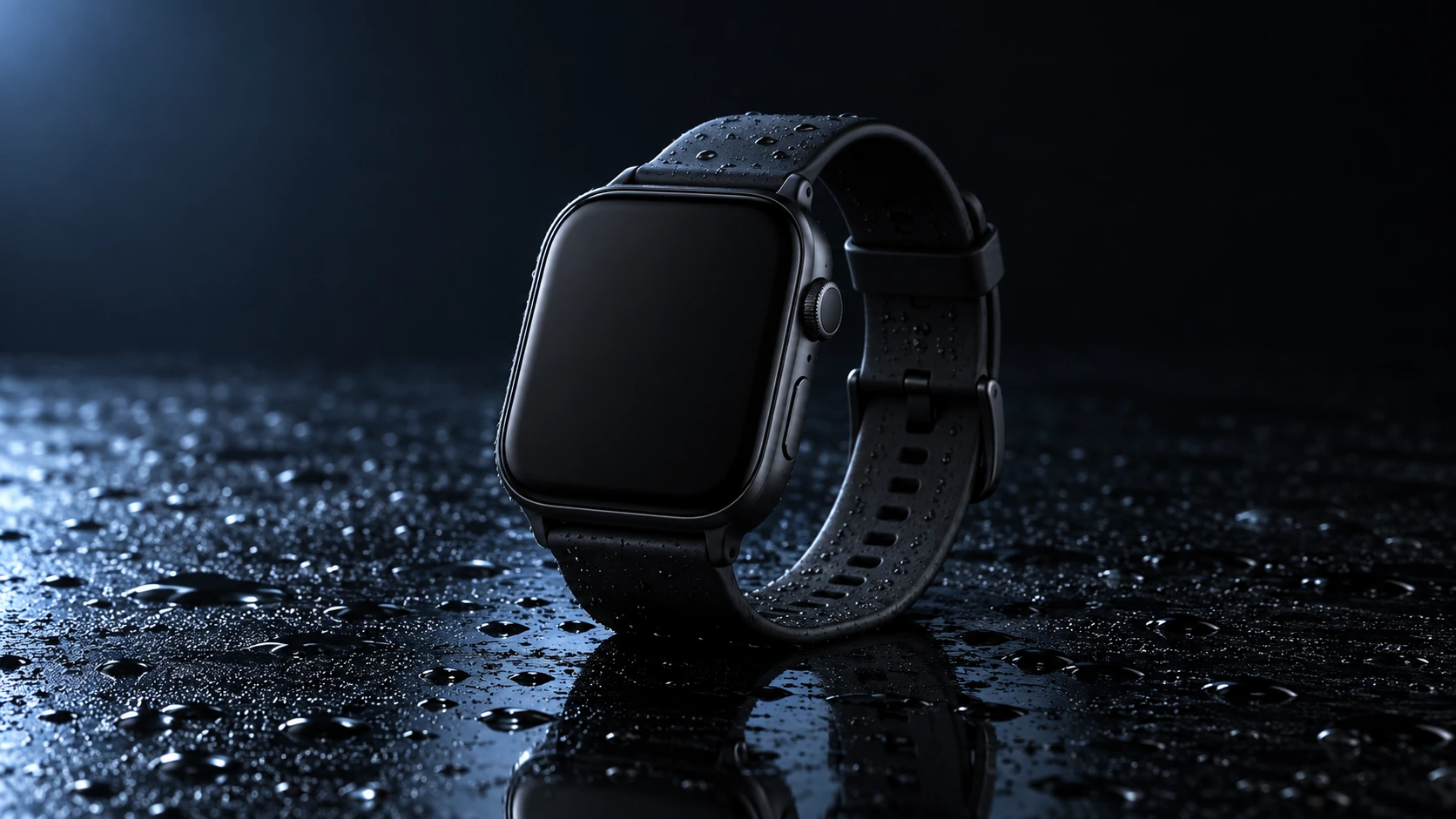
Scene: A closed matte-black square smartwatch with a black strap rests on a wet glossy black tabletop. Water droplets catch a cool blue rim light and a soft reflection sits beneath the watch. Use a low three-quarter product camera and preserve the case, strap, highlights, and empty dark background. No readable branding, extra products, hands, or watermark. Composition and rendering: Deliver one 16:9 commercial product still. Keep the complete product silhouette inside generous crop-safe margins. Resolve edges, seams and material transitions precisely; shape highlights to describe volume without clipping bright surfaces or crushing dark details. Align reflections with the object and light source. Retain the stated camera angle and existing negative space; add no decorative props. Avoid: warped perspective, malformed anatomy, merged objects, inconsistent shadows, excessive sharpening and watermarks. Follow the scene-specific text and branding restrictions above.
Generated with Image 2
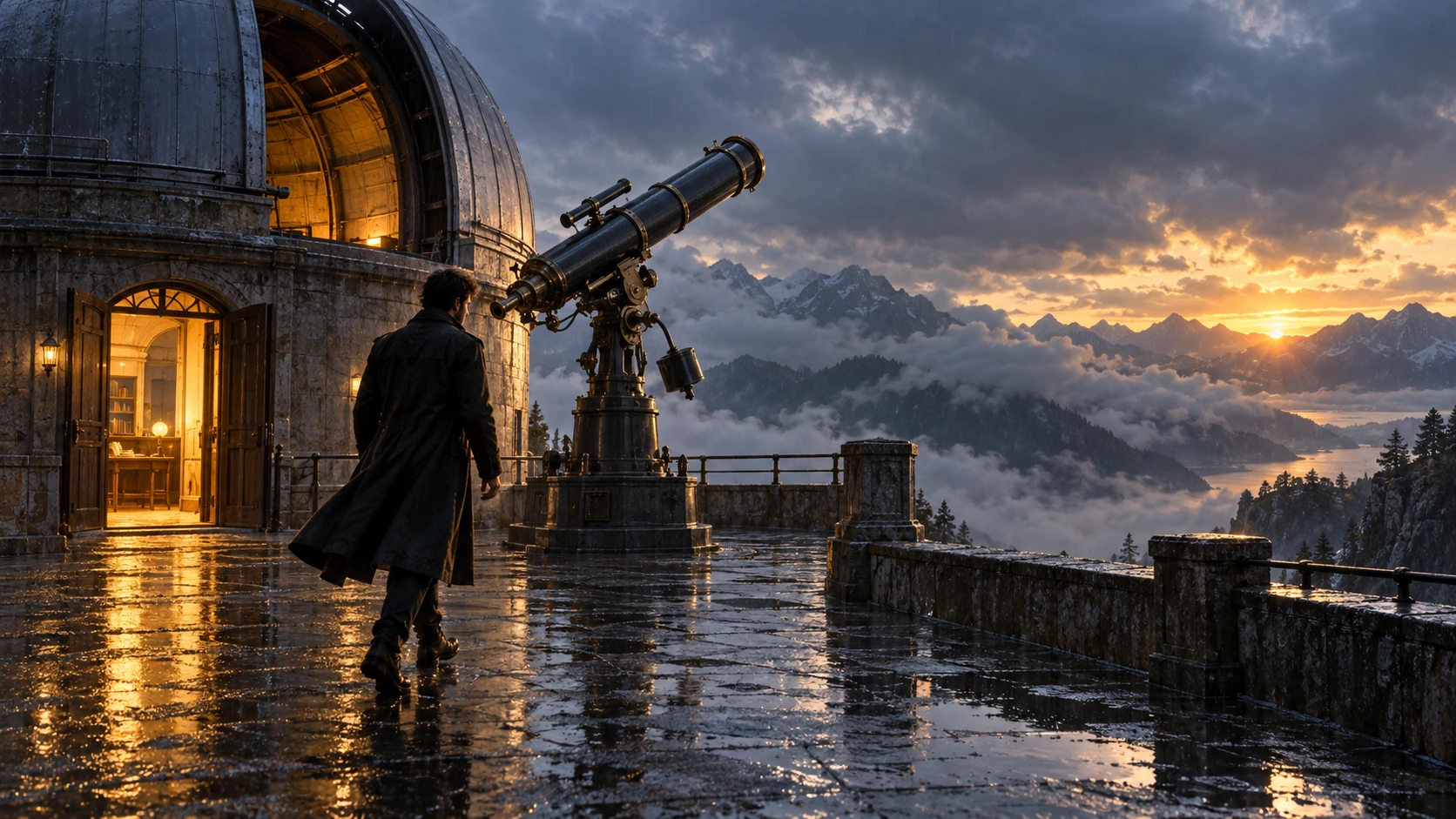
Scene: On a rain-soaked observatory roof at sunrise, a lone figure in a long dark coat walks toward a large telescope beside an open dome. Wet stone reflects the warm doorway light; cloud-covered mountains sit beyond. Hold the screen direction and end on the telescope and figure in the same wide composition. No readable text, logos, or watermark. Composition and rendering: Deliver one 16:9 storyboard keyframe, not a collage or an action sequence. Separate foreground, character plane and background through the existing light and atmospheric depth. Keep the stated pose and eyelines readable, and retain environmental landmarks for continuity. Match the described photographic, illustrated or puppet medium; give fabric and surfaces texture appropriate to that medium. Avoid: warped perspective, malformed anatomy, merged objects, inconsistent shadows, excessive sharpening and watermarks. Follow the scene-specific text and branding restrictions above.
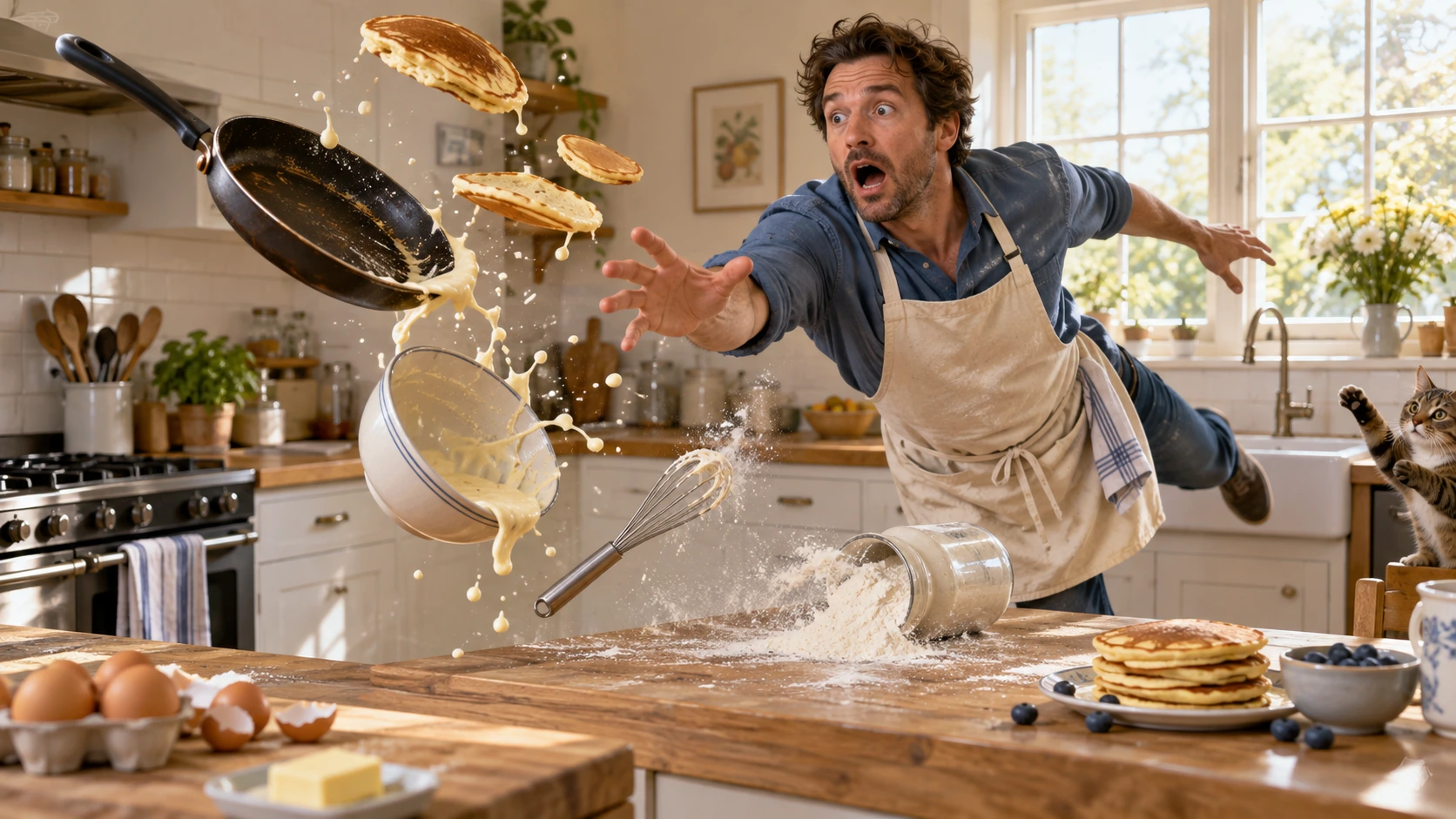
Generated with Image 2
Scene: In a bright home kitchen, a surprised cook in a blue shirt and cream apron reaches toward pancakes, a frying pan, flour, bowl, and whisk suspended midair. Freeze the comic cause-and-effect moment with believable weight, warm daylight, and a clear path for each object. No injury, logos, readable words, or watermark. Composition and rendering: Deliver one 16:9 physical-comedy still at the described instant. Make the cause of the gag readable through body balance, grip and object spacing. Separate the reaction from the airborne props; retain believable gravity and contact points. Keep the face and important props sharp, with only restrained directional blur on fast edges. Preserve the stated lighting and room or stage layout. Avoid: warped perspective, malformed anatomy, merged objects, inconsistent shadows, excessive sharpening and watermarks. Follow the scene-specific text and branding restrictions above.
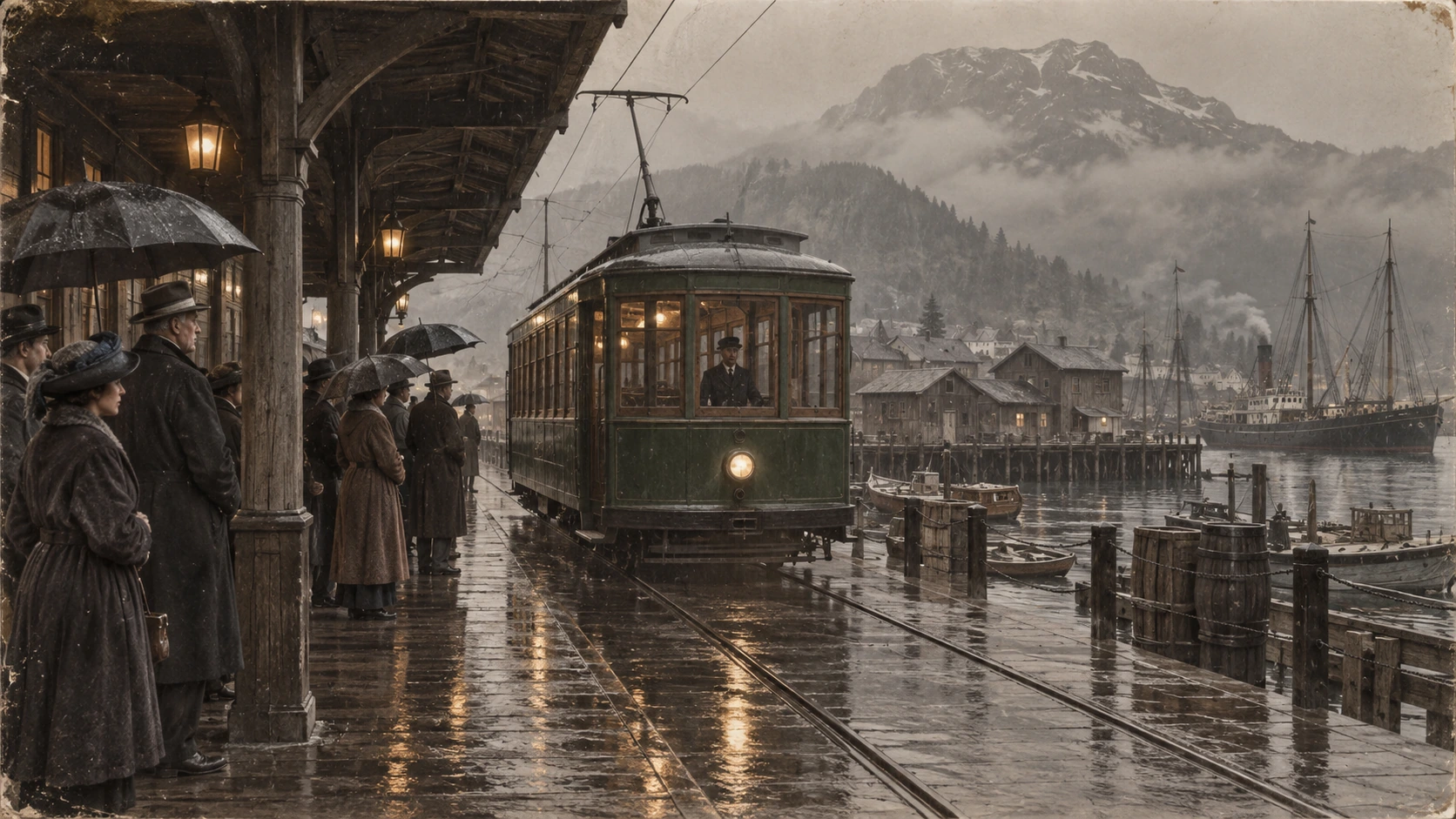
Generated with Image 2
Scene: A rainy period harbor platform shelters people in era-appropriate coats and umbrellas as a vintage green tram arrives on wet tracks. Wooden waterfront buildings and misty mountains sit behind the reflections. Preserve the historical clothing, tram shape, rain direction, and stable wide composition; no readable signage, logos, or watermark. Composition and restoration: Deliver one 16:9 archival-style still. Preserve the original framing, period-specific construction and restrained tonal range; retain monochrome, sepia or faded color as described. Recover modest detail in faces, clothing and architecture without synthetic sharpening. Keep fine grain and authentic aging consistent across the frame; repair damage without replacing historical features. Avoid: warped perspective, malformed anatomy, merged objects, inconsistent shadows, excessive sharpening and watermarks. Follow the scene-specific text and branding restrictions above.
Why use Flatkey for GPT Image 2?
Keep image controls and image-input token dimensions together so a prompt test can become a reproducible API request.
Set n, size, quality, output format, background, and moderation before you hand the request to the console.
The catalog exposes token and image-input dimensions; this is not a separate fee for output pixel size, and the final amount depends on request and usage fields.
Use product, ad, and storyboard examples as editable starting prompts rather than generic image filler.
The page does not promise transparent output, free generation, or a fixed per-image price when those facts are not verified.
API
Send the model ID with the supported image controls through the documented generation or edits route.
curl https://router.flatkey.ai/v1/images/generations \
  -H "Content-Type: application/json" \
  -H "Authorization: Bearer sk-***" \
  -d '{"model":"gpt-image-2","prompt":"A complex AI image generation mood wall photographed as one premium studio scene: a large violet-and-gold abstract floral artwork surrounded by pinned botanical sketches, macro insect study, translucent vellum flower sheets, black-and-white portrait, crystal minerals, perfume product render, architectural arch and staircase studies, film strips, fabric swatches, tape, brass pins, graphite notes, and warm spotlights on a charcoal wall.","n":1,"size":"1024x1024","quality":"high","output_format":"png","background":"opaque","moderation":"auto"}'
FAQ
Answers about GPT Image 2 API access, image-generation fields, token and image-input pricing, formats, and background behavior.