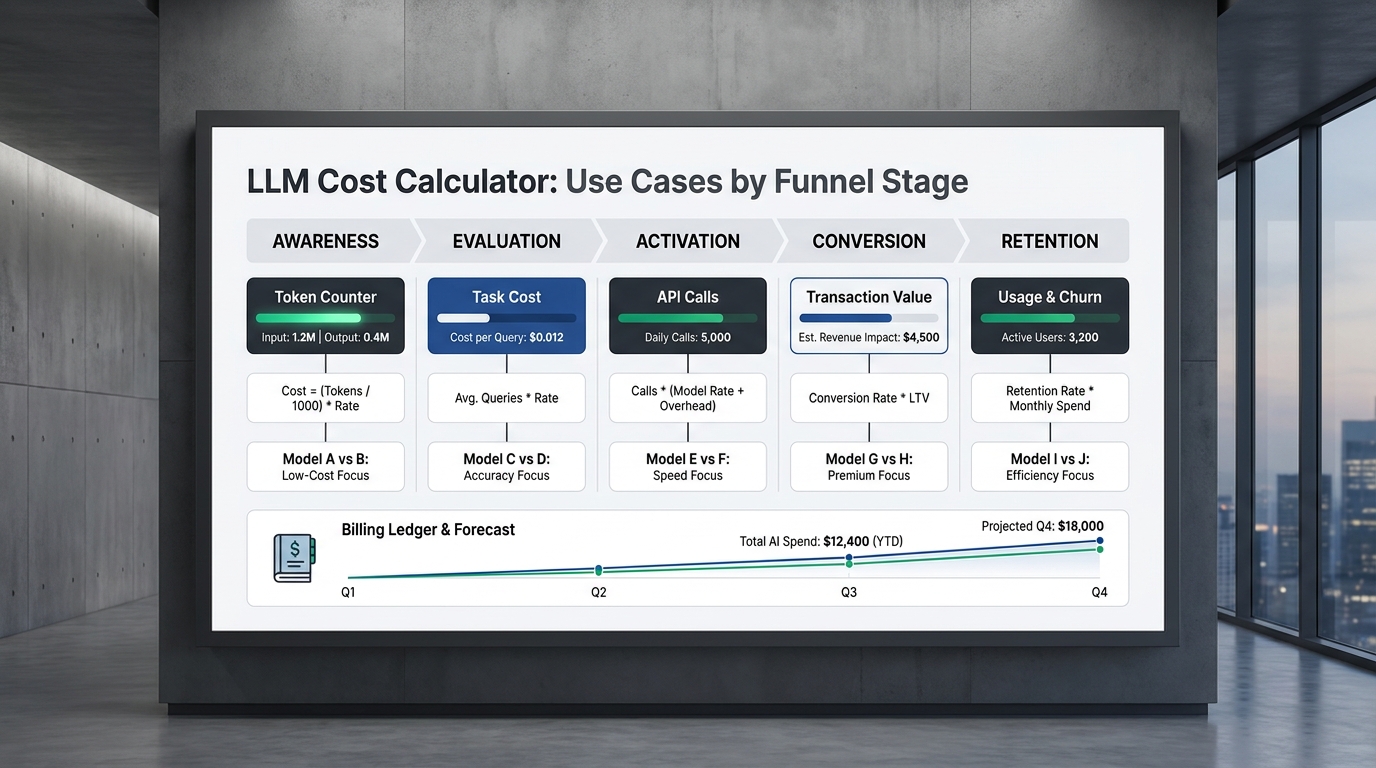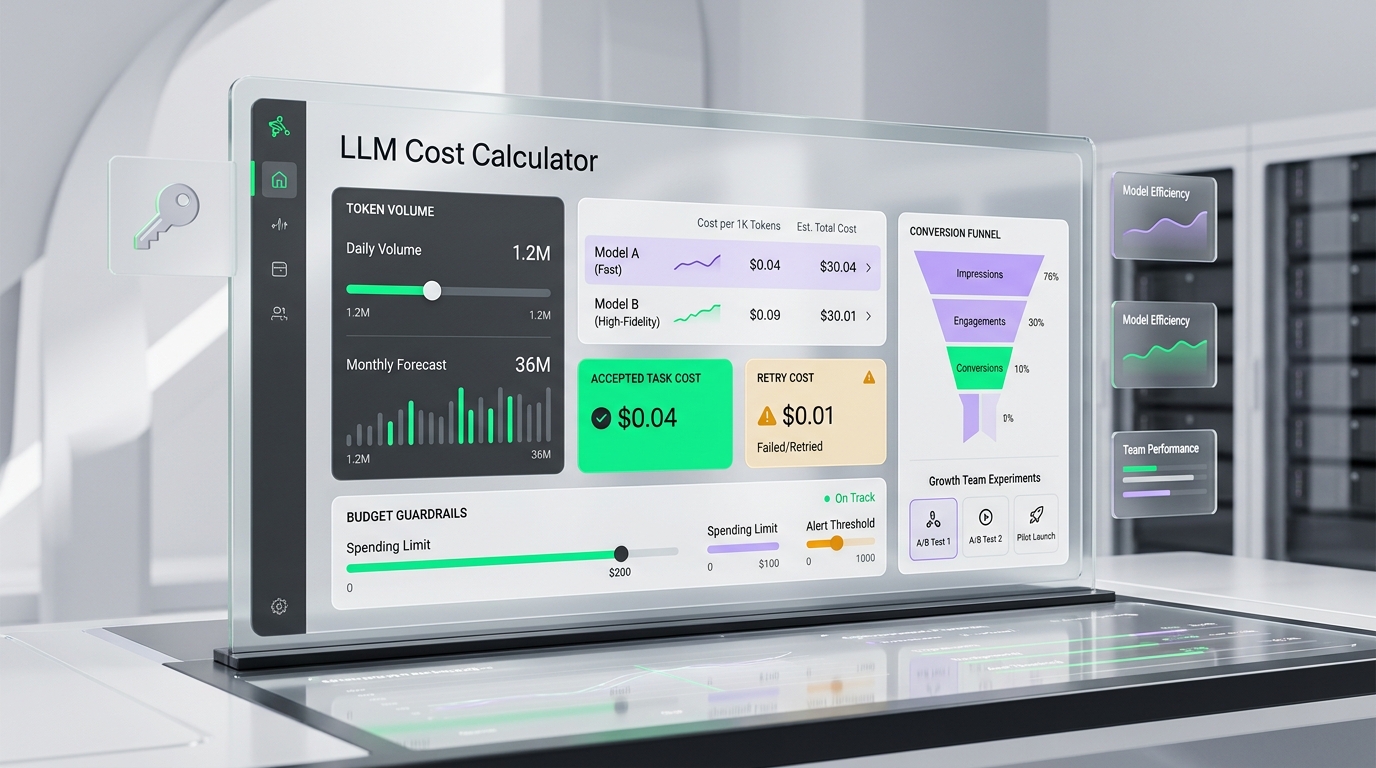
Comparing AI API pricing is useful only if the result changes how your team controls spend. A table of input and output token rates may help with model selection, but it does not stop a development key, runaway automation, or unexpected production traffic from consuming the entire monthly budget.
The practical goal is to turn provider prices into AI API quota limits for teams, environments, keys, and workloads.
This guide compares representative OpenAI, Anthropic Claude, Google Gemini, and Alibaba Cloud Qwen text-model prices, then shows how platform, operations, and finance teams can translate those rates into enforceable usage boundaries.
Pricing snapshot: July 23, 2026. Provider prices, model names, context tiers, regional availability, batch discounts, and cache rules can change. Check the linked official pricing pages and the current Flatkey pricing page before making a purchase or rollout decision.
AI API pricing comparison at a glance
The table below uses representative general-purpose models rather than claiming they are identical in capability. Prices are listed per 1 million tokens at standard published rates.
| Provider | Representative model | Input | Output | Important pricing detail |
|---|---|---|---|---|
| OpenAI | GPT-5.4 | $2.50 | $15.00 | Cached input is priced separately; Batch and Flex can reduce eligible workload costs |
| Anthropic | Claude Sonnet 5 | $2.00 | $10.00 | Cache writes and cache hits have separate rates; regional endpoint premiums may apply |
| Gemini 3.5 Pro | $1.00 | $6.00 | Higher rates apply above the listed 200,000-token prompt threshold; Batch is lower | |
| Alibaba Cloud | Qwen3.7-Max | $1.65 | $4.951 | The official global pricing page lists tiered input rates and separate cache-hit pricing |
Official references: OpenAI API pricing, Claude pricing, Gemini API pricing, and Alibaba Cloud Model Studio pricing.
These numbers are a starting point, not a ranking. Output-heavy agents, long-context analysis, cache-friendly retrieval, batch classification, and latency-sensitive customer experiences can each produce a different cost winner.
Normalize every model to cost per successful request
Token prices become operationally useful when converted into the unit your application team can recognize: one successful request, one completed document, one resolved ticket, or one generated workflow result.
For a text request, start with:
request cost =
  (input tokens / 1,000,000 × input rate)
  + (output tokens / 1,000,000 × output rate)
  + cache and tool charges
Assume a request uses 2,000 input tokens and returns 500 output tokens, with no caching, tools, retries, or long-context premium.
| Model | Estimated cost per request | Requests supported by a $300 production quota |
|---|---|---|
| GPT-5.4 | $0.01250 | 24,000 |
| Claude Sonnet 5 | $0.00900 | 33,333 |
| Gemini 3.5 Pro | $0.00500 | 60,000 |
| Qwen3.7-Max | about $0.00578 | about 51,943 |
This simple calculation exposes two important facts:
- Output length can dominate cost even when the input rate looks inexpensive.
- A quota should be based on expected request shape and business volume, not on a provider's token price alone.
For a deeper workflow, use the cost per AI API request guide to include retries, cache behavior, failure rates, and downstream processing.
Set one portfolio budget before setting model quotas
Quota design should begin with the maximum amount the business is willing to spend, not with a model's theoretical throughput.
Suppose the approved monthly AI API budget is $500. Do not immediately allocate the full $500 to active keys. Keep an explicit reserve for traffic spikes, incident recovery, pricing changes, and migrations.
| Budget layer | Share | Example amount |
|---|---|---|
| Operating reserve | 20% | $100 |
| Development | 8% | $40 |
| Staging and evaluation | 12% | $60 |
| Production | 60% | $300 |
This hierarchy creates a useful failure mode: a noisy development experiment can exhaust its $40 boundary without interrupting production.
The exact percentages should reflect your product. An early-stage evaluation program may assign more to testing, while a mature application may protect a larger production allocation and a smaller experimentation pool.
Use a quota hierarchy instead of one shared ceiling
A single account-level cap is better than no cap, but it is too broad for accountability. Create nested boundaries that mirror how work is owned.
1. Account or organization quota
This is the hard monthly ceiling agreed with finance. It should cover every provider, model, environment, and team that draws from the same balance.
2. Environment quota
Separate development, staging, and production. Do not let a shared unrestricted key blur the source of usage or allow non-production traffic to compete directly with customers.
3. Team or cost-center quota
Assign limits to product areas, automation programs, or departments. The team that owns a workflow should also own its forecast and explain material variance.
4. API key quota
Use distinct keys for applications and environments. A key-level limit provides a practical blast radius if credentials leak, a loop runs too often, or a deployment sends malformed requests.
5. Workload or model quota
Reserve expensive models for requests that justify them. High-volume extraction, classification, and routing may use a lower-cost model, while a complex reasoning or customer-facing task can receive a smaller premium-model allowance.
Flatkey provides one API key and one dashboard across supported models, with usage billed from actual consumption. Teams can set quota limits and review consumption centrally rather than reconciling separate provider accounts. Review current model availability and rates on Flatkey pricing.
Add warning thresholds before the hard limit
A hard quota prevents unlimited spend, but it should be the last line of defense. Add alerts and policy changes before the account reaches zero remaining budget.
| Threshold | Recommended action |
|---|---|
| 50% | Compare actual spend with the expected point in the month |
| 70% | Review the largest keys, models, and workloads |
| 85% | Pause nonessential evaluations and reduce output limits |
| 95% | Require an owner-approved exception for additional spend |
| 100% | Block, degrade, or route according to the documented continuity policy |
The 50% alert is not automatically a problem. Reaching half the budget halfway through the month may be exactly on plan. The useful signal is the relationship between budget consumed and time elapsed, adjusted for weekly seasonality and planned launches.
Decide what happens when a quota is reached
Every quota needs a response policy. Otherwise the first real limit event becomes an improvised incident.
Choose one or more of these behaviors:
- Block: reject new requests until the quota resets or an owner increases it.
- Degrade: shorten maximum output, disable optional tools, or reduce retrieval depth.
- Route: move eligible traffic to a lower-cost approved model.
- Queue: delay noninteractive jobs until the next budget window.
- Escalate: request a temporary increase with the owner, reason, amount, and expiration recorded.
Do not silently switch models for workflows with compliance, quality, residency, or contractual constraints. A cheaper fallback is useful only when it is approved for that request class and tested against the same acceptance criteria.
Include the costs that basic token tables omit
Your quota model should account for more than uncached input and output.
Cache behavior
OpenAI, Claude, Gemini, and Qwen publish different cache terms. Estimate the realistic cache-hit ratio for each workload and keep cache-write charges separate from cache-read savings.
Long context
Some providers increase rates after a prompt crosses a context threshold. A document-processing workflow can therefore have a nonlinear cost curve even when request count stays flat.
Retries and fallbacks
A request that fails twice before succeeding can cost more than the single successful response shown in product analytics. Measure attempts per success and include paid fallback calls.
Tools, search, and media
Web search, code execution, embeddings, image generation, audio, and video often use separate units or per-call fees. Do not force those workloads into a text-token quota model.
Batch and priority tiers
Batch processing may reduce cost for delay-tolerant workloads. Priority or regional processing may increase it. Apply the correct service tier to each quota forecast.
A practical monthly quota-setting workflow
Use this sequence for a new application or a quarterly budget reset.
- Inventory workloads. Record owner, environment, key, model, request volume, input tokens, output tokens, and success criteria.
- Verify current rates. Check official provider pages and your gateway's live pricing on the same day.
- Calculate unit economics. Estimate cost per request and cost per successful business outcome.
- Model three scenarios. Create expected, high-traffic, and incident cases with retries and output variance.
- Set the portfolio ceiling. Confirm the monthly maximum and reserve with finance.
- Allocate nested quotas. Divide spend across environments, teams, keys, and workload classes.
- Configure warnings. Assign thresholds, channels, owners, and response deadlines.
- Document limit behavior. Define block, degrade, route, queue, and exception policies.
- Review weekly. Compare actual burn rate, unit cost, and forecast-to-complete.
- Reset deliberately. Do not carry temporary exception limits into the next period without review.
Quota policy checklist
Before enabling production traffic, confirm that:
- Every production application has a named owner and its own key.
- Development and staging cannot consume the production allocation.
- The account has a hard monthly ceiling and an operating reserve.
- Premium models have workload-specific limits.
- Alerts fire before the hard stop and reach an accountable person.
- Retry, cache, tool, and fallback costs are visible in the forecast.
- The quota response preserves critical workflows or fails safely.
- Temporary increases include an amount, approver, reason, and expiration.
- Finance can reconcile spend to teams and environments.
- The current model pricing source and verification date are recorded.
FAQ
What is an AI API quota limit?
An AI API quota limit is a maximum usage or spend boundary applied to an account, environment, team, API key, model, or workload. It helps prevent unexpected consumption and makes ownership clearer.
Should quotas be based on tokens, requests, or dollars?
Use dollars for the portfolio ceiling because models have different input, output, cache, and tool rates. Use tokens and requests as operational guardrails when they map cleanly to a workload. The strongest policy tracks all three.
How often should AI API quotas be reviewed?
Review burn rate at least weekly and after a model change, pricing change, major launch, traffic anomaly, or routing-policy update. High-volume systems may need daily or near-real-time monitoring.
Is the cheapest model always the best way to reduce quota pressure?
No. A lower token rate can be offset by longer outputs, more retries, worse task success, or additional review work. Compare cost per successful outcome and test quality before routing production traffic.
How much budget should be kept in reserve?
There is no universal percentage. A 10% to 25% reserve is a useful planning range for many teams, but critical or volatile workloads may require more. The reserve should have a defined owner and exception policy.
Can one shared API key still have good spend control?
One gateway account can centralize billing and model access, but applications and environments should still use distinct keys or equivalent policy identities. That separation makes quotas, revocation, audit, and incident response more precise.
Turn model prices into operating policy
The best AI API pricing comparison does not end with the lowest number in a table. It ends with a budget that finance can approve, boundaries that engineering can enforce, and usage data that operations can explain.
Start with the current Flatkey pricing page, estimate cost per successful request, reserve part of the portfolio budget, and assign quotas to environments, teams, keys, and workloads. Then use the dashboard to keep model usage and team consumption visible as traffic changes.
Get a Flatkey API key and build quota limits into the rollout before the first production spike.