AI costs rarely become difficult because one model price is hard to find. They become difficult when every team has different provider accounts, separate API keys, inconsistent recharge methods, and no shared view of who consumed what.
For finance, that creates reconciliation work. For operations, it creates weak controls. For product leaders, it makes growth planning less reliable because usage can rise faster than the evidence needed to explain it.
AI API spend management solves a broader problem than invoice collection. It connects access, usage, budgets, balances, and operational ownership so a team can answer three questions quickly:
- What are we spending?
- Which product, workflow, or team is driving it?
- What control should change before the next billing cycle?
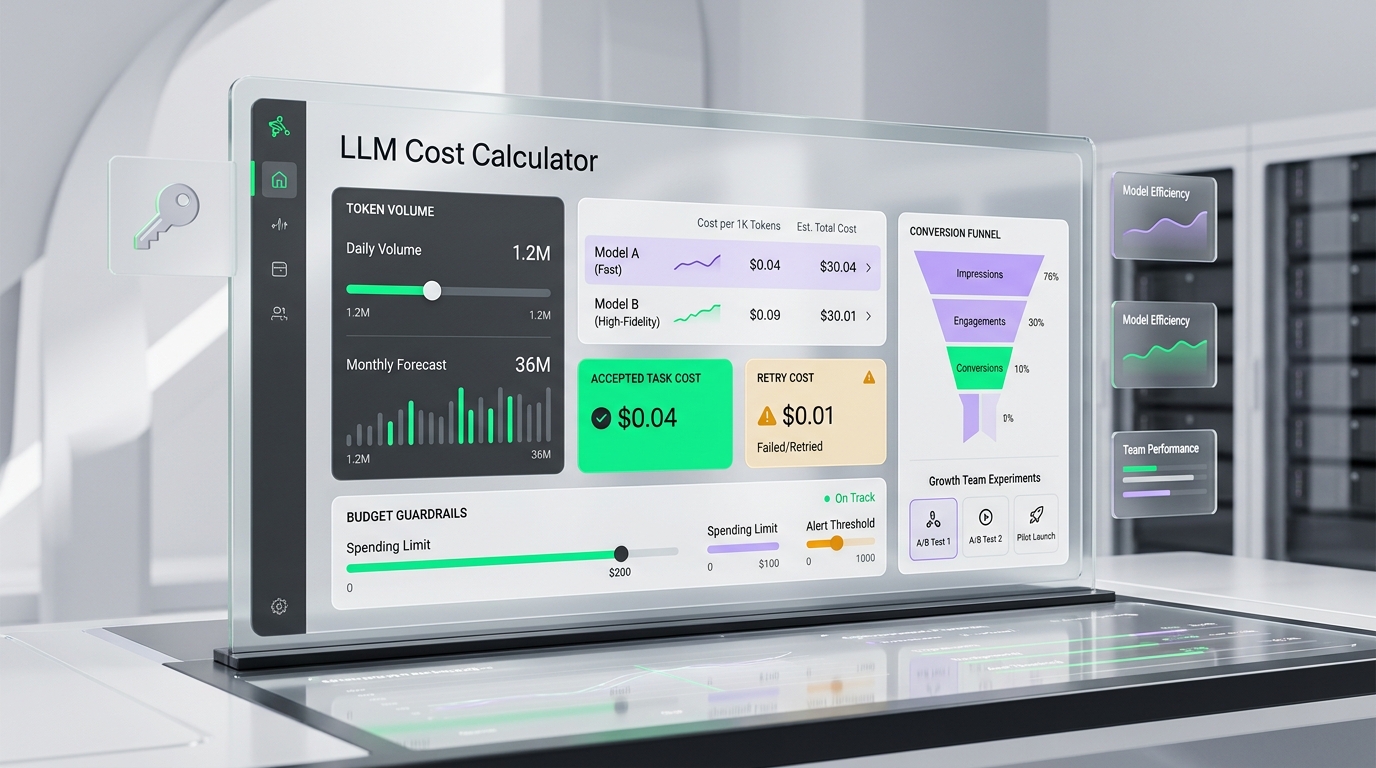
Flatkey gives teams one API key, one OpenAI-compatible base URL, and one dashboard for supported AI models. The dashboard surfaces billing, usage, API keys, quota limits, balances, and recharge records so operations and finance can work from the same control layer.
Why AI Spend Becomes an Operations Problem
A prototype may begin with one provider account and one developer-owned key. A production AI product usually expands beyond that starting point:
- Different teams test different model providers.
- Production and development traffic mix together.
- Image, video, and language workloads use different billing units.
- Retries and routing changes alter the final cost of a workflow.
- Credits or prepaid balances are replenished outside the normal invoice process.
- Keys remain active after a project, owner, or vendor relationship changes.
The result is not just fragmented billing. It is fragmented accountability.
Finance sees charges after they happen. Operations sees usage but may not have a reconciled cost view. Engineering understands the traffic but may not own budget policy. Leadership receives a monthly number without enough context to decide whether the increase reflects healthy adoption, inefficient routing, or uncontrolled access.
A useful spend-management system closes those gaps before month-end.
What Finance Needs From an AI API Control Layer
Finance stakeholders do not need every request log in their daily workflow. They need reliable answers that can be traced to operational evidence.
A Reconciled View of Usage and Billing
The visible balance, recorded usage, and recharge history should tell one coherent story. When those records live in separate provider portals, the finance team must normalize them manually before it can explain the period.
A unified dashboard reduces that reconstruction work by keeping the core records together:
- Metered usage
- Billing activity
- Current balance
- Recharge records
- Quota limits
- API key inventory
This does not remove the need for internal accounting controls. It gives those controls a cleaner source of operating evidence.
Spend Context, Not Just a Total
A top-line cost is useful for reporting but weak for decision-making. Finance should be able to ask whether growth came from higher customer volume, a new model rollout, an internal evaluation project, or an unexpected workload.
The operating model should therefore connect each key and quota to a recognizable owner, environment, or use case. Even when the final general-ledger allocation happens elsewhere, better access structure makes the source data easier to interpret.
Predictable Funding and Recharge Records
Prepaid AI usage introduces a practical cash-control question: when will the available balance require replenishment?
Recharge records provide the history needed to compare funding events with actual consumption. Combined with current usage and quota limits, they help finance estimate when a balance may need attention and whether a recharge followed approved operating plans.
Evidence for Planning Conversations
AI spending is often discussed as either a technical necessity or a finance exception. A shared dashboard supports a more useful conversation: which AI workloads are growing, what they cost, and whether the next unit of spend supports a product or revenue objective.
That evidence helps finance participate in growth planning without becoming the team that only says no.
What Operations Needs From AI Spend Governance
Operations teams translate budget policy into repeatable controls. For AI APIs, that means managing the access layer—not only reviewing a report after consumption occurs.
One Place to Review Active Keys
Scattered provider accounts make it difficult to maintain a dependable key inventory. A unified access layer reduces the number of places an operator must check and gives the team one dashboard for key management.
This is especially useful during:
- Employee or contractor offboarding
- Environment separation
- Product launches
- Incident response
- Vendor consolidation
- Budget resets
For a deeper technical control checklist, see secure API key management for AI products.
Quotas That Turn Budgets Into Guardrails
A budget in a spreadsheet does not control an API request. A quota attached to the operating environment can.
Quota limits help teams define how much consumption is acceptable before additional action is required. The specific policy will vary by workload, but the control principle is consistent: limits should be established before usage becomes a surprise.
Examples include:
- A lower allowance for development and evaluation traffic
- A production quota aligned with expected customer volume
- A separate limit for a temporary campaign or experiment
- A staged increase for a new workflow until unit economics are understood
Faster Investigation When Spend Changes
When usage increases, operations should be able to review access, consumption, and cost without opening a chain of unrelated systems.
The first questions are usually operational:
- Did traffic volume change?
- Did a new key or workload become active?
- Did the team move to a different model?
- Did a quota change?
- Was the balance recently recharged?
Keeping these signals in one dashboard shortens the path from anomaly to explanation.
A Shared Operating Model for Finance, RevOps, and Platform Teams
The strongest AI spend process is not owned by one department. It assigns clear responsibilities across the operating cycle.
| Stage | Finance or RevOps responsibility | Operations or platform responsibility | Shared evidence |
|---|---|---|---|
| Plan | Set budget assumptions and review funding needs | Map workloads to keys, environments, and quotas | Expected usage, current balance, quota plan |
| Launch | Confirm the initiative has an accountable owner | Create or assign access and establish limits | Key inventory and approved operating scope |
| Monitor | Review spend trend and recharge activity | Review usage, errors, routing, and quota pressure | Billing, usage, quotas, balance, recharge records |
| Investigate | Identify financial variance | Identify the operational cause | Time-aligned usage and access evidence |
| Adjust | Approve budget or funding changes | Change quotas, keys, models, or routing policy | Recorded control decision and updated dashboard state |
| Report | Explain the period to leadership | Confirm operational context | A reconciled narrative rather than isolated totals |
This model prevents two common failures: finance receiving a cost with no technical explanation, and platform teams changing infrastructure without a visible budget consequence.
Five Controls to Establish Before AI Usage Scales
1. Name an Owner for Every Production Access Path
Every production key should map to a team, product, or workflow that someone can explain. Avoid permanent shared keys with ambiguous ownership.
2. Separate Production From Evaluation Traffic
Experimental usage should not obscure customer-facing consumption. Separate access paths and quotas make it easier to measure both.
3. Set Quotas Before the Launch
Do not wait for the first unexpected balance change. Start with a limit based on expected volume, then increase it using observed usage.
4. Review Recharge and Usage Together
A recharge is not a complete explanation of spend, and usage is not a complete explanation of cash movement. Review both records in the same operating cadence.
5. Define an Escalation Rule
Decide who acts when usage approaches a quota, the balance drops faster than expected, or a key appears to be inactive but still enabled. The rule should name the owner and the permitted response.
A Practical Monthly AI Spend Review
A useful review can be completed without turning into a technical architecture meeting.
- Start with the period total. Compare usage and balance movement with recharge records.
- Identify the largest changes. Focus on workloads, keys, or periods that moved materially.
- Ask for the operational explanation. Determine whether the change came from adoption, evaluation, retries, model selection, or an access issue.
- Check quota performance. Review whether current limits protected the plan or created unnecessary friction.
- Confirm key hygiene. Remove or restrict access that no longer has an active owner or purpose.
- Update the forecast. Use observed consumption to revise the next funding and capacity decision.
- Record the action. Note the quota, access, routing, or budget change that follows from the review.
The goal is not to eliminate every variance. It is to make variance visible early enough that the business can choose how to respond.
How Flatkey Supports the Operating Model
Flatkey is a unified AI API gateway for teams using multiple supported models. Instead of maintaining a separate provider account and key for every model, teams can use one API key and one OpenAI-compatible base URL at https://router.flatkey.ai/v1.
For operations and finance, the value is the shared control surface around that access:
- Billing and usage visibility in one dashboard
- API key management from the same operating layer
- Quota limits for consumption control
- Balance and recharge records for funding visibility
- Model pricing available for workload planning
- One access layer that reduces provider-account sprawl
Flatkey charges supported usage on a pay-as-you-go basis according to the applicable metered units and model pricing. Because model availability and rates can change, teams should verify the current catalog before approving a production workload.
View Flatkey pricing to compare the current supported models and rates with your expected workload.
Questions to Use in a Role-Specific Evaluation
Finance, RevOps, and operations stakeholders can use these questions during a Flatkey evaluation:
Finance and RevOps
- Can we connect balance changes to usage and recharge records?
- Can we explain which operating activity caused a material spend change?
- Can we use current consumption to plan the next recharge or budget adjustment?
- Does the dashboard reduce the need to reconcile multiple provider portals?
Operations and Platform
- Can we review keys, usage, quotas, and billing from one control layer?
- Can we separate production, development, and temporary workloads?
- Can we establish a quota before a new workflow scales?
- Can we identify and remove access that no longer has a valid owner?
Leadership
- Can the team explain whether AI spend growth reflects product growth or operating inefficiency?
- Can finance and platform owners make a decision from the same evidence?
- Can we expand model access without expanding provider-account complexity at the same rate?
Make AI Spend Reviewable Before It Becomes Material
AI API spend management is most effective when it begins before the monthly total becomes large. The right starting point is a shared operating layer where access, usage, billing, quotas, balances, and recharge records can be reviewed together.
Flatkey connects those controls with one key, one OpenAI-compatible base URL, and one dashboard for supported AI models.
Review current pricing and model access, then evaluate Flatkey with the finance and operations questions above.