An AI model provider evidence review is the proof step between "this model looks useful" and "this route is approved for production." It gives platform, procurement, security, and finance reviewers the same dated record: which model route is being added, what it can do, what it costs, what data terms apply, how support and status will be checked, and how the team can roll back if the route misbehaves.
Skipping that review creates a quiet failure mode. A developer may save a model alias, a buyer may approve a vendor, finance may budget from a different pricing unit, and security may read a different retention page. When the route later fails, nobody can tell which source was authoritative on approval day.
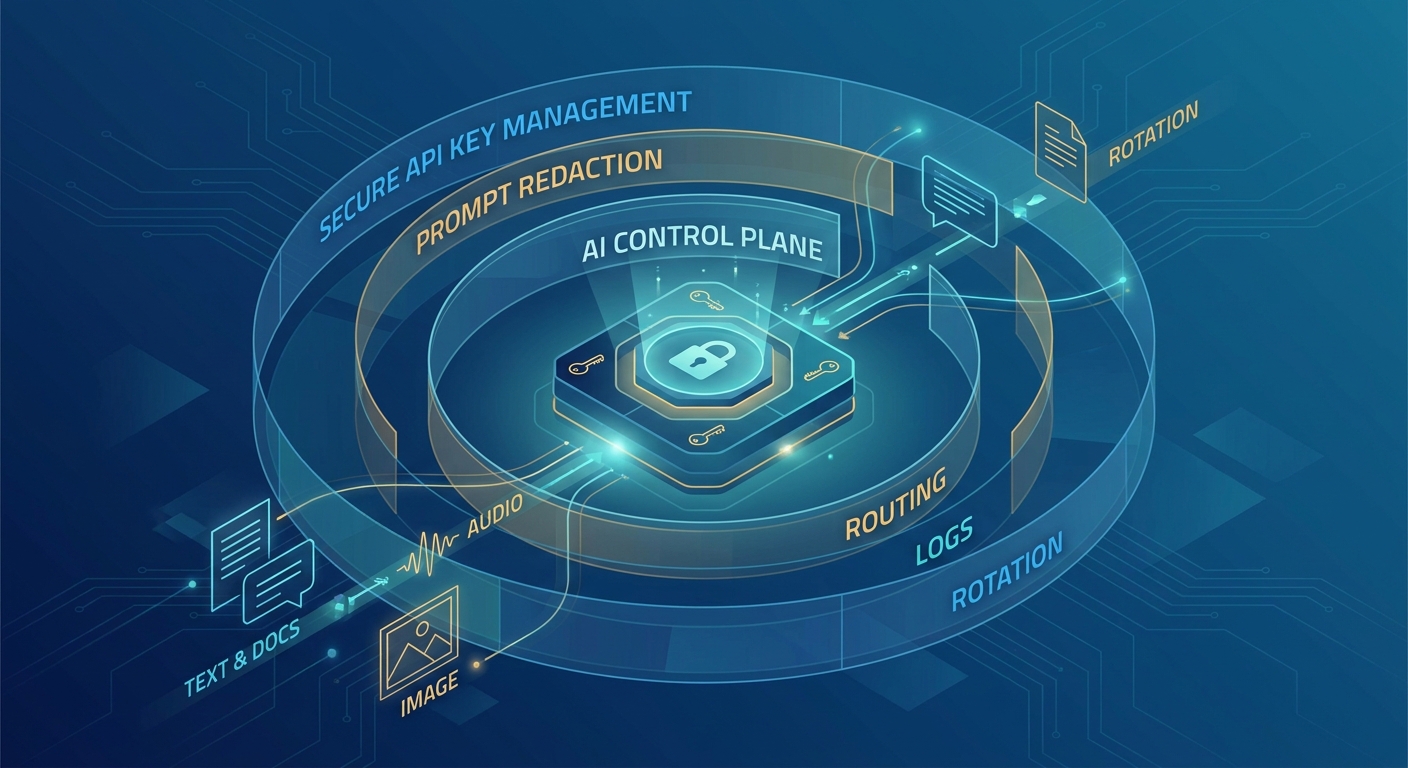
Flatkey is useful in this workflow because the current public site positions flatkey.ai around one API key, a model directory with live pricing, usage visibility, cost controls, and unified billing across providers. Treat that as a place to centralize AI access review. Do not treat a public marketing page as legal proof, a route smoke test, or an account-specific DPA. The AI model provider evidence review still needs current provider docs, buyer-account evidence, approval owners, and rollback proof.
AI Model Provider Evidence Review: The Approval Packet
The approval packet should be small enough to complete before a route launch and specific enough to answer an incident review later.
| Evidence area | Save before approval | Why it matters |
|---|---|---|
| Route request | Workload, owner, environment, endpoint family, model alias, expected data class | Prevents vague "we added Claude/GPT/Gemini" approvals |
| Model docs | Official model page, API model ID, modality, context, tool/streaming support, deprecation notes | Confirms the route matches the workload and client integration |
| Pricing | Provider pricing page, gateway pricing page, units, cache/batch discounts, currency, date checked | Keeps finance from comparing token, image, video, and request units incorrectly |
| Rate limits | Official quota/rate-limit page plus account-tier evidence when available | Sets concurrency, retry, and fallback expectations |
| Data terms | API data controls, retention page, DPA or security review, subprocessor scope, opt-in/opt-out settings | Defines what can cross the route and what must stay out |
| Status and support | Status page, support plan, escalation channel, SLA or no-SLA note | Makes incident ownership explicit |
| Route test | Minimal request, error handling, usage/cost row, logging behavior, rollback command | Proves the route works in the target environment |
| Approval record | Reviewer names, decision, exceptions, expiry/review date | Creates a renewable control instead of a permanent assumption |
The key discipline is to save source evidence, not just conclusions. A Slack note that says "pricing approved" is weaker than a dated pricing screenshot, pricing URL, route ID, and reviewer decision in the same packet.
Use this packet as the AI model approval evidence for a narrow route, the AI vendor evidence review for procurement, and the model provider risk review for security and platform owners.
Freeze The Route Request First
Start the AI model provider evidence review by freezing what is being requested. Otherwise the evidence packet will drift while reviewers are still collecting proof.
Record these fields before any approval meeting:
| Field | What to capture |
|---|---|
route_name |
Human-readable route name, such as support-triage-sonnet-prod |
owner |
Product owner, platform owner, and security reviewer |
environment |
Development, staging, production, customer-specific, or internal-only |
gateway_path |
Endpoint family such as chat completions, responses, messages, image, video, or embeddings |
provider_model_id |
Exact upstream model ID or version from official docs |
gateway_model_alias |
Exact alias exposed through the gateway or Flatkey account |
data_class |
Public, internal, confidential, personal data, regulated data, or customer content |
expected_features |
Streaming, tool calls, vision, structured output, long context, batch, cache, or file input |
budget_guardrail |
Expected monthly usage, hard cap, owner, and alert threshold |
rollback_plan |
Previous model, fallback route, feature flag, owner, and cutback command |
This is where many approvals fail. The team asks to approve "a better model," but the evidence applies only to one endpoint, one model alias, one data class, and one environment. Treat every new provider, model family, endpoint family, or sensitive-data scope as a separate review unless the existing approval explicitly covers it.
Save Official Model Documentation
The model documentation is the first source to save because it defines what the route is supposed to be. Use official model pages rather than blog summaries or third-party tables. OpenAI's current models documentation, Anthropic's models overview, and Google's Gemini API models documentation are examples of the kind of source that belongs in the packet.
For each approved route, save:
| Model evidence | Review question |
|---|---|
| Official URL and capture date | Which source was current on approval day? |
| Exact API model ID and alias | What string must the client send? |
| Modality and endpoint family | Does the route support text, image, audio, video, embeddings, or tool use? |
| Context limits and output limits | Will the workload fit without silent truncation or runaway cost? |
| Supported parameters | Are temperature, tools, structured output, streaming, or files supported? |
| Version, preview, beta, or deprecation status | Is the route stable enough for the workload? |
| Regional or account restrictions | Is the buyer account eligible to call it? |
Do not approve a route from memory. Model names, aliases, preview status, and feature support change. The evidence packet should include the exact docs used, the date checked, and a note that the team must recheck docs before major traffic shifts.
Save Pricing And Quota Evidence Together
Pricing evidence is weak when it only says "cheap" or "same as provider." Save the pricing unit and the quota/rate-limit evidence together because route behavior and cost depend on both.
OpenAI's developer pricing page, Anthropic's pricing page, and Google's Gemini API pricing page are the official sources to check for provider-side units. OpenAI, Anthropic, and Google also publish rate-limit or quota documentation, such as OpenAI rate limit guidance, Anthropic rate limits, and Gemini API rate limits.
In the approval packet, separate these fields:
| Pricing or quota field | Evidence to save |
|---|---|
| Input unit | Tokens, characters, seconds, images, requests, or another unit |
| Output unit | Output tokens, generated media seconds, image count, tool calls, or response units |
| Cache/batch terms | Whether discounts or separate units apply |
| Free tier or preview terms | Whether the route depends on temporary availability |
| Gateway markup or billing unit | Current Flatkey or account-specific pricing page/checkout evidence |
| Currency and taxes | Currency, invoice entity, and tax handling where available |
| Rate limit | RPM, TPM, RPD, concurrent requests, or account-tier quota |
| Budget cap | Internal owner, cap, alert, and shutdown behavior |
Flatkey's current public pricing/model surfaces are useful evidence for what is visible to buyers on Flatkey at the time of review. They are not enough for a production approval by themselves. Save the current Flatkey pricing or model page, then pair it with the official provider pricing page and the buyer account's own billing/contract evidence.
This is where an AI model provider evidence review protects both engineering and finance: the model route, the pricing unit, and the quota expectation are approved from the same dated packet.
Save Data, Legal, And Security Evidence
The data review should be explicit about the boundary the route crosses. A provider may not train on API data by default, but that does not automatically answer retention, abuse monitoring, subprocessors, support access, logging, deletion, regional processing, or contractual DPA scope.
OpenAI's API data controls, Anthropic's API and data retention documentation, Google's Gemini API terms, and the NIST AI Risk Management Framework are examples of source categories reviewers can use to structure the evidence review. The point is not to paste long policy text into a ticket. The point is to capture the exact source, buyer-account term, and approval decision.
Save these legal and security fields:
| Evidence | Approval decision |
|---|---|
| Legal entity and contracting path | Which entity is the buyer contracting with? |
| DPA or data-processing terms | Is there a signed DPA or only public terms? |
| Data use and training setting | Is API data used for training by default, opt-in, opt-out, or account-specific? |
| Retention and abuse monitoring | What may be retained, for how long, and under what exception? |
| Subprocessors and region | Which subprocessors or regions are in scope? |
| Support access | Can provider support access prompts, outputs, logs, or attachments? |
| Logging and exports | Which raw payloads, metadata, and usage rows will your gateway or tools store? |
| Restricted data | Which data classes are forbidden on this route? |
| Exception process | Who can approve raw-payload access, incident retention, or legal hold? |
Write the decision plainly. For example: "Approved for internal troubleshooting prompts without regulated personal data; not approved for production customer documents until DPA and retention evidence are attached." That is a useful AI model provider evidence review outcome. "Provider reviewed" is not.
Save Status, Support, And Incident Evidence
Route approval is also an operational decision. If a model route becomes unavailable, rate limited, degraded, or unexpectedly expensive, the team needs to know where to look and who is responsible.
For each provider route, save:
| Operational evidence | What to include |
|---|---|
| Public status page | OpenAI status, Anthropic status, Google Cloud status, or the provider equivalent |
| Support path | Account portal, support email, priority plan, ticket severity, and escalation owner |
| SLA or no-SLA note | Contractual uptime/remedy evidence or a clear "no committed SLA found" note |
| Incident role | Who decides to fail over, pause traffic, or notify customers? |
| Customer impact threshold | Error rate, latency, cost, or quality threshold that triggers rollback |
| Communication template | Internal incident channel and customer-facing owner |
Do not assume the gateway owner is also the vendor escalation owner. Platform may own the route, procurement may own the contract, security may own the exception, and product may own customer impact. The evidence packet should show how those roles meet during an incident.
Run The Technical Route Proof
The AI model provider evidence review should end with a small route proof. This is not a full load test. It is the minimum evidence that the selected route works in the expected environment and that failure can be observed.
Use a non-sensitive prompt and save:
| Proof artifact | What good looks like |
|---|---|
| Request | Endpoint, model alias, environment, request ID, and sanitized payload |
| Response | Status code, model returned, latency, usage fields, and expected content shape |
| Error test | One invalid model or bad-key test with expected error handling |
| Usage row | Billing or usage evidence that the request appears under the expected owner |
| Log row | Metadata proof without raw sensitive payload unless explicitly approved |
| Limit behavior | Backoff or retry policy tied to provider/gateway rate-limit evidence |
| Fallback test | Previous model or alternate route can be restored |
| Rollback owner | Named person or on-call role who can switch the route off |
If no real API key or account route is available during review, mark the route as not production-approved. A documentation-only review can approve further testing, but it should not approve customer traffic.
Build A Rollback Packet Before Launch
Rollback evidence should be created before the new model route goes live. Otherwise the team may discover during an incident that the old model alias was removed, the old key expired, or the client cannot switch endpoint families quickly.
| Rollback field | Save this before approval |
|---|---|
| Previous route | Model alias, endpoint family, provider, and last-known-good test |
| Switch mechanism | Feature flag, config key, gateway rule, deploy variable, or manual runbook |
| Data compatibility | Whether prompt format, tool schema, JSON mode, or file input differs |
| Cost impact | Expected cost difference when falling back |
| Quality risk | Known quality drop, missing feature, or human review requirement |
| Owner | Person or on-call role authorized to trigger rollback |
| Verification | How the team confirms traffic is back on the approved route |
Rollback is not a pessimistic add-on. It is part of the approval. A new route that cannot be rolled back safely is a higher-risk route, even if the model performs well in a demo.
How Flatkey Buyers Should Use The Review
Flatkey buyers can use the evidence review as a shared checklist between engineering and procurement. Start with the route request, then save current Flatkey proof for the selected model, pricing, key ownership, usage visibility, and billing review. Pair that with direct provider docs for model behavior, data terms, pricing units, quota, status, and support.
For surrounding governance context, connect this packet to the existing Flatkey cluster:
- Use the AI model approval workflow to define who can request, review, approve, expire, and reapprove a model.
- Use the AI gateway procurement evidence packet when the route change is tied to vendor or gateway procurement.
- Use the AI API vendor risk assessment when the provider or processor changes.
- Review current Flatkey pricing and the model directory before approval, then get a key only after the route evidence and account-specific controls are clear.
The practical Flatkey pattern is simple: centralize access, but do not centralize assumptions. Every new route still needs its own dated proof.
Evidence Review Template
Copy this template into your ticketing or GRC system before approving a new model route.
| Section | Required fields |
|---|---|
| Route summary | Route name, owner, environment, endpoint family, model alias, data class |
| Model proof | Official model docs URL, date checked, exact model ID, supported features, limitations |
| Pricing proof | Provider pricing URL, Flatkey/account pricing proof, unit, currency, budget cap |
| Quota proof | Provider rate-limit URL, account-tier evidence, retry/backoff policy |
| Data proof | API data controls, DPA/terms, retention, support access, restricted data classes |
| Operational proof | Status page, support path, SLA note, incident owner |
| Technical proof | Request/response sample, usage row, log row, error test, fallback test |
| Decision | Approved/not approved, exceptions, reviewer names, expiry date |
| Recheck trigger | Model version change, price change, provider incident, new data class, new customer scope |
Keep the packet short, but keep the artifacts. Screenshots, saved HTML, exported PDFs, API responses, and dated notes matter because provider pages and account settings change.
FAQ
What is an AI model provider evidence review?
An AI model provider evidence review is the dated evidence packet a team saves before approving a new AI model or provider route. It covers model docs, pricing, quota, data terms, support, status, route tests, rollback, and reviewer decisions.
What evidence should we save before approving a new route?
Save the exact model ID, endpoint family, provider docs, pricing unit, rate-limit proof, data-retention and DPA evidence, status/support path, sanitized route test, usage/log proof, rollback plan, reviewers, and review expiry date.
Is a provider pricing page enough for approval?
No. A provider pricing page is one input. The approval should also include gateway/account pricing, expected usage, budget cap, quota, currency, invoice entity, and the owner responsible for reviewing usage after launch.
Can procurement approve a route without a live route test?
Procurement can approve contract or evaluation work, but production route approval should require a live smoke test in the target account and environment. Without that proof, the packet should say documentation review only.
Where does Flatkey fit in the review?
Flatkey can be the shared access and review surface for model routes, pricing visibility, usage review, and key-based rollout. The buyer still needs official provider docs, account-specific legal evidence, technical route proof, and a rollback plan before production approval.
Final Takeaway
The strongest AI model provider evidence review is not a long policy. It is a compact, dated packet that lets a future reviewer reconstruct why the team approved a route, what source facts were current, what data was allowed, how cost was bounded, and how the team could roll back. Save that proof before the route goes live, then recheck it whenever the model, provider, data class, price, or customer scope changes.