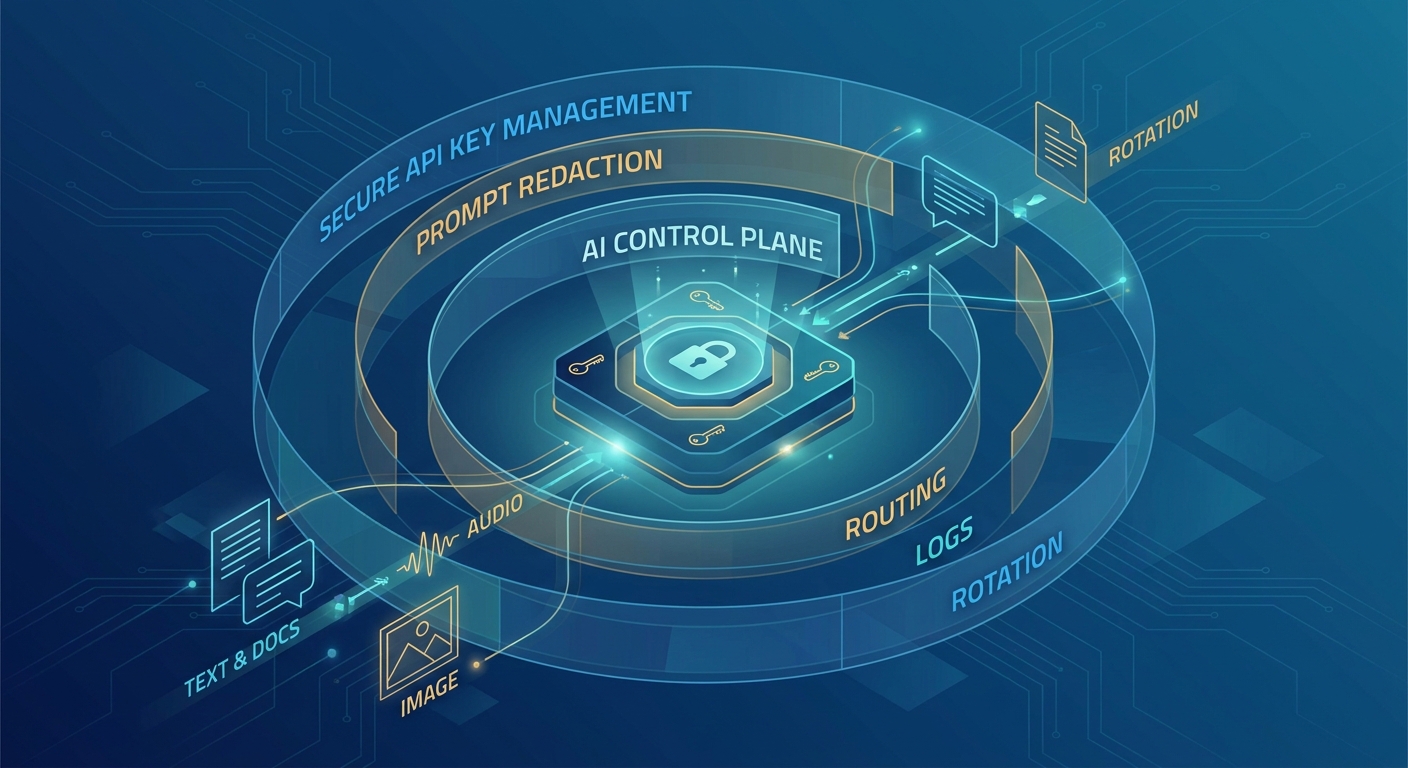
An AI API redaction policy is the rulebook for what your team can send to a model, what it can store after the model responds, what appears in request logs, and what support can see when a customer opens a ticket. It matters because prompts and outputs are no longer just transient developer inputs. They become debug records, audit evidence, screenshots, exports, support attachments, and procurement review material.
The weak version of this policy says "do not log sensitive data." That is not enough. Teams need field-level decisions, owners, retention windows, and exception handling before production traffic hits a model gateway. A good AI API redaction policy tells engineering when to block a request, security when to mask data, support when to redact a ticket, and procurement what evidence proves the workflow is controlled.
Flatkey is useful in this conversation because the current public site positions flatkey.ai as one API key for official GPT, Claude, Gemini, and other model traffic with usage analytics, cost controls, and one invoice across providers. Treat that as a unified access and review surface. Do not treat it as a replacement for your own data classification, legal review, retention policy, or support redaction workflow. Before rollout, verify the exact account settings, logs, exports, retention behavior, and DPA scope in your own buyer account.
AI API Redaction Policy: The Short Version
An AI API redaction policy should answer five operating questions before a prompt reaches production:
| Question | Policy decision | Owner |
|---|---|---|
| What data is forbidden in prompts? | Block secrets, payment data, raw credentials, private keys, and unsupported regulated data before the API call | Security owner |
| What data can be masked and sent? | Replace direct identifiers with tokens, hashes, labels, or synthetic placeholders when task quality still holds | Application owner |
| What gets stored in logs? | Prefer metadata-only logs by default; store payload excerpts only for approved debug cases | Platform owner |
| What can support see? | Redact customer prompts, outputs, attachments, screenshots, and traces before ticket sharing | Support owner |
| When can redaction be bypassed? | Require named exception, incident purpose, access limit, retention date, and legal/security approval | Governance owner |
The practical goal is not to remove every useful detail. The goal is to preserve enough evidence to debug, reconcile usage, and support customers without turning prompts, outputs, logs, or tickets into uncontrolled sensitive records.
Start With A Data Map, Not A Regex List
LLM prompt redaction usually fails when teams start with a narrow list of regular expressions. Regexes help find obvious patterns, but they do not define policy. Start by mapping where AI traffic appears:
| Record surface | Typical fields | Default handling |
|---|---|---|
| Prompt body | User text, tool arguments, uploaded context, retrieved documents, system instructions | Classify before send; block or tokenize sensitive values |
| Model output | Generated answer, citations, tool calls, code, structured JSON | Scan before display, storage, export, or ticket copy |
| Gateway metadata | Provider, model, status, latency, token count, request ID, workspace, environment | Keep for ops and billing unless it reveals sensitive content |
| Gateway payload log | Prompt, response, tool input/output, attachments, embeddings input | Off by default or short-retention debug vault |
| Support ticket | Customer report, copied prompt, output, screenshots, HAR files, stack traces | Redact before sharing broadly; separate incident evidence from routine support |
| Analytics export | Cost rows, usage rows, customer/team labels, error categories | De-identify labels when exports leave the operational team |
This map should become the appendix to your AI API redaction policy. It gives reviewers a place to ask concrete questions: which fields are classified, which are masked, which are retained, and which role can approve exceptions.
Classify Prompts Before The Model Call
Provider retention controls are important, but they are not a substitute for prompt hygiene. OpenAI's current API data controls say API data is not used to train OpenAI models unless a customer explicitly opts in, but they also describe abuse monitoring logs that may contain prompts, responses, and derived metadata and are retained up to 30 days by default. Anthropic's API and data retention documentation similarly distinguishes data handling arrangements, zero data retention, and cases where safety-flagged inputs and outputs may be retained.
That means your policy should avoid relying on "the provider will not train on it" as the only control. A production AI API redaction policy should define what never crosses the boundary:
| Data type | Recommended action | Example replacement |
|---|---|---|
| API keys, session tokens, OAuth refresh tokens, private keys | Block request and alert owner | SECRET_BLOCKED |
| Payment card numbers and bank details | Block unless a compliant, approved payment workflow exists | PAYMENT_FIELD_REMOVED |
| Passwords or recovery answers | Block and create a security ticket | CREDENTIAL_REMOVED |
| Direct personal identifiers not needed for task quality | Tokenize or generalize | CUSTOMER_4821, city_region |
| Account IDs needed for debugging | Hash or use internal surrogate ID | acct_hash_... |
| Internal system prompts and hidden policy text | Do not expose to user input or support tickets | SYSTEM_CONTEXT_REDACTED |
The prompt classifier does not have to be perfect to be useful. It needs escalation paths. If the request contains a credential, block. If it contains personal data that the model does not need, mask. If the product genuinely needs a sensitive value, require a documented purpose, limited model route, retention owner, and reviewer.
For teams building their own classifiers, Google Sensitive Data Protection is useful official reference material for de-identification and redaction transformation concepts. Use it as a design pattern source, not as proof that any one gateway has those controls enabled.
Scan Outputs Before They Become Records
Prompt output privacy is often missed because teams think of the model answer as a display artifact. In practice, outputs get copied into tickets, stored in chat histories, embedded into analytics, attached to bug reports, and pasted into customer emails. Your output policy should cover at least four risks:
| Output risk | Control |
|---|---|
| The model repeats sensitive prompt content | Scan generated text before persistence and support sharing |
| The model reveals system instructions or hidden context | Detect and block policy/preamble leakage patterns |
| The model invents personal or financial facts | Require source-aware review before regulated or customer-impacting use |
| The model includes unsafe code, secrets, or credentials | Quarantine and route to security review |
OWASP's LLM02 sensitive information disclosure risk category frames disclosure as a model and application risk that can include personal data, financial details, health records, confidential business data, credentials, and legal documents. That is a useful reminder: AI API redaction policy is not only input filtering. It is also output inspection, storage control, and support workflow control.
For high-risk workflows, keep the generated answer separate from the raw prompt. Store a redacted transcript for routine operations and keep raw evidence only in a restricted incident vault when an approved purpose exists.
Make AI API Log Redaction Metadata-First
AI API log redaction should start with a metadata-first default. Most platform teams need request IDs, model names, status codes, latency, token counts, route attempts, environment, owner, and cost fields. They do not always need the raw prompt and raw response.
Cloudflare's AI Gateway logging documentation is a good example of why the distinction matters: it documents controls for collecting logs and collecting log payloads separately, plus DLP fields when policies trigger. Vercel's AI Gateway observability docs describe logging spend, model usage, and observability metrics for monitoring and debugging. Those examples are not Flatkey feature claims. They show the operating pattern every gateway buyer should evaluate: metadata, payload, DLP signals, retention, and deletion are separate decisions.
Use this log policy as a baseline:
| Log field | Default | Exception |
|---|---|---|
| Request ID, workspace, environment, route, model, provider | Keep | None; needed for support and audit |
| Status, error code, latency, retry/fallback event | Keep | None; needed for reliability review |
| Token usage and cost estimate | Keep | De-identify customer/team labels in finance exports when required |
| Prompt and response body | Do not store by default | Short-retention debug vault with named incident |
| Tool arguments and tool output | Redact by field; store only approved snippets | Security incident or reproducible bug case |
| DLP match category | Keep policy IDs and categories | Avoid storing the matched secret itself |
The AI API redaction policy should also define deletion mechanics. Who can delete a log? Who can place a legal hold? What happens to derived analytics after a raw payload is purged? If the team cannot answer those questions, payload logging is not ready for broad production use.
Redact Support Tickets Before They Spread
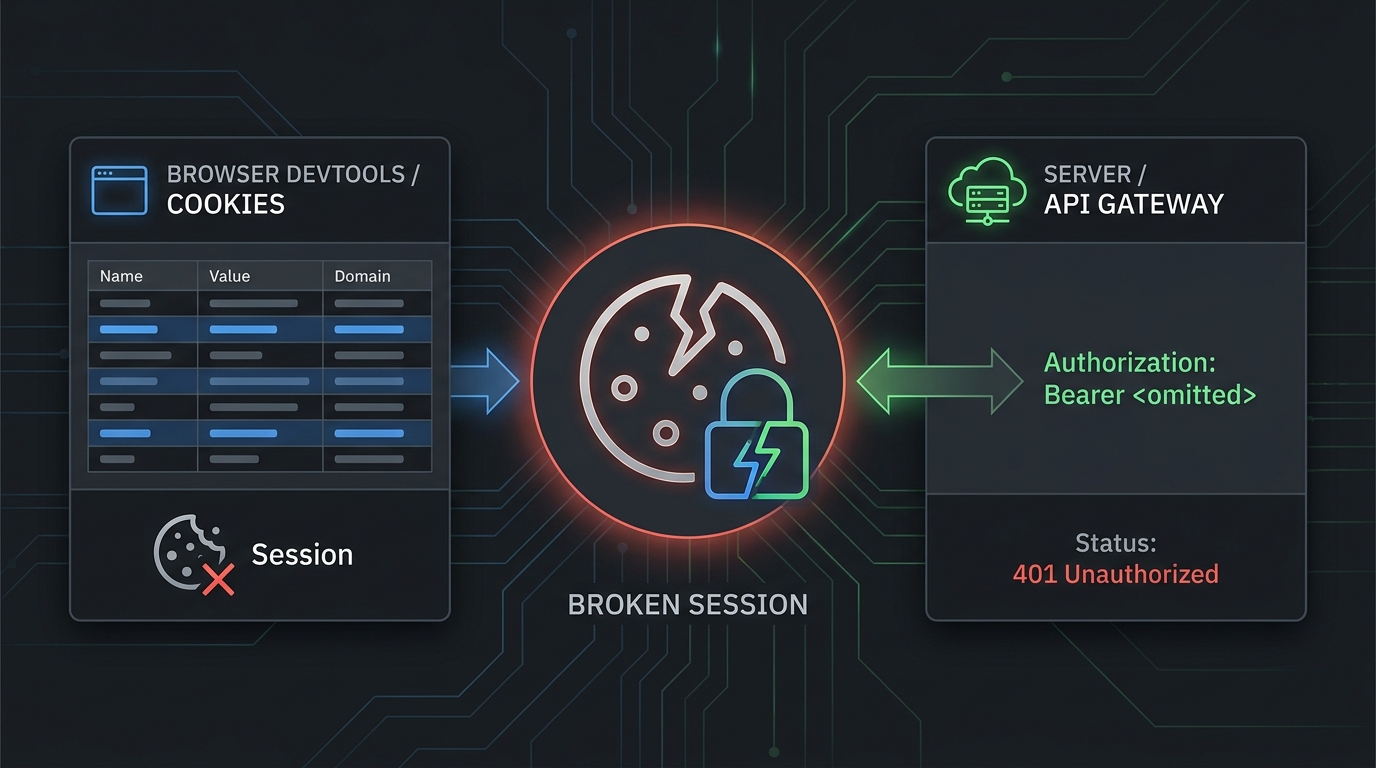
Support tickets are where careful engineering controls often leak. A customer pastes a full prompt into a ticket. An engineer attaches a trace with a request body. A screenshot includes a key. A support macro forwards the thread to another vendor. Suddenly the sensitive record is no longer just in the model path; it is in a help desk, email notification, warehouse export, and incident retrospective.
Your AI API redaction policy should treat support as a separate surface:
| Support artifact | Required review |
|---|---|
| Copied prompt or model output | Redact identifiers, secrets, and regulated data before broad support visibility |
| Screenshot | Crop or blur keys, emails, customer IDs, request bodies, and hidden prompts |
| HAR file or trace | Strip authorization headers, cookies, payloads, and signed URLs |
| Ticket attachment | Redact or remove sensitive files before escalation |
| Vendor escalation | Share minimum reproduction data, not raw customer content |
Zendesk's official API docs support this operating model by documenting redaction for strings in ticket comments, plus a separate comment attachment redaction endpoint. Even if your team uses a different help desk, the policy point is the same: support redaction should be a named workflow, not a one-off cleanup after someone notices a leaked value.
Define Exceptions Before Incidents
Every strict policy needs a controlled exception path. Without one, teams either bypass the policy informally or keep too little evidence to solve production issues.
Use this exception record:
| Field | Required value |
|---|---|
exception_id |
Unique ID tied to incident or investigation |
business_purpose |
Debugging, fraud review, safety review, legal hold, or customer-approved support |
data_scope |
Exact fields allowed, not "full payload" by default |
access_group |
Named people or role with time-boxed access |
retention_until |
Date or event that ends the exception |
reviewer |
Security, legal, privacy, or product owner |
customer_notice_required |
Yes/no with rationale |
deletion_or_redaction_task |
Follow-up ticket that closes the loop |
The exception path should be hard enough to prevent casual raw-payload access and fast enough for incident response. For routine debugging, use synthetic reproductions or redacted fixtures first. For legal holds, preserve only the scope required by counsel. For customer support, ask for consent before using raw customer-provided content outside the original support context.
Put Ownership In The Policy
A policy without owners becomes shelfware. Assign decisions by surface:
| Surface | Primary owner | Backup owner | Review cadence |
|---|---|---|---|
| Prompt classifier and block rules | Security engineering | Application platform | Monthly and after incidents |
| Output scanner | Product engineering | Trust and safety | Monthly |
| Gateway log fields | Platform engineering | Security engineering | Quarterly |
| Retention schedule | Privacy/legal | Security engineering | Quarterly |
| Support redaction workflow | Support operations | Security operations | Monthly |
| Export and analytics de-identification | Data/finance operations | Privacy/legal | Quarterly |
| Exception approvals | Security/privacy council | Incident commander | Every exception |
Review the AI API redaction policy after major model changes, new modalities, new support tools, new data processors, and any incident involving prompt or output exposure. Redaction is not a one-time regex project. It is a living control that follows the AI traffic lifecycle.
How Flatkey Buyers Should Use This Policy
If your team is evaluating unified AI API access, use this policy as a procurement checklist. Ask the same questions whether traffic goes through direct provider accounts, an internal proxy, or a managed gateway:
- Which request fields are visible in logs, exports, invoices, dashboards, and support workflows?
- Can payload logging be disabled, scoped, or time-limited?
- Who can view raw prompts and outputs?
- How are support tickets and attachments redacted?
- What retention settings are contractual, configurable, or only operational practice?
- How does the provider handle subprocessors, DPA scope, legal holds, and deletion requests?
- What evidence can a buyer export for audit without exporting raw customer content?
Flatkey's current public pages position it around one key, model access, usage analytics, cost controls, prepaid balance, and one invoice across providers. That makes it a relevant place to centralize AI API operating review. The buyer still needs to validate account-specific controls before treating any gateway as the system of record for privacy, retention, or support evidence. For current plan, model, and top-up context, review Flatkey pricing before approval.
Implementation Checklist
Use this checklist before the first production launch:
- Classify prompt, output, metadata, logs, ticket, screenshot, and export fields.
- Block secrets and credentials before the AI API request.
- Tokenize or generalize personal identifiers that are not needed for task quality.
- Store metadata logs by default and require approval for raw payload capture.
- Set a short retention window for approved debug payloads.
- Scan outputs before persistence, analytics export, or support sharing.
- Redact support tickets, attachments, screenshots, and traces before escalation.
- Document exception owners, retention dates, and deletion tasks.
- Verify provider data controls, DPA terms, subprocessor scope, and account settings.
- Review the AI API redaction policy after incidents, new models, and new support tooling.
FAQ
What is an AI API redaction policy?
An AI API redaction policy defines what sensitive fields must be blocked, masked, tokenized, retained, deleted, or approved across prompts, model outputs, gateway logs, exports, and support tickets. It is more specific than a privacy statement because it assigns field-level handling and owners.
Is provider zero data retention enough?
No. Zero data retention or modified retention can reduce provider-side storage, but it does not classify your own prompts, clean your logs, redact support tickets, or govern exports. Treat provider retention as one control inside a broader AI API redaction policy.
Should AI API logs include prompts and outputs?
Metadata-only logs should be the default for most production traffic. Store raw prompts and outputs only when the debugging or compliance purpose is approved, access is limited, retention is short, and the cleanup task is tracked.
How should support handle customer prompts?
Support should ask for the smallest reproduction needed, redact copied prompts and outputs before broad sharing, strip secrets from traces and screenshots, and keep raw evidence only in a restricted incident or support workflow with a retention owner.
Where should a Flatkey team start?
Start with the internal links between payload logging, data retention, and gateway governance: review AI API payload logging, pair it with an AI API data retention checklist, map it to your GDPR AI API gateway checklist, then get a key and verify account-specific settings before production.
Final Takeaway
The durable AI API redaction policy is the one your developers, support team, privacy reviewer, and finance owner can all operate. Keep useful metadata. Mask or block sensitive values before they spread. Store raw payloads only for named exceptions. Redact support tickets before escalation. Then use a gateway review surface, current provider docs, and your own DPA evidence to prove the policy is not just written, but working.