An AI model approval workflow is the release gate that decides whether a model route is allowed to handle production traffic. The route is not only the model name. It is the provider, endpoint family, prompt version, tool permissions, fallback behavior, logging setting, cost guardrail, owner, and rollback path that will run behind a product feature.
That is why approval should happen before a new route goes live. A model can look safe in a demo and still fail in production because the wrong prompt version ships, a fallback sends traffic to an unreviewed provider, a tool call gets too much authority, a logging setting stores payloads longer than expected, or finance cannot reconcile spend after the rollout.
Use this AI model approval workflow to turn a model change into a buyer-owned evidence file. The output should be clear enough for engineering, security, procurement, finance, and product to answer the same question later: what was approved, why was it approved, what evidence was reviewed, and what triggers a fresh review?
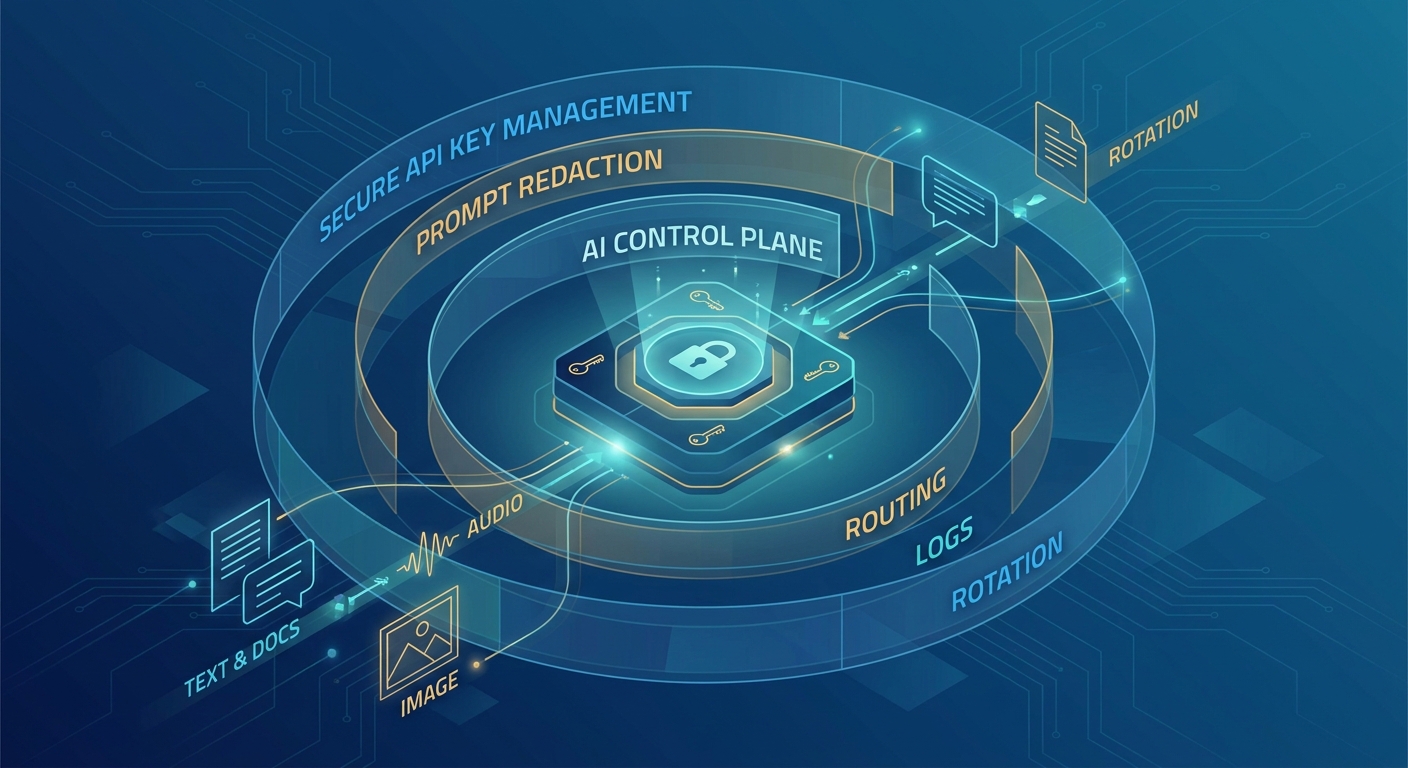
For Flatkey buyers, this review belongs around the gateway route. Flatkey's current public site positions the product as one AI API gateway for model access, routing, billing, usage analytics, and operational controls, with one API key, one base URL, and one dashboard. That makes the gateway a useful place to centralize route evidence. It does not remove the need to verify account-specific logging, provider terms, model behavior, data handling, and approval responsibilities before production launch.
What the workflow approves
An AI model approval workflow should approve a route, not a vendor slogan. The approval record should identify the exact production behavior that will exist after release.
| Route surface | Approval question | Evidence to keep | Release blocker |
|---|---|---|---|
| Use case | What user or system task will this route perform? | Product brief, data classification, user impact, abuse cases | The task is vague or ownership is unclear |
| Model and provider | Which model, provider, endpoint, region, and account path will serve traffic? | Provider docs, model/version status, route config, fallback list | A fallback can select an unapproved model |
| Prompt and tool policy | Which instructions, tools, schemas, and permissions are allowed? | Prompt version, tool manifest, typed schema, code review | The tool can take irreversible action without a control |
| Evaluation pack | Which tests prove the route is good enough for this use case? | Eval dataset, metrics, thresholds, reviewer notes, failure examples | There is no task-specific pass/fail threshold |
| Safety and abuse controls | How are prompt injection, unsafe output, data leakage, and policy bypass handled? | Red-team cases, filter settings, refusal tests, monitoring alerts | A known failure has no mitigation or owner |
| Data and logging | Which prompts, outputs, metadata, traces, and billing rows are stored? | Data-flow map, log sample, retention class, redaction test | Raw payload storage is unclear or unbounded |
| Cost and capacity | What spend, quota, rate limit, timeout, and fallback behavior is allowed? | Budget limit, usage sample, stress test, finance owner | A failure mode can create uncontrolled spend |
| Rollout and rollback | How will traffic start, expand, pause, and revert? | Feature flag, canary plan, rollback command, incident contact | Rollback depends on a manual guess |
| Renewal trigger | What change forces reapproval? | Review date, model deprecation watch, route-change policy | No one owns drift after launch |
The key point: approval is not a meeting. Approval is an evidence package plus a route control.
Use a lifecycle frame, not a one-time checklist
NIST's AI Risk Management Framework is a practical frame because it organizes work around Govern, Map, Measure, and Manage. That maps cleanly to an AI model approval workflow:
| AI RMF function | Route approval translation |
|---|---|
| Govern | Assign route owner, risk owner, finance owner, security reviewer, approval policy, and decommission rules |
| Map | Describe the use case, users, data, upstream provider, model limits, route dependencies, and business impact |
| Measure | Run functional evals, adversarial tests, safety checks, cost tests, latency tests, and observability checks |
| Manage | Approve, roll out, monitor, pause, renew, or decommission the route based on evidence |
NIST's Generative AI Profile also matters because generative systems introduce risks that ordinary API change reviews often miss: prompt injection, hallucination, data exposure, unsafe capability expansion, model drift, and downstream misuse. Treat the framework as a way to structure decisions, not as a substitute for your own evidence.
AI model approval workflow checklist
Use this checklist for every new model route, material prompt change, tool-permission change, provider fallback, or endpoint migration.
- Define the route.
Record the route ID, owner, product feature, environment, endpoint family, primary model, allowed fallback models, provider accounts, prompt version, tool manifest, data classes, and expected traffic pattern.
- Classify the use case.
Decide whether the route touches customer data, employee data, regulated workflows, financial decisions, support decisions, legal review, code execution, external actions, or safety-sensitive content. A summarization route and an autonomous refund agent should not share the same approval depth.
- Collect model and provider evidence.
Keep provider model docs, model cards or system cards when available, deprecation status, content filtering docs, data handling terms, regional constraints, and account-level settings. Google's model version guidance is a reminder to capture whether a model is stable, preview, experimental, deprecated, or retired. Do not approve only a friendly display name.
- Version prompts and tools.
OpenAI's prompt guidance recommends code-managed production prompts, typed inputs, code review, tests, eval checks, and staged rollout. That is the right pattern for a buyer-owned AI model approval workflow: prompt behavior belongs in the same release process as code behavior.
- Build task-specific evals.
OpenAI's evaluation best practices frame evals as structured tests for accuracy, performance, and reliability in variable AI systems. Approval should require a task-specific eval pack, not only a generic benchmark screenshot. Include typical cases, edge cases, adversarial cases, multilingual cases, tool cases, and known failure examples.
- Run security and misuse tests.
OWASP's LLM01 prompt injection guidance separates direct and indirect prompt injection. Add tests for both. If the route can call tools, retrieve documents, write records, send messages, or run code, test excessive authority, tool argument manipulation, system-prompt conflict, and hidden instructions in retrieved content.
- Verify data retention and logging.
Decide whether prompts, outputs, tool arguments, files, retrieved chunks, traces, request metadata, audit events, and billing rows are stored. Use the AI API data retention checklist to split payload content from metadata, and use audit logs for AI API usage to prove who changed keys, routes, logging, quota, and model policy.
- Set cost, reliability, and fallback limits.
Record token budgets, request budgets, quota limits, timeout strategy, retry policy, fallback model list, circuit breaker, and alert thresholds. A fallback that quietly moves traffic to a stronger, more expensive, or less-reviewed model is a governance failure even when the user experience looks fine.
- Approve staged rollout and renewal.
Release through a canary, feature flag, route weight, or tenant allowlist. Define the first-hour check, first-day check, first-week check, and renewal trigger. Reapprove when the model version changes, provider terms change, prompt behavior changes, tool permissions change, logging changes, cost profile changes, or user population changes.
Build the approval packet
The strongest AI model approval workflow leaves behind a compact approval packet. It should be short enough to review, but specific enough to audit.
| Packet field | Required answer | Proof artifact | Renewal trigger |
|---|---|---|---|
| Route ID | Stable ID for this production route | Gateway route config or change request | Route rename, merge, or split |
| Business owner | Who accepts product risk? | Approval record | Owner change |
| Technical owner | Who can pause or roll back? | On-call doc, runbook | Team or on-call change |
| Data class | What data can enter prompts, tools, files, and retrieval? | Data-flow map, sample payload class | New data source or customer segment |
| Model list | Primary model, fallback models, endpoint family, provider account | Model/version docs, route readback | New model, fallback, endpoint, or provider |
| Prompt version | Current prompt builder, schema, and system instruction source | Git commit or reviewed config | Prompt, schema, or tool change |
| Eval pack | Dataset, metrics, thresholds, failures, reviewer signoff | Eval report | Model, prompt, data, or user distribution change |
| Safety controls | Content filters, refusal policy, prompt-injection tests, human escalation | Test report and filter settings | Filter, policy, or risk classification change |
| Tool controls | Allowed tools, scopes, arguments, approval requirements | Tool manifest and permission test | Tool permission or side effect change |
| Logs and retention | Metadata fields, payload policy, retention class, redaction behavior | Log sample and retention readback | Export, observability, or retention change |
| Cost controls | Budget, quota, rate limit, alert, invoice owner | Usage sample and cost threshold | Pricing, traffic, or model mix change |
| Rollout plan | Canary size, rollback method, stop conditions | Feature flag or route weight record | Rollout cohort expansion |
| Post-live monitoring | Metrics, alerts, review cadence, incident path | Dashboard screenshot or API readback | Alert miss, incident, or drift |
This packet is also a procurement asset. It makes vendor review concrete: instead of asking whether a vendor is "enterprise ready," the buyer asks which evidence proves this route is ready.
Pre-production tests before a route goes live
The test set should match the approved use case. A route that only labels support tickets needs different tests from a route that writes SQL, issues refunds, edits code, or summarizes medical notes.
| Test lane | What to test | Evidence to keep | Stop condition |
|---|---|---|---|
| Functional correctness | Expected outputs on normal tasks | Eval score, failure examples, reviewer notes | Pass rate below threshold |
| Instruction hierarchy | System prompt vs conflicting user prompt | Adversarial cases | User prompt overrides system policy |
| Prompt injection | Direct and indirect injection in user text, retrieved docs, files, and tool outputs | Red-team transcript | Hidden instruction changes the task |
| Tool authority | Tool selection, argument extraction, scope, and side effects | Tool-call logs and deny cases | Tool can perform unapproved action |
| Data leakage | Secrets, private data, customer identifiers, and retrieved context exposure | Fixture test | Sensitive fixture appears in output or logs |
| Content filtering | Input/output policy categories and severity thresholds | Filter configuration and blocked cases | Required category is not monitored or blocked |
| Cost and quota | Token budget, rate limit, fallback spend, abuse burst | Usage rows and alert test | Spend can grow without owner alert |
| Reliability | Timeout, retry, streaming, fallback, provider outage, circuit breaker | Failure drill | User traffic keeps retrying into failure |
| Auditability | Key change, route change, prompt change, log access, quota change | Audit event sample | Change cannot be tied to actor and time |
| Rollback | Disable route, revert prompt, remove fallback, restore prior model | Rollback drill | Rollback cannot be completed quickly |
Microsoft's Azure OpenAI content filtering docs are useful as a reminder that filters have categories, severities, configuration choices, and optional behaviors. Your approval record should capture the actual settings used for the route, not only the existence of a safety feature somewhere in the stack.
Route policy example
Approval should produce a route policy that engineers can implement and reviewers can inspect. The exact schema depends on your gateway, but the shape should be explicit.
route_id: support-summary-prod
owner:
  product: support_ops
  engineering: ai_platform
  security: appsec
  finance: finops
use_case:
  task: summarize_support_threads
  data_class: customer_support_confidential
  allowed_environments: [production]
models:
  primary: approved_summary_model_2026_07
  fallbacks:
    - approved_summary_backup_2026_07
  denied:
    - any_preview_model_without_reapproval
prompt:
  source: app/prompts/support_summary.ts
  reviewed_commit: 8f3c2d1
  schema_required: true
tools:
  allowed:
    - read_ticket_metadata
  denied:
    - refund_customer
    - send_email
logging:
  payload_storage: disabled
  metadata_retention_class: ops_metadata_90d
  audit_events:
    - route_change
    - model_change
    - prompt_change
    - key_rotation
controls:
  max_input_tokens: 8000
  max_output_tokens: 700
  monthly_budget_usd: 500
  fallback_requires_same_data_policy: true
evals:
  pack: support_summary_eval_2026_07
  min_pass_rate: 0.95
  required_tests:
    - prompt_injection
    - sensitive_data_fixture
    - tool_scope
rollout:
  canary_percent: 5
  expand_after_hours: 24
  rollback: disable_route_weight
renewal:
  review_by: 2026-10-04
  triggers:
    - model_version_change
    - prompt_change
    - new_tool
    - logging_change
    - provider_terms_change
This is where the AI model approval workflow becomes operational. If a route config cannot express the decision, the approval is too abstract.
How this fits with Flatkey
Flatkey can serve as the operating surface for this workflow because the public product surface centers on unified model access, routing, billing, usage analytics, quota limits, and one dashboard for keys and routing. The current homepage also shows an OpenAI-compatible request pattern using https://router.flatkey.ai/v1/chat/completions, while the pricing and model pages describe prepaid balance, usage analytics, model pricing, and provider coverage.
Use Flatkey as the gateway evidence surface, then verify these account-specific details before approval:
- Which models and providers are enabled for the route.
- Which endpoint family each route uses.
- Which fallback models are allowed and denied.
- Which API keys, teams, projects, and environments can call the route.
- Which usage, cost, and quota controls are available for the buyer account.
- Which request metadata, audit events, and billing records are visible.
- Whether raw prompts, outputs, tool arguments, files, or traces are stored.
- Whether route changes, key changes, quota changes, and logging changes produce reviewable evidence.
Do not turn this into a generic trust claim. A gateway can reduce provider sprawl and centralize evidence, but the buyer still owns the AI model approval workflow.
Procurement questions to ask
Procurement and security teams should ask for evidence that matches the route, not only a platform overview.
| Question | Good evidence | Weak evidence |
|---|---|---|
| Which model will serve this route? | Route readback with primary and fallback models | "We use best-in-class models" |
| What happens if the model fails? | Timeout, retry, fallback, and rollback policy | "The gateway handles it" |
| What data is logged? | Sample metadata event and payload policy | "We have logs" |
| Who can change the route? | Role list and audit event sample | "Admins can manage it" |
| What evals passed? | Dataset, threshold, failures, and reviewer notes | "It worked in testing" |
| What safety controls are active? | Filter settings, refusal tests, prompt-injection cases | "Safety is enabled" |
| What does finance review? | Usage rows, pricing snapshot, budget alert, invoice path | "There is a dashboard" |
| What forces reapproval? | Written trigger list and owner | "We review when needed" |
Connect this review with the enterprise AI API gateway checklist for gateway-level controls, the AI API vendor risk assessment for upstream provider boundaries, and the audit logs for AI API usage for durable change evidence.
Renewal and decommissioning
The biggest approval failure is drift. The route that was approved in July may not be the route running in October.
Set renewal triggers before launch:
- A model version becomes deprecated, retired, preview-only, or replaced.
- A provider changes data handling, content filtering, pricing, region, or feature support.
- A fallback model, route weight, endpoint family, or provider account changes.
- A prompt, schema, retrieval source, system instruction, or tool permission changes.
- A new user group, customer tier, geography, or data class starts using the route.
- A monitoring alert shows quality, safety, latency, cost, or abuse drift.
- An incident, support escalation, customer complaint, or procurement finding touches the route.
Decommissioning should be part of the same AI model approval workflow. When a route is retired, record the replacement route, traffic drain date, disabled keys, deleted secrets, retained logs, billing closeout, and final owner signoff.
FAQ
What is an AI model approval workflow?
An AI model approval workflow is the governance process that decides whether a model route can handle production traffic. It records the use case, model/provider path, prompt and tool policy, eval results, safety controls, logging behavior, cost guardrails, rollout plan, and renewal triggers.
Who should approve a new AI model route?
At minimum, approval should include the product owner, technical owner, security or risk reviewer, and finance or operations owner. Higher-risk routes may also need legal, procurement, privacy, support, or executive review.
Is a model card enough for approval?
No. A model card or system card is useful evidence, but it does not prove that your prompt, tools, fallback, logging, data flow, cost controls, and rollout behavior are safe for your use case. The route still needs its own approval packet.
How often should model approvals be reviewed?
Review cadence depends on risk, but every route should have renewal triggers. Reapprove when the model version, provider, prompt, tool permissions, logging, data class, fallback, cost profile, or user population changes.
How does an AI gateway help with model approval?
An AI gateway can centralize model access, route policy, keys, usage, cost, quota, and audit evidence. It does not replace buyer governance. Use the gateway as the control and evidence surface, then verify account-specific behavior.
Conclusion
An AI model approval workflow should make production model changes reviewable before they become incidents. Approve routes, not vague model names. Keep the evidence file close to the gateway, require task-specific evals, test prompt injection and tool authority, verify logging and cost controls, and set renewal triggers before the first request goes live. When you are ready to centralize model access, routing, usage, and billing behind one gateway, review Flatkey's current pricing and model catalog, then get a key.