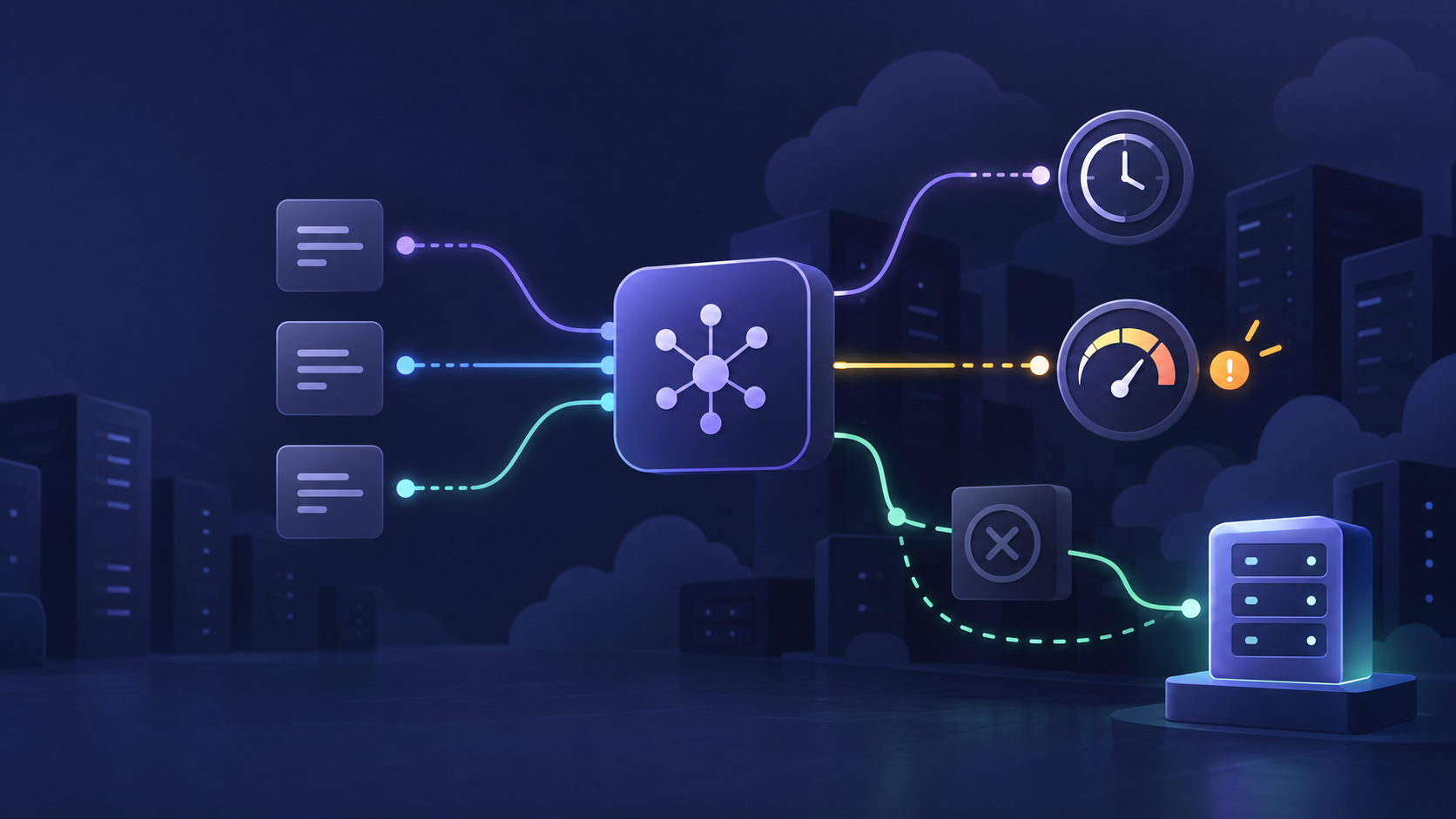
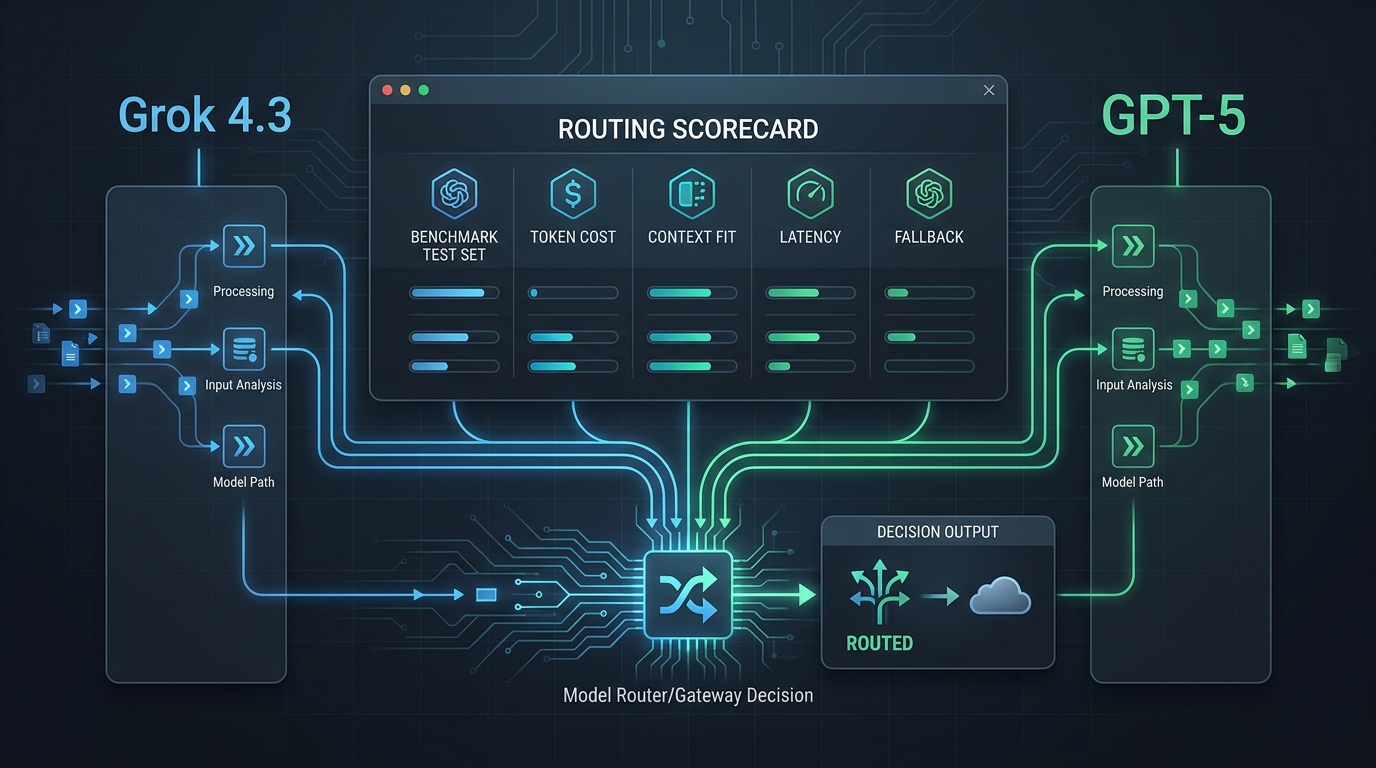
If you are searching for a Kong AI Gateway alternative, do not reduce the decision to model routing. Kong AI Gateway is a serious control-plane option: the official docs describe provider-agnostic AI routing, AI Proxy plugins, load balancing, retry and fallback, token-aware rate limiting, observability, and Konnect Metering & Billing. The practical question is whether your team wants to operate that gateway stack, provider account model, metering design, entitlement enforcement, and billing workflow yourself.
Flatkey is a different kind of Kong AI Gateway alternative. It is a managed AI API gateway for teams that want one API key, one OpenAI-compatible base URL, published model pricing, prepaid balance, usage analytics, request logs, cost controls, and one invoice across providers without first building a gateway plus monetization project. That makes the comparison less about who has a routing feature and more about who owns the operational burden after traffic starts moving.
Source note: this comparison was checked on June 30, 2026 against live Flatkey public pages and official Kong Developer documentation. Product packaging, gateway plugins, model catalogs, prices, and provider support can change. Use this guide as a buyer checklist, then verify the current console, contract, and docs before procurement or production cutover.
Quick answer: choose a Kong AI Gateway alternative when billing and quotas must be ready on day one
A Kong AI Gateway alternative makes sense when your immediate problem is not building an API management platform. If your product team needs to consolidate model access, charge a prepaid balance, review request-level spend, control usage, and migrate OpenAI-compatible clients quickly, Flatkey should be on the shortlist. If your platform team already runs Kong, wants deep gateway policies, needs custom metering products, and can own enforcement logic, Kong AI Gateway may be the better fit.
| Buyer situation | What to compare first | Likely direction |
|---|---|---|
| You already standardize API traffic through Kong and have gateway operators. | AI Proxy Advanced, Kong plugins, Konnect analytics, Metering & Billing setup, and entitlement enforcement. | Kong AI Gateway may fit the existing platform model. |
| You need one AI key across GPT, Claude, Gemini, DeepSeek, image, audio, and video models. | Model catalog, base URL migration, prepaid balance, request logs, invoice flow, and quota workflow. | Flatkey should be evaluated as a Kong AI Gateway alternative. |
| You need to sell API usage to your own customers through plans and rate cards. | Customer mapping, meters, features, subscriptions, pricing plans, webhooks, and payment integrations. | Kong's Metering & Billing path may be relevant if your team can implement it. |
| You need developers to test one workflow this week without separate provider onboarding. | Current Flatkey base URL, model alias, key owner, usage row, billing owner, and rollback. | Flatkey is the lower-setup evaluation path. |
What Kong AI Gateway is built for
Kong's AI Gateway documentation describes a connectivity and governance layer built on Kong Gateway. The docs say Kong AI Gateway routes AI requests through a provider-agnostic API, centralizes credentials, and lets request routing optimize for cost, latency, or availability. The AI Gateway capabilities list includes rate limiting, semantic caching, semantic routing, guardrails, load balancing, logging, LLM metrics, usage analytics, and AI plugins.
The AI Proxy plugin transforms and proxies requests to AI providers and models. Kong's docs say it accepts standardized OpenAI formats, translates requests to the configured target format, and transforms responses back into a standard format. The AI Proxy Advanced plugin extends that model to multiple providers and models at the same time, which enables load balancing between targets. Its load balancing options include round-robin, lowest-latency, and lowest-usage routing based on token counts or cost. The docs also describe retry and fallback across supported targets.
Kong's AI Rate Limiting Advanced plugin is also relevant to this comparison. The official docs say it uses token data returned by the LLM provider to calculate query costs, and that cost-based limiting can use prompt tokens multiplied by input cost plus completion tokens multiplied by output cost. The same page notes policy-based rate limiting for Consumer and Consumer Group matches, model-specific policies, and headers that show allowed limits, remaining quota, restore time, and query cost. That is real quota infrastructure, not a generic API throttle.
Kong also has Konnect Metering & Billing. Its docs describe real-time metering, flexible pricing models, subscription management, automated invoicing, payment and ERP integrations, and an LLM cost database. The LLM traffic how-to walks through mapping a Kong Gateway Consumer to a customer, creating a meter for AI token usage, defining a feature, creating a usage-based plan and rate card, starting a subscription, and previewing an invoice.
That is the strength and the tradeoff. Kong AI Gateway can become a highly configurable AI traffic, policy, metering, and monetization layer. But the buyer must be ready to operate the pieces. Kong's LLM metering how-to also states that AI Gateway does not automatically block traffic when a customer's entitlement is exhausted; teams must enforce limits with webhook notification rules and their own infrastructure. If your main requirement is ready-to-use provider access, balance, and spend review, that operational boundary matters.
What Flatkey is built for
Flatkey's homepage checked for this guide is titled One API gateway for production AI teams and says Flatkey unifies model access, routing, billing, usage analytics, and operational controls. Its public example uses https://console.flatkey.ai/v1/chat/completions, which maps to https://console.flatkey.ai/v1 as the OpenAI-compatible base URL when your account confirms that route.
The Flatkey pricing page checked the same day positions the self-serve plans as prepaid top-ups rather than monthly subscriptions. It says balance is consumed when API requests use models, one balance can route across GPT, Claude, Gemini, DeepSeek, image, audio, and video models, and usage is metered by model, token type, and request logs so teams can review spend and control cost. It also lists usage analytics, cost controls, prepaid balance, and one invoice across providers.
Flatkey's model directory checked on June 30, 2026 says the site currently has 633 enabled models and publishes server-rendered model pricing across 23 providers. The directory exposes model names, vendors, endpoint types, and pricing information in crawlable HTML, with endpoint filters including OpenAI-style, Gemini, OpenAI Responses, and OpenAI video routes. Treat those counts as dated public catalog evidence, not a guarantee that every account can call every model without current key and route verification.
That makes Flatkey a practical Kong AI Gateway alternative for teams that want to spend less engineering time on gateway construction and more time validating model workflows. The default evaluation is straightforward: get a key, confirm the current base URL in the Flatkey console, choose a model alias, send one measured request, check request logs and cost, then decide whether the workflow should expand.
Kong AI Gateway alternative comparison matrix
The strongest Kong AI Gateway alternative decision comes from comparing operating evidence. Ask each vendor to show the request path, billing path, quota path, and support owner for the same workflow.
| Decision area | Kong AI Gateway evidence to request | Flatkey evidence to request | Why it matters |
|---|---|---|---|
| Provider access | Which upstream provider accounts, plugin configs, credentials, and target models your team owns. | Which Flatkey workspace, API key, model aliases, and provider groups your account can use. | Access ownership drives support, incident response, key rotation, and procurement scope. |
| Model routing | AI Proxy or AI Proxy Advanced config, target list, load balancing algorithm, retry rule, and fallback behavior. | Base URL, endpoint family, model alias, route status, provider group, and visible usage row. | Routing claims need request-level proof, not feature names. |
| Billing model | Meter, feature, plan, rate card, customer mapping, subscription, invoice preview, and payment integration. | Prepaid top-up, one balance, model pricing row, request log cost, invoice workflow, and billing owner. | Finance needs to know who pays, when balance is consumed, and where usage appears. |
| Quotas and limits | Rate limiting strategy, cost inputs, token calculation, policy scope, restore headers, and webhook enforcement. | Workspace balance, quota controls, usage analytics, cost controls, key owner, and owner escalation path. | A quota is useful only if the team knows whether it blocks, alerts, degrades, or requires human action. |
| Logs and observability | Konnect analytics, audit logs, LLM metrics, OpenTelemetry flow, payload logging policy, and retention settings. | Request logs, model and token fields, cost visibility, route status, and export or review needs. | Debugging and security review both depend on what is logged and who can see it. |
| Catalog and pricing proof | Configured providers, LLM cost database, custom price overrides, and production price source. | Flatkey model directory, current pricing row, endpoint type, provider count, and account availability. | Published catalog proof reduces guesswork before a pilot, but every production route still needs a current key test. |
| Migration effort | Kong control plane, data plane, plugins, Consumer mapping, API key auth, provider secrets, and deployment owner. | OpenAI-compatible base URL change, Flatkey API key, model alias mapping, endpoint test, and rollback diff. | A small SDK change can still require a large platform workflow if billing and quotas sit elsewhere. |
| Enterprise fit | Existing Kong footprint, plugin licensing, gateway deployment model, RBAC, policy approvals, and billing integrations. | Enterprise usage, invoicing, procurement support, custom routing discounts, and team-level controls. | The right platform depends on whether the gateway is your product infrastructure or a managed access layer. |
When Kong AI Gateway is the better fit
Kong AI Gateway is likely the better fit when you already operate Kong Gateway or Konnect and want AI traffic to use the same API management muscle. That includes platform teams with existing gateway policy standards, declarative configuration workflows, centralized credential management, API product plans, observability pipelines, customer subscription logic, and payment or ERP integrations.
Kong may also fit better if your company sells API access to external customers and needs custom plan packaging. Kong's Metering & Billing docs are built around meters, features, plans, subscriptions, customers, billing profiles, Stripe, and ERP integrations. If your team wants to monetize your own API surface and has the engineering resources to wire entitlement enforcement into infrastructure, Kong gives you a broad toolkit.
Finally, Kong is worth a closer look when your platform needs custom AI gateway behavior: semantic routing, semantic cache, AI prompt guardrails, request and response transformations, OpenTelemetry traces, gateway-native authentication, or a standardized control plane for non-AI and AI APIs together. Those are not small checkboxes; they are reasons to invest in an API gateway platform.
When Flatkey should be on the shortlist
Flatkey is worth evaluating as a Kong AI Gateway alternative when your team wants managed multi-model access without managing separate provider accounts, scattered API keys, and fragmented usage tracking. It is especially relevant for AI product teams, automation builders, and finance operators who need to know which key used which model, how much the request cost, and who should approve more usage.
Flatkey is also a strong shortlist candidate when your migration path is OpenAI-compatible. Instead of building an AI Proxy configuration, metering pipeline, rate card, and entitlement webhook before a developer can test one workflow, Flatkey lets the pilot begin with base URL, API key, model alias, and usage verification. That is a different operating model from Kong, and it is often the real reason a team searches for a Kong AI Gateway alternative.
The buyer should still verify the current account state. Before production, check the Flatkey console base URL, endpoint family, selected model alias, model pricing row, account permissions, request logs, cost fields, quota behavior, balance owner, and support path. The useful claim is not that a managed gateway removes all review work. It is that the review work starts closer to the AI workflow and farther away from platform assembly.
Quota and billing checklist for the pilot
Use this checklist before choosing any Kong AI Gateway alternative. It keeps the review focused on the evidence your developers, platform team, finance owner, and procurement reviewer need.
- Name the workflow. Choose one internal agent, batch job, coding assistant, support workflow, or image/video path. Do not evaluate the whole model estate at once.
- Freeze the current route. Record current provider, key owner, model, endpoint, request shape, retry behavior, average usage, and rollback owner.
- Map access ownership. For Kong, identify Consumers, API keys, provider credentials, plugin owners, and target configs. For Flatkey, identify workspace, API key owner, model alias, provider group, and billing owner.
- Run a minimal request. Capture status, response shape, model used, usage fields, error format, and whether the request appears in logs.
- Run a quota test. Confirm the limit scope, reset window, enforcement behavior, alert path, and whether over-limit traffic is blocked automatically or requires external action.
- Run a billing test. Confirm the cost unit, price source, request cost, invoice or balance impact, customer or team attribution, and finance review path.
- Run a failure test. Simulate provider error, rate limit, invalid model, auth failure, and exhausted budget. Record what happens and who is notified.
- Write the go/no-go note. Include the exact code diff, config diff, owner map, quota behavior, billing behavior, evidence links, and rollback path.
How to compare total implementation effort
Implementation effort is where a Kong AI Gateway alternative can win or lose. Kong's path can be powerful, but a fair estimate should include Gateway Services and Routes, Consumers, authentication, AI Proxy configuration, provider secrets, optional AI Proxy Advanced targets, rate limiting strategies, cost inputs, Redis or cluster considerations, Metering & Billing meters, features, plans, subscriptions, customer mapping, invoice integrations, and webhook-based entitlement enforcement.
Flatkey's path should be estimated differently. The main work is confirming account access, changing the base URL for an OpenAI-compatible client, choosing a model alias, running endpoint-specific smoke tests, checking usage and request logs, setting cost or quota expectations, and documenting ownership. That is still work, but it is not the same as standing up a gateway-plus-billing system.
For teams comparing Flatkey to OpenRouter or LiteLLM at the same time, use the same evidence standard. The OpenRouter alternatives and LiteLLM alternatives guides use a similar pattern: account ownership, billing, routing proof, logs, quotas, migration effort, and operational evidence. The enterprise AI API gateway checklist is useful when procurement or security needs a broader review packet.
FAQ
What is the best Kong AI Gateway alternative?
The best Kong AI Gateway alternative depends on what you are replacing. If you need a full API gateway control plane with AI plugins, metering products, subscriptions, and custom infrastructure enforcement, Kong may remain the better fit. If you need managed multi-model access, prepaid balance, one OpenAI-compatible base URL, request logs, published model pricing, usage analytics, and one invoice across providers, evaluate Flatkey.
Is Flatkey a direct replacement for Kong AI Gateway?
No. Flatkey should be treated as an alternative operating model, not a clone of Kong. Kong AI Gateway is built on Kong Gateway and can support deep gateway policy, routing, metering, and API monetization workflows. Flatkey is built for managed AI model access, routing, billing, usage analytics, request logs, cost controls, and simpler OpenAI-compatible migration.
Does Kong AI Gateway support quotas and billing?
Yes. Kong's docs describe token-aware AI Rate Limiting Advanced, usage analytics, LLM cost calculation, Konnect Metering & Billing, pricing models, subscriptions, invoicing, and payment or ERP integrations. The key buyer question is how much of that setup and enforcement your team wants to operate. Kong's LLM metering how-to says entitlement exhaustion is not automatically blocked by AI Gateway and must be enforced with webhook notification rules and your own infrastructure.
What is the difference between Kong rate limiting and Flatkey prepaid balance?
Kong rate limiting is gateway policy infrastructure. It can calculate costs from token usage, apply rate limit strategies, and expose limit headers when configured. Flatkey prepaid balance is a managed usage and billing model: balance is consumed when API requests use models, and teams can review spend by model, token type, and request logs. Compare both against the same workflow before choosing a Kong AI Gateway alternative.
Can I use Kong AI Gateway with OpenAI-compatible clients?
Kong's AI Proxy and AI Proxy Advanced docs describe standardized OpenAI formats and transformation to configured provider formats. Flatkey also uses an OpenAI-compatible base URL for supported workflows. In either case, verify the exact endpoint family, model alias, streaming behavior, tool behavior, error format, and logging before migrating production traffic.
How should finance evaluate the choice?
Finance should ask for a concrete scenario: expected monthly requests, model mix, token types, image or video calls, retries, fallbacks, log volume, quota limits, overage behavior, invoice path, balance owner, and approval owner. A feature list is not enough. The team should be able to show where one request appears, how it is priced, and what happens when the limit is reached.
Final decision rule
Choose Kong AI Gateway if your team wants to operate AI traffic as part of a broader API gateway, metering, billing, and monetization platform. Choose Flatkey if your priority is a managed Kong AI Gateway alternative with one key, OpenAI-compatible access, published model pricing, prepaid balance, usage analytics, request logs, cost controls, and a faster path to validate model workflows.
To test Flatkey in that operating model, review the current pricing and model access, then get a key and run one measured workflow before moving broader traffic.