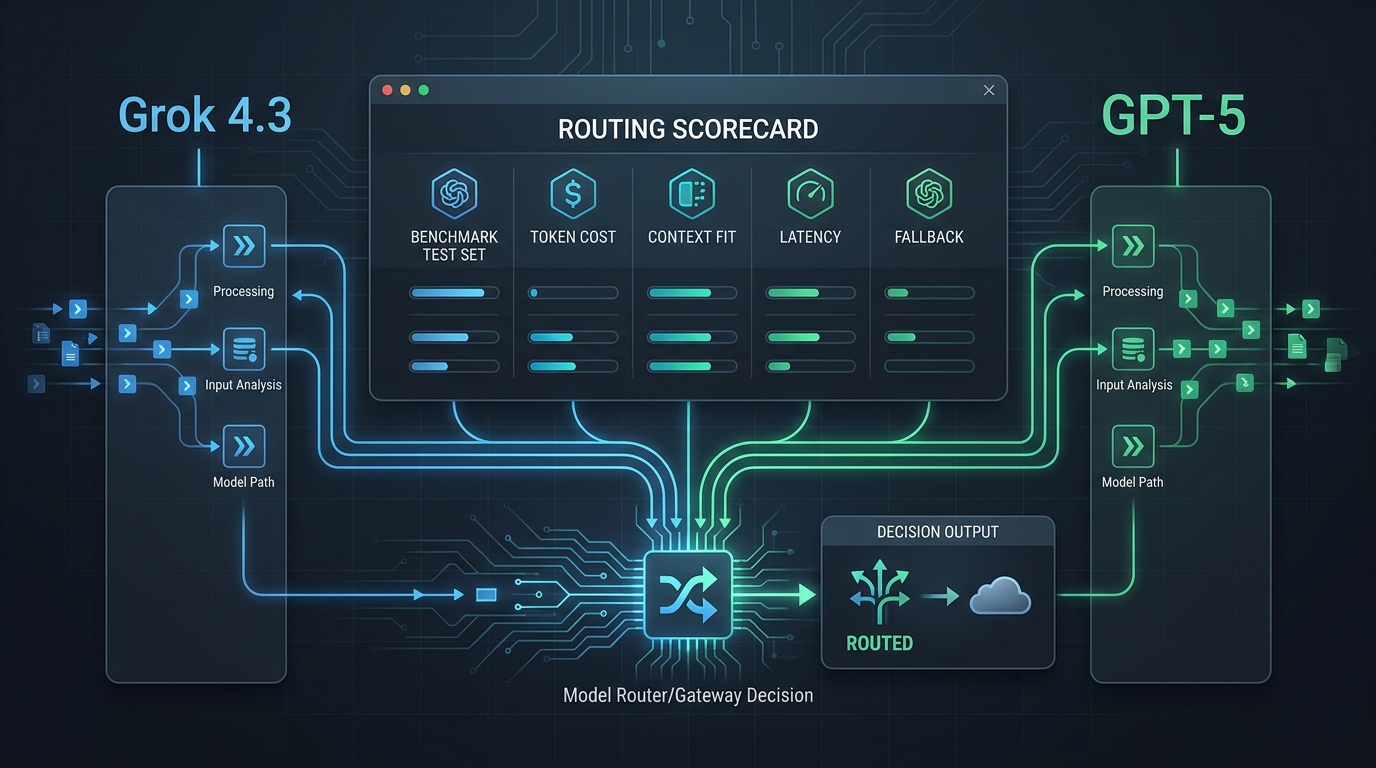
A multi-provider LLM router is useful only if it can answer operational questions, not just model-count questions. Teams comparing routers need to know who owns provider access, how usage is billed, which logs prove a request path, where quotas are enforced, how fallback attempts are recorded, and how hard it is to move an existing SDK or workflow.
This comparison was checked on July 1, 2026 Asia/Shanghai against Flatkey's public home page, pricing page, live pricing API snapshot, and official documentation from LiteLLM, OpenRouter, Portkey, Cloudflare, and Vercel. Treat model rows, endpoint families, product wording, routing behavior, and billing language as point-in-time evidence. Verify the current dashboard, model row, provider console, and request logs before sending production traffic through any router.
Quick Answer: What A Multi-Provider LLM Router Should Prove
The best multi-provider LLM router for a team is not the one with the longest provider list. It is the one that matches your ownership model. If finance wants one prepaid balance and one invoice, the router must make billing review simple. If platform engineering wants provider-key control, the router must expose credential ownership and routing rules clearly. If product teams need resilience, fallback logs must show what happened after the first provider failed.
| Router Pattern | Best Fit | What To Verify Before Choosing |
|---|---|---|
| Managed one-key gateway | Teams that want model access, billing, routing, usage analytics, request logs, quota controls, and fewer separate provider accounts. | Current model row, endpoint family, price unit, quota behavior, request log fields, fallback evidence, and invoice path. |
| Provider marketplace router | Teams that want a broad model catalog, provider preferences, fallback models, and optional bring-your-own-key paths. | Credit vs BYOK behavior, provider routing order, fallback triggers, data policy preferences, rate-limit ownership, and response model attribution. |
| Self-hosted or configurable proxy | Platform teams that want to own provider keys, routing config, Redis or database state, custom callbacks, and internal policy logic. | Who operates the proxy, how spend is tracked, how logs are retained, how upgrades are handled, and how provider limits are synchronized. |
| Cloud or platform AI gateway | Teams already invested in that cloud or deployment platform and looking for analytics, logs, rate limiting, retries, fallback, or unified model access. | Supported providers, BYOK support, usage export, billing entity, routing controls, app attribution, and quota boundaries. |
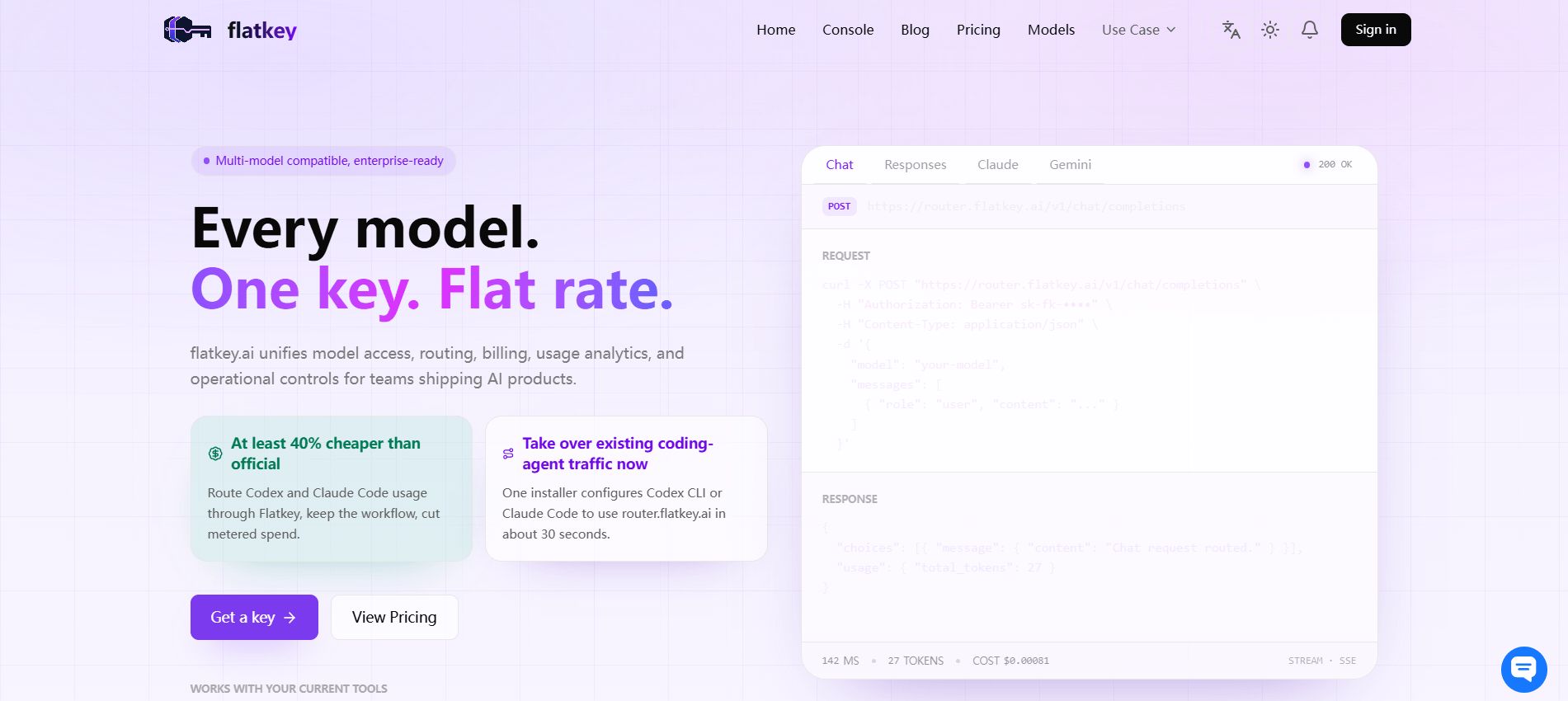
Flatkey fits the managed one-key gateway pattern. Its current home page says Flatkey is one API gateway for production AI teams and says it unifies model access, routing, billing, usage analytics, and operational controls. The same page says teams can get one API key and call connected AI models without applying for each provider separately, route multiple upstream accounts with automatic switching and load balancing, bill by actual usage, set quota limits, and keep team consumption clear.
Multi-Provider LLM Router Comparison Matrix
Use this multi-provider LLM router matrix as a buyer checklist. It is not a ranking. The right choice depends on whether your team prioritizes managed access, direct provider ownership, proxy control, cloud-native observability, or framework-level convenience.
| Option | Account And Billing Posture | Logs And Quotas | Fallback And Routing | Practical Fit |
|---|---|---|---|---|
| Flatkey | Flatkey public pages describe one API key, reduced separate provider accounts, prepaid balance, usage-based billing, usage analytics, cost controls, enterprise invoicing, procurement support, and one invoice across providers. | Flatkey public pages describe request logs, usage analytics, quota limits, and clear team consumption. The live pricing API snapshot for this article returned 227 model rows, 23 vendors, and endpoint families including anthropic, gemini, image-generation, openai, and openai-video. |
Flatkey public pages describe routing across multiple upstream accounts with automatic switching and load balancing. Validate the exact fallback log and model-row behavior for your workflow. | Good commercial fit when the goal is one key, unified billing review, usage evidence, and less provider-account work. Start with pricing, then get a key for a scoped test. |
| LiteLLM | LiteLLM is often evaluated when teams want a configurable router/proxy layer and provider-key control. Its official router docs describe load balancing across deployments and providers. | LiteLLM docs say Redis can be used in production to track cooldown server and usage for TPM/RPM limits. The docs also show custom callbacks for tracking API key, API endpoint, model used, and response cost. | LiteLLM official routing docs describe load balancing, cooldowns, fallbacks, timeouts, retries, and routing strategies across deployments and providers. | Good fit when platform engineering wants deeper proxy control and is ready to operate the gateway state, config, keys, and upgrades. |
| OpenRouter | OpenRouter docs describe OpenRouter credits and BYOK. The BYOK docs say provider keys enable direct control over rate limits and costs via your provider account, while OpenRouter credits have provider rate limits managed by OpenRouter. | OpenRouter provider routing docs expose request-level provider preferences such as provider order, allowed providers, fallback permission, data-collection preference, ZDR routing, provider sorting, and max price. | OpenRouter docs describe provider load balancing, backup providers, provider sorting by price, throughput, or latency, and model fallbacks through a models array. |
Good fit when a team wants broad model routing, explicit provider preferences, and a choice between credits and BYOK. Compare against OpenRouter alternatives when billing ownership is the deciding factor. |
| Portkey | Portkey docs say the old Virtual Keys concept moved into Model Catalog, where one Portkey API key can access multiple providers and models while provider credentials are stored centrally. | Portkey Model Catalog docs describe organization-level management, fine-grained budgets, rate limits, model allow-lists, credential management, and access controls. | Portkey fallback docs describe prioritized provider/model targets, fallback on non-2xx responses by default, custom status-code triggers, and tracing fallback requests by config ID or trace ID. | Good fit when a team wants a gateway with model catalog governance, provider credential management, and traceable fallback chains. |
| Cloudflare AI Gateway | Cloudflare AI Gateway docs frame the product around visibility and control for AI applications, including supported providers such as Workers AI, Anthropic, Google Gemini, OpenAI, Replicate, and more. | Cloudflare docs list analytics, logging, cost/tokens metrics, caching, and rate limiting as AI Gateway features. | Cloudflare docs list request retry and model fallback as features for resilience when errors occur. | Good fit when the application already lives in the Cloudflare ecosystem or when edge-adjacent observability and controls are central. |
| Vercel AI Gateway | Vercel docs say AI Gateway provides one key, hundreds of models, a unified API, spend monitoring, and no markup on tokens, including BYOK. | Vercel docs point to observability for usage, latency, and spend across providers, plus usage and billing docs for pricing and metrics. | Vercel docs say AI Gateway automatically retries requests to other providers if one fails and offers provider options for routing, fallbacks, and preferences. | Good fit for Vercel-centered teams that want framework-friendly access to multiple models and built-in spend visibility. |
Billing: Start With The Entity That Pays
A multi-provider LLM router changes finance operations before it changes code. The hard question is not "Can we call Claude, GPT, Gemini, and image models?" The hard question is "Who pays for the request, and can we prove the charge later?"
Flatkey uses a prepaid balance model, so teams can start small, test routes across supported models, and scale usage without committing to fixed monthly bundles. Usage is tracked by model, token type, and request log, which makes it easier for engineering and finance to see where spend is coming from. That matters when billing is part of the routing problem. If a team is tired of reconciling separate provider invoices, Flatkey gives them one place to review usage, apply cost controls, and handle invoicing or procurement as the workflow grows.
OpenRouter's BYOK docs draw a different boundary. They say OpenRouter supports both credits and bring-your-own provider keys. With OpenRouter credits, provider rate limits are managed by OpenRouter. With provider keys, users get direct control over rate limits and costs via their provider account. That is a meaningful distinction: credits centralize payment through the router, while BYOK keeps more direct provider-account ownership.
Vercel's AI Gateway docs also make billing posture explicit. They say tokens cost the same as they would from the provider directly, with no markup, including BYOK. Portkey's docs emphasize provider credentials stored centrally through Model Catalog and governance controls such as budgets and rate limits. LiteLLM's router docs emphasize configurable control, but the operating team must still decide where provider bills, key ownership, and chargeback records live.
Logs: Ask For The Request-Level Evidence Trail
A useful multi-provider LLM router log does not stop at status code and latency. For model traffic, the log should help a developer debug a failed response and help finance explain a cost line. That means the request log needs the app key, route, model, provider, endpoint family, token or unit usage, status, retry or fallback attempt, and cost record when available.
| Log Field | Why It Matters | Proof To Request |
|---|---|---|
| App key or project | Connects usage to the workflow, team, environment, or customer. | One request traced from app key to model usage and billing record. |
| Model and provider | Shows the actual route, not just the requested alias. | Requested model, served model, provider, and endpoint family in the same record. |
| Token, image, video, or request unit | Explains the cost basis for different modalities. | Input, output, cache, image, video, or request units shown clearly. |
| Fallback attempt | Shows whether the first provider failed and what the router tried next. | Trace ID, attempt order, status codes, and final served route. |
| Cost or balance impact | Gives finance a reconciliation path. | Request cost, balance deduction, invoice grouping, or exportable usage record. |
Portkey's fallback docs are a good example of the kind of evidence to ask for. They say Portkey logs all requests in a fallback chain and suggests filtering by Config ID and Trace ID to inspect all attempts for a single request. Cloudflare AI Gateway docs say analytics can show requests, tokens, and cost, while logging gives insight into requests and errors. LiteLLM docs show custom callbacks that can capture API key, API endpoint, model used, and response cost.
Quotas And Rate Limits: Know Which Limit Failed
Quotas are easy to misunderstand in a multi-provider LLM router. A workflow may be constrained by the app key quota, the team budget, the gateway's rate limit, the provider account's RPM/TPM limit, a prepaid balance, or a model-specific availability condition. Those are not interchangeable.
Quota control means different things depending on the gateway. In Flatkey, the focus is keeping team usage visible and setting limits around consumption. Cloudflare AI Gateway talks about rate limiting mainly as a way to control request volume. Portkey goes deeper into budgets, rate limits, and model allow-lists. LiteLLM can support TPM and RPM limits too, but in production you need the right tracking setup, often with Redis. OpenRouter depends on how you pay: with your own provider keys, you keep more direct control over provider-side limits and costs; with OpenRouter credits, more of that rate-limit management moves to OpenRouter. A better buyer question is not “does it have quotas?” Most tools do. The real question is what the quota protects: requests, tokens, budget, teams, models, provider accounts, or all of them. Then ask what happens when the limit is hit: does the request fail, fall back, alert someone, or quietly move to another route?
Before choosing a router, run a quota test with a deliberately small limit. Confirm which error appears, whether the log identifies the quota source, whether fallback is allowed after a rate limit, and whether finance can see the blocked request as usage, no usage, or failed usage.
Fallbacks: Define The Trigger Before You Trust The Router
Fallback is where a multi-provider LLM router can quietly create surprises. A fallback may improve availability, but it can also change model behavior, latency, price unit, data handling, tool-call support, or response shape. The router must make the fallback trigger and final route visible.
OpenRouter's model fallback docs say the models parameter lets requests try other models if the primary model's providers are down, rate-limited, or refuse to reply due to moderation. The same docs say requests are priced using the model ultimately used, which is returned in the response body. Portkey docs say fallback can use prioritized provider/model targets and can trigger on specific status codes such as 429 or 503. Cloudflare docs list request retry and model fallback as resilience features.
For production review, do not ask only "Does fallback exist?" Ask these questions:
- Trigger: Does fallback happen on all non-2xx responses, only selected status codes, provider downtime, rate limits, moderation, or timeouts?
- Compatibility: Does the backup model support the same tools, structured output, context length, streaming behavior, and modality?
- Cost: Does the fallback model use a different price unit or provider account?
- Logging: Can the team see every attempt in one trace?
- Response attribution: Does the final response expose the model that actually served the request?
- Rollback: Can operators disable fallback or pin a provider during an incident?
Migration: The Base URL Change Is Only The First Step
Many router migrations begin as a simple base URL and API key change. That is not the full migration. A multi-provider LLM router migration should prove that the SDK request, response shape, streaming path, tool-calling behavior, usage record, quota behavior, and rollback path still work.
- Pick one production-like workflow: do not start with every model. Choose one route with real prompts, expected response shape, and a known cost basis.
- Map the model alias: document the requested model name, provider route, endpoint family, and fallback candidates.
- Run ten traceable requests: include one normal call, one streaming call if used, one tool call if used, one quota test, one deliberate provider or model failure, and one retry/fallback test.
- Compare logs: confirm the app key, route, model, provider, token or unit count, status, latency, fallback attempt, and cost record.
- Review billing: trace those same requests to prepaid balance, credits, provider account, invoice, or internal chargeback.
- Write the rollback rule: document how to return to direct provider access or pin a known route if the router behaves unexpectedly.
For more migration context, compare this page with LiteLLM alternatives and the enterprise AI API gateway checklist. The router decision is partly technical, partly financial, and partly operational.
Where Flatkey Fits In A Router Shortlist
Flatkey is strongest in this multi-provider LLM router comparison when the buyer wants less provider-account work and clearer usage operations. The public evidence checked for this article supports these Flatkey claims:
- One API gateway for production AI teams.
- One API key for connected AI models without applying for each provider separately.
- Reduced separate provider accounts, scattered API keys, inconsistent routing, and fragmented usage tracking.
- Routing across multiple upstream accounts with automatic switching and load balancing.
- Usage-based billing, prepaid balance, request logs, usage analytics, cost controls, quota limits, enterprise invoicing, procurement support, and one invoice across providers.
- A live pricing API snapshot on July 1, 2026 returning 227 model rows, 23 vendors, and endpoint families
anthropic,gemini,image-generation,openai, andopenai-video.
That evidence does not prove that every model row is available for your account, that any specific provider route has a permanent price, or that a fallback will match your exact production behavior. The right next step is a scoped proof run: open Flatkey pricing, confirm the current model row and endpoint family, then get a key and run the ten-request migration proof above.
Router Decision Record Template
Use this template before approving a multi-provider LLM router for a production workflow.
| Decision Field | Record |
|---|---|
| Workflow owner | Team, app, environment, and business owner. |
| Primary model route | Requested model, served model, provider, endpoint family, and account or gateway credential source. |
| Billing owner | Prepaid balance, gateway credits, BYOK provider account, direct invoice, or internal chargeback path. |
| Required logs | App key, model, provider, usage units, status, latency, fallback trace, and cost record. |
| Quota source | App key quota, team budget, gateway rate limit, provider RPM/TPM, prepaid balance, or account-level limit. |
| Fallback policy | Trigger, backup route, compatibility checks, max attempts, cost expectations, and rollback switch. |
| Acceptance proof | Ten traceable requests, billing review, fallback test, quota test, and rollback test. |
FAQ
What is a multi-provider LLM router?
A multi-provider LLM router is a gateway, proxy, or platform layer that can send model requests to more than one LLM provider. In production, it should also help with credentials, routing policy, billing evidence, request logs, quotas, retries, and fallback behavior.
Is a multi-provider LLM router the same as an AI API gateway?
They overlap, but the terms are not always identical. A multi-provider LLM router emphasizes choosing between providers and models. An AI API gateway usually includes broader operational controls such as logs, analytics, quotas, billing visibility, access policy, and model traffic governance.
Does a multi-provider LLM router replace direct provider accounts?
Sometimes, but not always. A managed gateway can reduce separate provider accounts for many workflows. BYOK and self-hosted proxy patterns may keep provider accounts under your control while centralizing routing and logging. The key is to decide who owns credentials, rate limits, invoices, and support paths.
What logs should a router expose?
At minimum, ask for app key or project, requested model, served model, provider, endpoint family, status, latency, token or unit usage, retry attempts, fallback trace, and cost or balance impact. Logs should help both developers and finance review the same request.
How should fallback be tested?
Test fallback with a controlled failure, not only by reading documentation. Confirm the trigger, attempt order, final served model, status codes, cost impact, response shape, and trace visibility. For streaming or tool-calling workflows, test those paths separately.
When should Flatkey be on the shortlist?
Put Flatkey on the shortlist when your team wants one key, reduced provider-account work, unified usage evidence, request logs, quota limits, prepaid balance, and invoice review across model traffic. Verify the current model row on pricing, then get a key for a scoped proof run.
Get a key: start with Flatkey sign-up, confirm your first model row on pricing, and run a small request set that proves billing, logs, quotas, and fallback behavior before production rollout.