OpenAI API Alternative for Growth Teams: A Practical Buying Guide
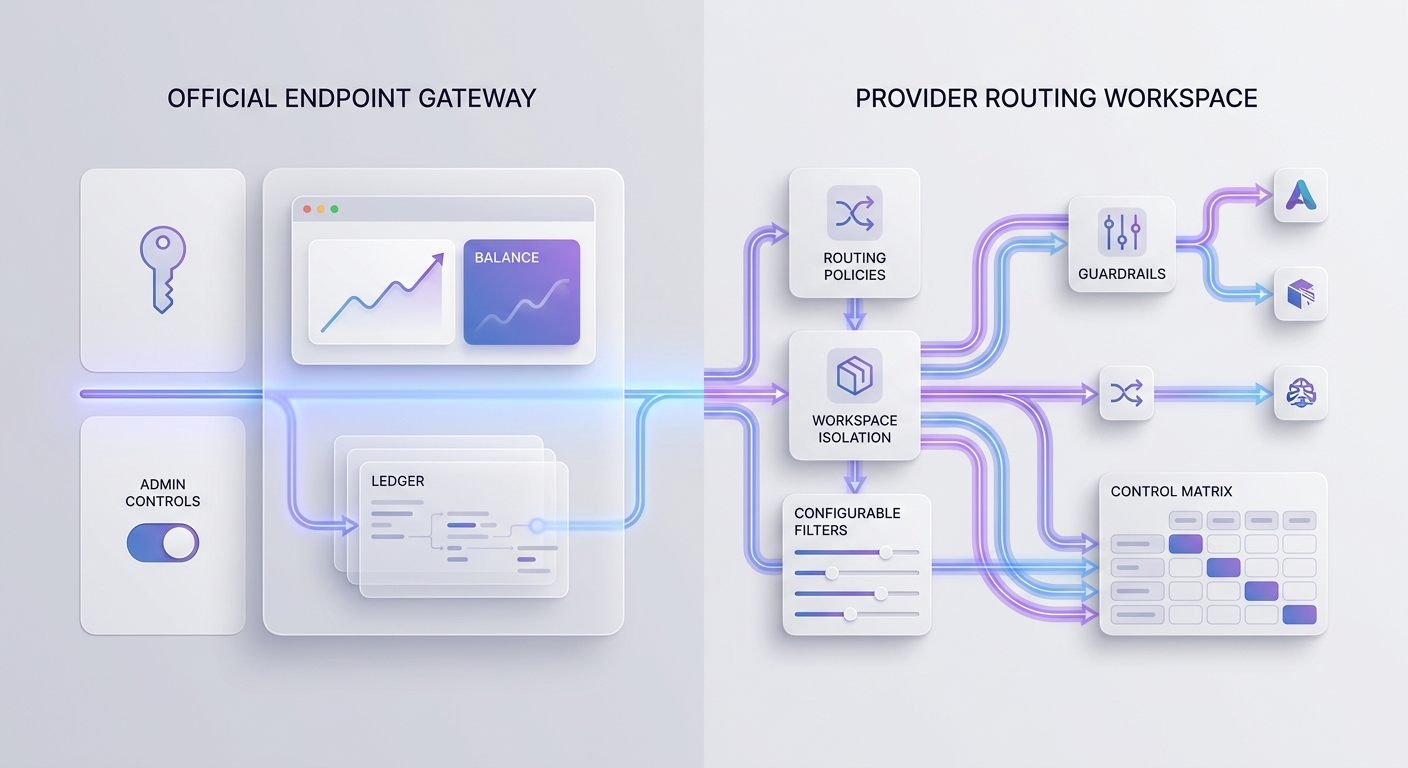
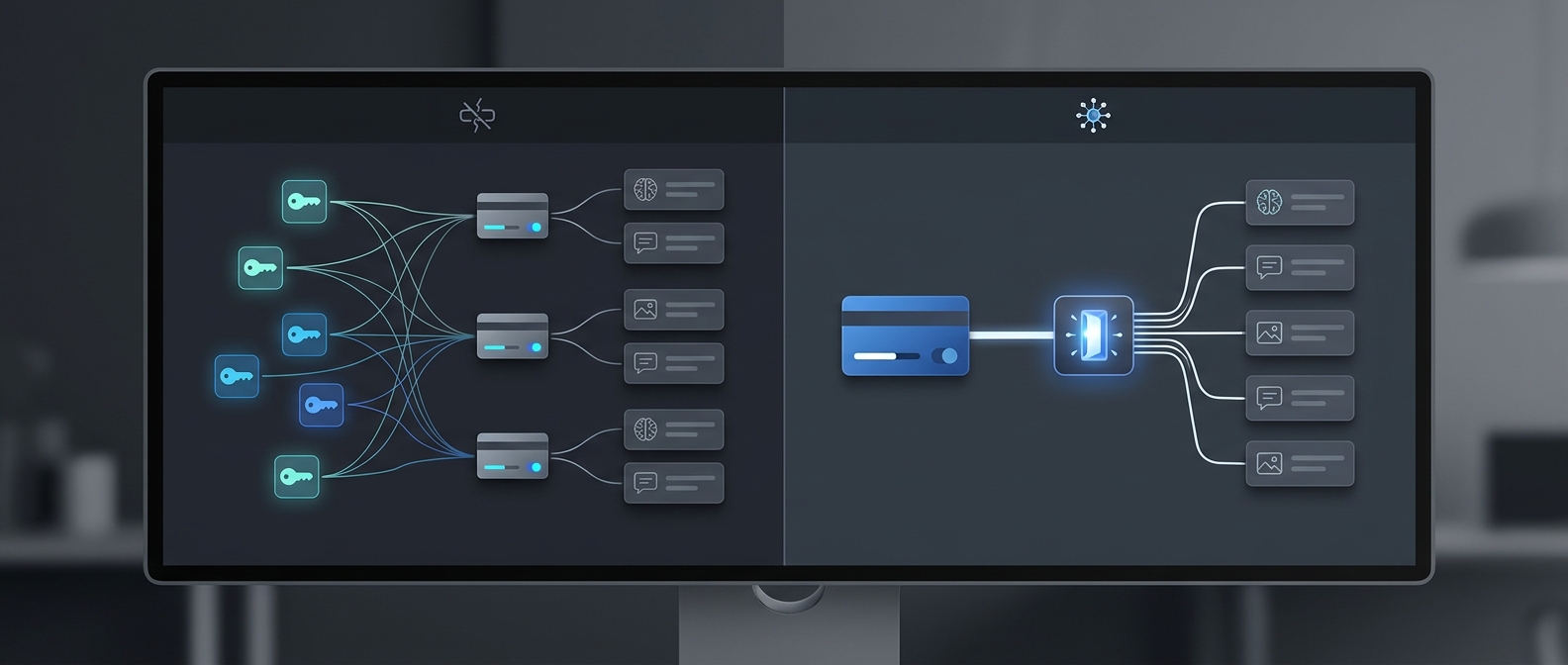
If your team is comparing an OpenAI API alternative, the real question is usually not “which provider has the most models.” An OpenAI API alternative for growth teams is a control-plane choice: do you want direct-provider setup with separate keys, pricing, and usage review, or one gateway that gives your team a single OpenAI-compatible endpoint, one balance, and one dashboard?
Flatkey is built for the second path. Its current homepage and docs position it as an AI API gateway with one key, one balance, and access to 100+ official models and 1,000+ tools. The docs also describe an OpenAI-compatible endpoint at https://router.flatkey.ai/v1, usage tracking, failover, and zero data retention. OpenAI’s own docs still center the standard model API on an API key, SDKs, and the Responses API, with a current model catalog and pricing table that changes over time. That makes “OpenAI API alternative” a buying and operating decision, not just a feature comparison.
What an OpenAI API alternative should solve
Growth teams usually reach this search after one of four problems:
- They have too many provider accounts and spend tools.
- They want a single client integration that can outlive model churn.
- They need clearer cost control across experimentation, production, and agents.
- They want routing and fallback behavior without rebuilding every integration.
An OpenAI API alternative should help with those problems before it tries to impress you with a long model list.
What to compare first
Use this checklist before you switch:
- One API key or many.
- One billing layer or separate invoices.
- OpenAI-compatible SDK support or custom rewrites.
- Routing and failover controls.
- Usage visibility by project, team, or workload.
- Pricing model that matches your traffic pattern.
- Support for the models you already rely on.
- Data handling and retention policy.
If the vendor cannot answer those clearly, the migration cost will show up later. A serious OpenAI API alternative should make the tradeoff visible before you switch.
For a broader architecture view, see AI API gateway architecture. If you are still mapping the migration surface, review OpenAI-compatible API gateway and pricing before you commit.
A practical comparison lens
1. Direct provider setup
Direct OpenAI-style setup works when you want a single vendor relationship and simple request flow. OpenAI’s quickstart still starts with creating an API key, exporting it, installing an SDK, and calling the Responses API. That is fine for a small number of workflows.
The tradeoff is operational sprawl. As soon as your team adds more models, more environments, or more agents, key management and cost review become their own job.
2. Flatkey as an OpenAI API alternative
Flatkey’s current docs and pricing page position it as a unified gateway for teams that want to keep their client code largely intact while consolidating billing and routing. The homepage emphasizes one key, more models, lower cost, and billing only for successful calls. The docs describe a drop-in OpenAI-compatible endpoint, model health dashboards, and usage monitoring.
That matters for growth teams because the decision is often about control plane, not model quality.
3. When an alternative is worth it
An OpenAI API alternative is usually worth evaluating when:
- your usage is spread across multiple teams or agents,
- your budget needs a single review layer,
- you want routing and fallback without custom infrastructure,
- or you are comparing model access across more than one provider.
If you only need one model and one workflow, direct setup may still be enough.
Decision table
| Situation | Better fit |
|---|---|
| One product, one model, low volume | Direct provider setup |
| Multiple teams, agents, or environments | Flatkey-style gateway |
| Need one key and one dashboard | Flatkey-style gateway |
| Need to preserve existing OpenAI-compatible code | Flatkey-style gateway |
| Need the simplest possible vendor relationship | Direct provider setup |
What Flatkey changes in practice
From a growth-team perspective, the value is not just “more models.” It is:
- one OpenAI-compatible endpoint,
- one balance across models and tools,
- usage and cost review in one place,
- and a route layer that can reduce migration churn when the model mix changes.
That is a cleaner operating model than maintaining a separate approval trail for every provider account.
Where OpenAI still fits
OpenAI remains the right choice when your team wants to stay close to the native provider stack, use the current official SDK flow, and standardize on a single vendor. The current OpenAI docs still make that path straightforward.
So this is not “OpenAI versus gateway” in the abstract. It is whether your team values directness more than control plane consolidation.
Bottom line
Choose an OpenAI API alternative when your real pain is routing, billing, and multi-workload operations. Choose direct OpenAI integration when the stack is small enough that those problems do not matter yet. For growth teams, the best OpenAI API alternative is the one that reduces operational drag, not the one with the longest model list.
For growth teams that need one key, one balance, and one reviewable usage layer, Flatkey is the more operationally complete path.