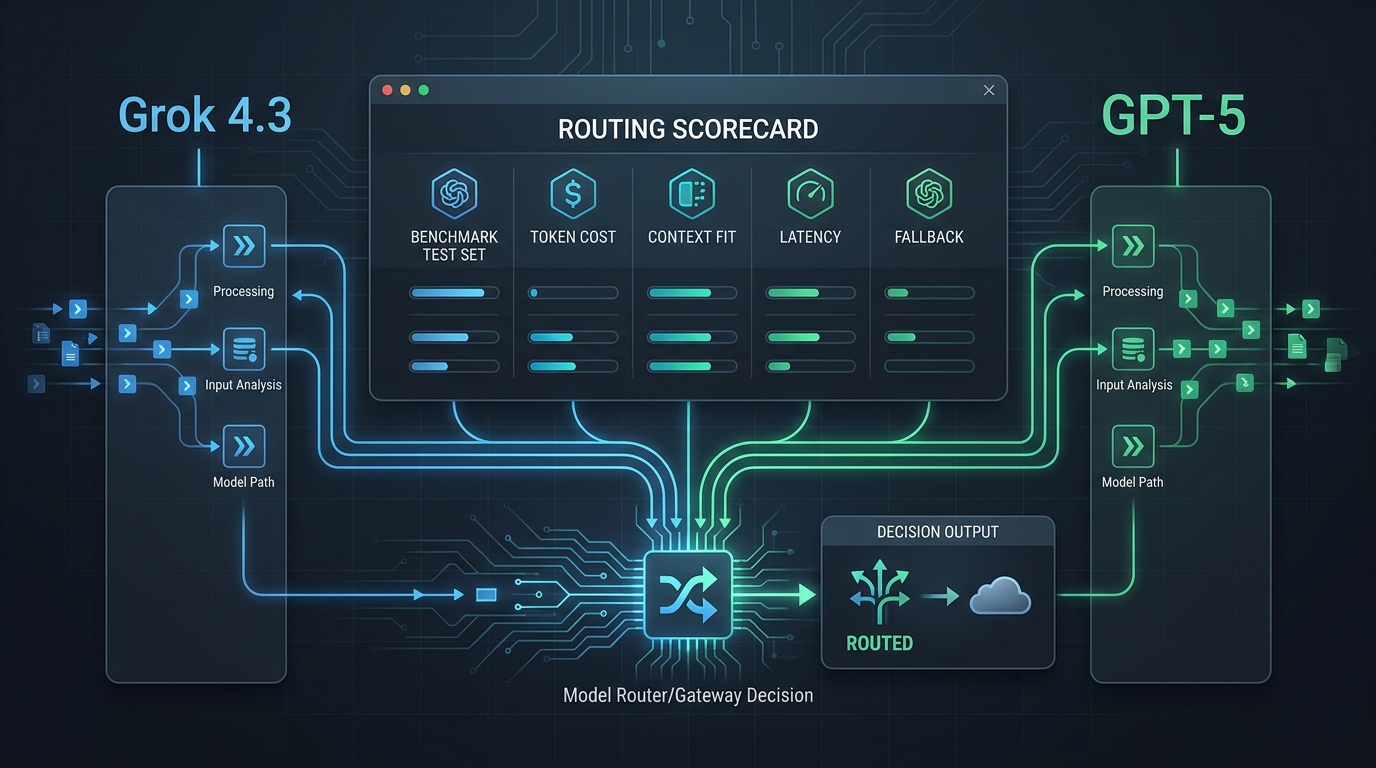
If you are searching for a Vercel AI Gateway alternative, first define which parts of routing, billing, provider access, and operations your team wants to own; then use the shortlist below. Vercel AI Gateway is a real gateway product: its current documentation describes one key for hundreds of models, OpenAI and Anthropic-compatible APIs, provider routing, model fallbacks, usage and billing views, API key budgets, Bring Your Own Key, and zero markup on token rates for the paid tier.
The better question is whether your team wants that gateway inside the Vercel operating model, or whether you need a provider-neutral AI API layer centered on one key, prepaid balance, published model pricing, request logs, and one invoice across providers. That is where Flatkey should be evaluated as a Vercel AI Gateway alternative.
Source note: this comparison was last verified on October 12, 2026 against live Flatkey public pages and official Vercel AI Gateway documentation. Product packaging, model catalogs, prices, provider support, free-tier limits, and gateway controls can change. Use this guide as an evaluation checklist, then verify the current console, contract, route, and docs before moving production traffic.
Vercel AI Gateway Alternatives: 7 Options at a Glance
This shortlist is not a universal ranking. It separates alternatives by deployment model and buyer intent so a Vercel-native application is not compared with a self-hosted proxy as if they were the same product.
| Alternative | Best fit | Operating model | What to verify |
|---|---|---|---|
| Flatkey | One managed key, prepaid balance, multi-provider billing, and OpenAI-compatible migration | Hosted gateway | Exact model row, endpoint family, price, quota, and request logs |
| OpenRouter | Broad hosted model-marketplace access | Hosted router | Provider selection, account policy, route visibility, and billing rules |
| Cloudflare AI Gateway | Cloudflare-centric edge and traffic-control stacks | Cloud platform service | Integration fit outside Cloudflare and the exact observability controls you need |
| Portkey | Gateway policy and observability workflows | Managed with enterprise deployment choices | Deployment requirements, feature scope, data path, and contract cost |
| LiteLLM | Teams that explicitly want an open-source, self-hosted proxy | Self-hosted | Deployment, upgrades, upstream credentials, secrets, logs, and on-call ownership |
| Kong AI Gateway | Organizations already using Kong for API management | Enterprise gateway platform | Platform-team capacity, plugin needs, deployment model, and procurement |
| Direct provider accounts | Native features, direct contracts, or strict provider relationships | No intermediary gateway | Key sprawl, fragmented billing, failover, logs, and per-provider SDK behavior |
Keep Vercel AI Gateway when your application is already Vercel-native, uses AI SDK heavily, and benefits from Vercel's routing, billing, credits, and observability in one workflow. An alternative is most compelling when you need a different ownership boundary—not simply another model list.
Quick answer: choose a Vercel AI Gateway alternative when one-key operations matter more than Vercel-native fit
A Vercel AI Gateway alternative makes sense when your team wants unified AI model access but does not want the gateway decision to be tied mainly to Vercel project workflow, Vercel credits, or Vercel dashboard ownership. If your app is already built around Vercel, AI SDK, and Vercel observability, Vercel AI Gateway may be the most direct option. If your team wants a hosted AI gateway with Flatkey-managed model access, prepaid balance, usage analytics, request logs, cost controls, and one invoice across providers, Flatkey belongs on the shortlist.
| Buyer situation | What to compare first | Likely direction |
|---|---|---|
| Your product is already Vercel-native and uses AI SDK heavily. | AI SDK workflow, Vercel AI Gateway API keys, dashboard usage, provider options, free and paid credit rules. | Vercel AI Gateway may be the simpler default. |
| You need one key and one billing workflow across GPT, Claude, Gemini, DeepSeek, image, audio, and video models. | Flatkey base URL, model catalog, prepaid balance, request logs, invoice path, and quota workflow. | Flatkey should be evaluated as a Vercel AI Gateway alternative. |
| You want provider routing controls inside each request. | Vercel provider options, model fallbacks, provider ordering, cost or latency sorting, BYOK behavior, and metadata. | Vercel AI Gateway may fit if request-level routing control is the main job. |
| Finance wants prepaid balance, visible request cost, and one invoice across providers before a wider rollout. | Flatkey pricing page, current model row, request log fields, balance owner, cost controls, and billing owner. | Flatkey is the lower-friction evaluation path. |
What Vercel AI Gateway is built for
Vercel's AI Gateway docs describe a unified API that works with AI SDK v5 and v6, OpenAI Chat Completions, OpenAI Responses, Anthropic Messages, and framework integrations. The overview page says AI Gateway provides one key for hundreds of models, a unified API for switching providers with minimal code changes, automatic retries to other providers if one fails, embeddings support, spend monitoring, and no markup on tokens, including Bring Your Own Key.
The provider controls are also substantial. Vercel's Provider Options documentation says AI Gateway can route model requests across multiple AI providers, and that Vercel dynamically chooses default providers based on recent uptime and latency. It also lets teams use order, only, and sort under providerOptions.gateway to control provider order, provider allowlists for a request, and ranking by cost, time to first token, or throughput. The same page covers automatic caching, provider timeouts, provider-specific options, and request-scoped BYOK.
Vercel's model fallback documentation describes model-level failover: a request can try a primary model first, then fallback models in order when the primary model fails or is unavailable. Its metadata can show which model and provider attempts failed or succeeded. That is useful for developers who need proof of the actual route that served a response.
Vercel also has meaningful spend controls. The Usage & Billing docs say AI Gateway tracks credit balance, total spend, and a record of every generation it serves. The dashboard shows current AI Gateway Credits balance, recent spend, and individual requests with cost, latency, and token usage. REST API endpoints can return team credit balance, lifetime spend, and generation-level cost, latency, finish reason, and token usage.
API key budgets add another control surface. Vercel's budget docs say a budget caps how much an AI Gateway API key can spend, checks the budget before each request, and rejects further requests once the limit is exceeded until reset or raised. The same docs include an important nuance: budgets are soft caps, so the request that crosses the limit still completes, and changes may take time to apply.
That means a fair Vercel AI Gateway alternative comparison should not imply Vercel lacks routing, fallbacks, usage views, budget controls, or BYOK. It should ask whether those controls fit your team's ownership model.
What Flatkey is built for
Flatkey is for teams that have outgrown one-provider, one-key AI setups. Once a product starts testing GPT, Claude, Gemini, DeepSeek, image models, or video routes in the same workflow, the problem is no longer just making an API call. The team also needs to know which model was used, who owns the key, how usage is billed, what failed, and where to look when finance or engineering asks for proof.
Flatkey gives those teams one gateway layer for model access, routing, billing, usage analytics, and operational controls. For OpenAI-compatible clients, the migration path should feel familiar: use a Flatkey key, point the client at the base URL confirmed in your account, and choose the model route you want to test. Before production, still verify the exact route in the console, especially if you are changing endpoint families or moving traffic away from a direct provider integration.
Billing is handled through prepaid usage rather than fixed monthly bundles. Teams can top up one balance, use it across supported models, and then review spend by model, token type, and request log. Larger teams can also use enterprise invoicing and procurement support, which gives finance a cleaner starting point than reconciling separate provider bills.
The model directory adds another layer of visibility. It gives teams a public place to check model names, providers, endpoint types, availability, and pricing before they route traffic. A June 30, 2026 directory snapshot listed 633 models across 23 providers, including Anthropic Messages, Gemini, image generation, OpenAI Chat Completions, OpenAI Responses, and OpenAI video routes.
That catalog is useful, but it is still a snapshot. Models change. Prices change. Account access can differ. Before launch, confirm the current model row, endpoint type, key access, and route behavior in your own Flatkey account instead of relying on an old note or a copied model name.
That makes Flatkey a practical Vercel AI Gateway alternative when your evaluation centers on account ownership, billing evidence, model pricing visibility, logs, quotas, and a simple OpenAI-compatible migration path. The pilot is straightforward: get a key, confirm the current base URL in the Flatkey console, choose a model alias, send one measured request, check request logs and cost, then decide whether the workflow should expand.
Vercel AI Gateway alternative comparison matrix
The strongest Vercel AI Gateway alternative decision comes from comparing operating evidence, not product names. Ask both products to show the same workflow from request to bill.
| Decision area | Vercel AI Gateway evidence to request | Flatkey evidence to request | Why it matters |
|---|---|---|---|
| Operating model | Vercel team ownership, AI Gateway API key owner, project linkage, AI SDK fit, and dashboard access. | Flatkey workspace, API key owner, base URL, route owner, billing owner, and support path. | The first decision is where AI access should live operationally. |
| Provider access | Available model list, free-tier subset, paid credits, BYOK rules, provider availability, and system credential fallback behavior. | Account-enabled model aliases, provider groups, current model directory row, route status, and visible usage rows. | Access ownership drives procurement scope, support path, key rotation, and incident response. |
| Routing and fallback | providerOptions.gateway, order, only, sort, model fallback list, provider metadata, and timeout behavior. |
Endpoint family, selected model alias, route proof, provider group, error behavior, and fallback expectations. | Routing claims need request-level proof, especially when a workflow is latency or reliability sensitive. |
| Billing model | AI Gateway Credits balance, provider list price basis, free-to-paid transition, BYOK paid-tier requirement, add-on charges, and payment fees. | Prepaid top-up, one balance, model pricing row, request-log cost, one invoice across providers, and billing owner. | Finance needs to know who pays, when balance is consumed, and where one request appears. |
| Budgets and limits | API key budget amount, refresh period, soft-cap behavior, budget lag, key without budget behavior, and quota API evidence. | Workspace balance, quota controls, usage analytics, cost controls, key owner, and owner escalation path. | A budget is useful only if teams know whether it blocks, alerts, lags, or needs manual action. |
| Logs and observability | Generation ID, cost, latency, token usage, finish reason, provider metadata, custom reporting fields, and dashboard permissions. | Request logs, model and token fields, cost visibility, route status, usage analytics, and export or review workflow. | Debugging and finance review both depend on the exact fields visible after a request. |
| Migration effort | AI SDK usage, OpenAI or Anthropic compatibility route, key management, provider options diff, environment variables, and rollback. | OpenAI-compatible base URL change, Flatkey API key, model alias mapping, smoke test, usage review, and rollback diff. | A gateway that looks simple in code can still require ownership decisions outside the repo. |
| Enterprise review | Vercel team controls, security settings, provider allowlist cost, ZDR settings, BYOK policy, and Vercel procurement status. | Enterprise usage, invoicing, procurement support, custom routing discounts, team-level controls, and current trust evidence. | The right choice depends on whether the gateway is part of the Vercel platform standard or a separate AI access layer. |
When Vercel AI Gateway is the better fit
Vercel AI Gateway is likely the better fit when your application, team permissions, deploy workflow, observability habits, and AI SDK usage already live in Vercel. In that case, a gateway inside the same dashboard can reduce operational friction. Developers can keep request-level provider options close to the code, finance can review AI Gateway Credits, and platform owners can manage API key budgets within Vercel's team model.
Vercel is also worth prioritizing when request-level provider control is central to the product. The provider options API can specify provider ordering, provider filtering, cost or latency sorting, model fallbacks, automatic caching, provider-specific options, and request-scoped BYOK. If your team wants that kind of per-request routing expression inside an AI SDK workflow, Vercel AI Gateway has a strong case.
Finally, Vercel may fit when you want a free-tier entry point for experiments and are comfortable with its limits. Vercel's pricing docs say every team account gets free and paid tiers for AI Gateway Credits, the free tier includes only a subset of models, and purchasing credits moves the team to the paid tier. That can be useful for Vercel-native experimentation, but production teams should still verify limits, model availability, add-on charges, and owner responsibilities.
When Flatkey should be on the shortlist
Flatkey is worth evaluating as a Vercel AI Gateway alternative when the gateway has to serve teams beyond a Vercel-centered app workflow. AI product teams, automation builders, platform engineers, finance operators, and procurement reviewers usually need the same evidence: who owns the key, which model was called, what the request cost, which log proves it, and who approves more usage.
Flatkey is also a strong candidate when prepaid balance and one invoice across providers matter more than free-tier exploration. Its current pricing page emphasizes prepaid top-ups, usage analytics, cost controls, and one invoice across providers. That is a different buying motion from starting inside Vercel AI Gateway Credits, and it may be easier for teams that want one AI model access layer across multiple apps, scripts, and internal tools.
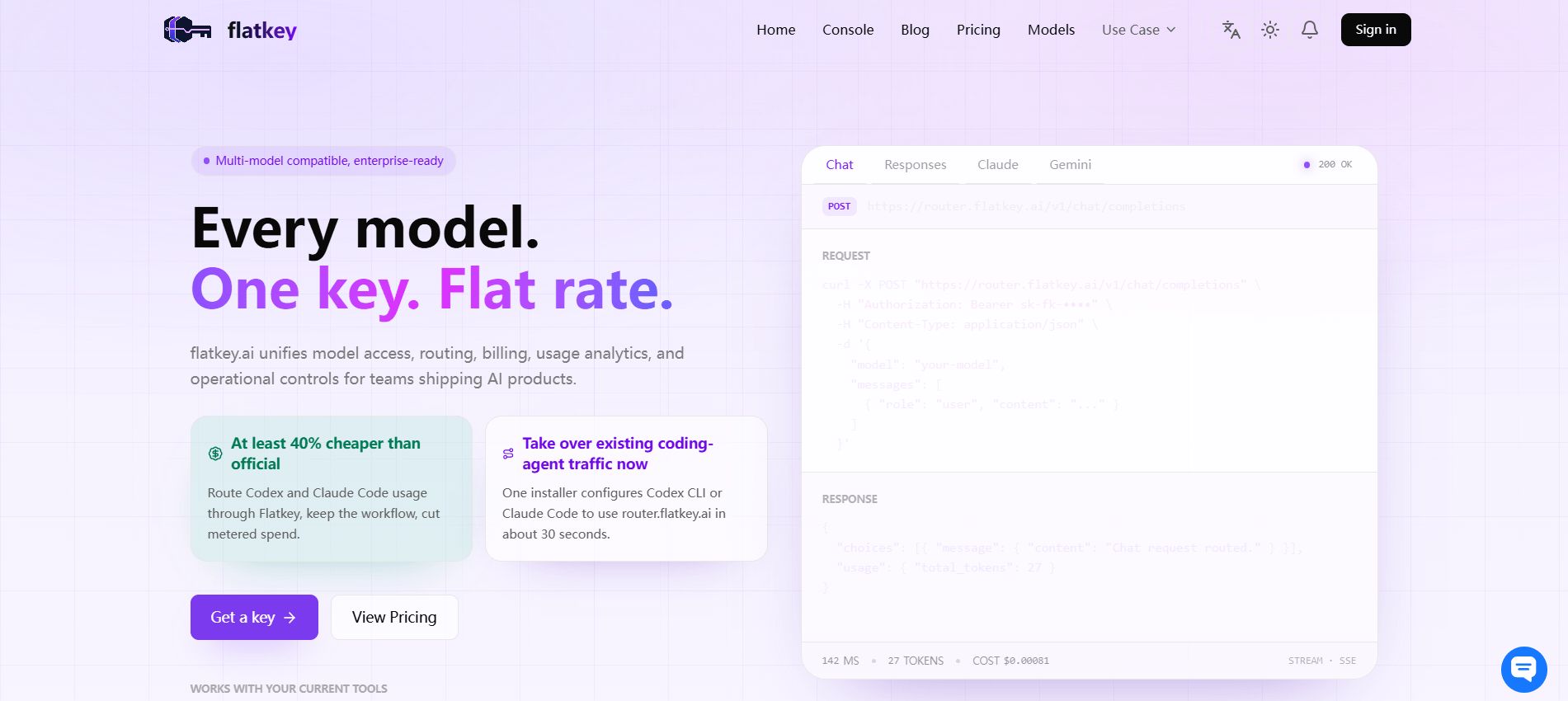
The OpenAI-compatible migration path is another reason to test Flatkey. Instead of redesigning application code, teams can confirm the Flatkey console base URL, set a Flatkey API key, map the model alias, run a smoke test, and inspect the request log. The useful claim is not that a managed gateway removes all review work. It is that the review work starts with the AI workflow, request cost, and owner map rather than a broader platform decision.
One-key evaluation checklist for the pilot
Use this checklist before choosing any Vercel AI Gateway alternative. It keeps the review grounded in the evidence developers, platform owners, finance, and procurement need.
- Name one workflow. Choose a support assistant, coding agent, batch job, image/video workflow, or internal automation. Do not evaluate every model route at once.
- Freeze the current route. Record current provider, key owner, model, endpoint, request shape, retry behavior, average usage, and rollback owner.
- Map account ownership. For Vercel, identify team, API key owner, credit owner, BYOK owner, provider options owner, and dashboard viewers. For Flatkey, identify workspace, API key owner, model alias, provider group, balance owner, and request-log reviewers.
- Run one minimal request. Capture status, response shape, model used, usage fields, error format, and whether the request appears in the expected dashboard or log.
- Run a budget test. Confirm limit scope, reset window, enforcement behavior, soft-cap or lag behavior, alert path, and who acts when a limit is reached.
- Run a billing test. Confirm cost unit, price source, request cost, credit or balance impact, invoice path, and finance review owner.
- Run a failure test. Simulate provider error, rate limit, invalid model, auth failure, exhausted balance, and fallback. Record which model or provider served the response.
- Write the go/no-go note. Include the exact code diff, environment variable diff, route proof, log proof, billing proof, owner map, and rollback path.
How to compare total implementation effort
Implementation effort is where a Vercel AI Gateway alternative can win or lose. Vercel's path can be efficient for teams already using Vercel and AI SDK, but a fair estimate should include team access, AI Gateway credits, API key budgets, provider options, BYOK setup, add-on settings, dashboard permissions, and any reporting endpoints required by finance or operations.
Flatkey's path should be estimated differently. The main work is confirming account access, changing the base URL for an OpenAI-compatible client, choosing a model alias, running endpoint-specific smoke tests, checking usage and request logs, setting cost or quota expectations, and documenting ownership. That is still work, but it is not the same as adopting a gateway inside a deployment platform.
If your team is comparing multiple gateway options at once, use the same evidence standard. The OpenRouter alternatives and LiteLLM alternatives guides use a similar pattern: account ownership, billing, routing proof, logs, quotas, migration effort, and operational evidence. The enterprise AI API gateway checklist is useful when security or procurement needs a broader review packet.
FAQ
What is the best Vercel AI Gateway alternative?
The best Vercel AI Gateway alternative depends on what you are replacing. If your team wants a Vercel-native gateway for AI SDK workflows, Vercel AI Gateway may remain the better fit. If your team wants managed multi-model access with one OpenAI-compatible base URL, prepaid balance, request logs, published model pricing, usage analytics, cost controls, and one invoice across providers, evaluate Flatkey.
Is Flatkey a direct replacement for Vercel AI Gateway?
No. Flatkey should be treated as an alternative operating model, not a clone of Vercel AI Gateway. Vercel AI Gateway is strongest when AI access sits naturally inside Vercel teams, credits, API key budgets, AI SDK usage, and provider options. Flatkey is built for managed AI model access, prepaid balance, billing visibility, request logs, cost controls, and OpenAI-compatible migration across apps and tools.
Does Vercel AI Gateway support one key across models?
Yes. Vercel's overview says AI Gateway provides one key for hundreds of models, a unified API, automatic retries, spend monitoring, and no markup on tokens. The reason to evaluate a Vercel AI Gateway alternative is not that Vercel lacks one-key access. It is that your team may want a different account, billing, log, or procurement model.
How do Vercel API key budgets compare with Flatkey prepaid balance?
Vercel API key budgets cap spend for an AI Gateway key and can reject later requests once the budget is exceeded, with documented soft-cap and timing nuances. Flatkey prepaid balance is a managed usage and billing model: balance is consumed when API requests use models, and teams can review spend by model, token type, and request logs. Compare both against the same workflow before choosing a Vercel AI Gateway alternative.
Can I use existing OpenAI-compatible code with either option?
Both options support OpenAI-compatible workflows, but you should verify the exact endpoint family, model alias, streaming behavior, tool behavior, error format, and logging before production cutover. For Flatkey, confirm the current console base URL and selected model alias in your account before shipping.
How should finance evaluate the choice?
Finance should ask for a concrete scenario: expected monthly requests, model mix, token types, image or video calls, retries, fallbacks, log volume, budget or balance behavior, invoice path, credit or balance owner, and approval owner. A feature list is not enough. The team should be able to show where one request appears, how it is priced, and what happens when the limit is reached.
Final decision rule
Choose Vercel AI Gateway if your team wants AI model access, provider routing, model fallbacks, spend monitoring, and API key budgets inside the Vercel platform workflow. Choose Flatkey if your priority is a managed Vercel AI Gateway alternative with one key, an OpenAI-compatible base URL, prepaid balance, published model pricing, request logs, usage analytics, cost controls, and one invoice across providers.
To test Flatkey in that operating model, review the current pricing and model access, then get a key and run one measured workflow before moving broader traffic.