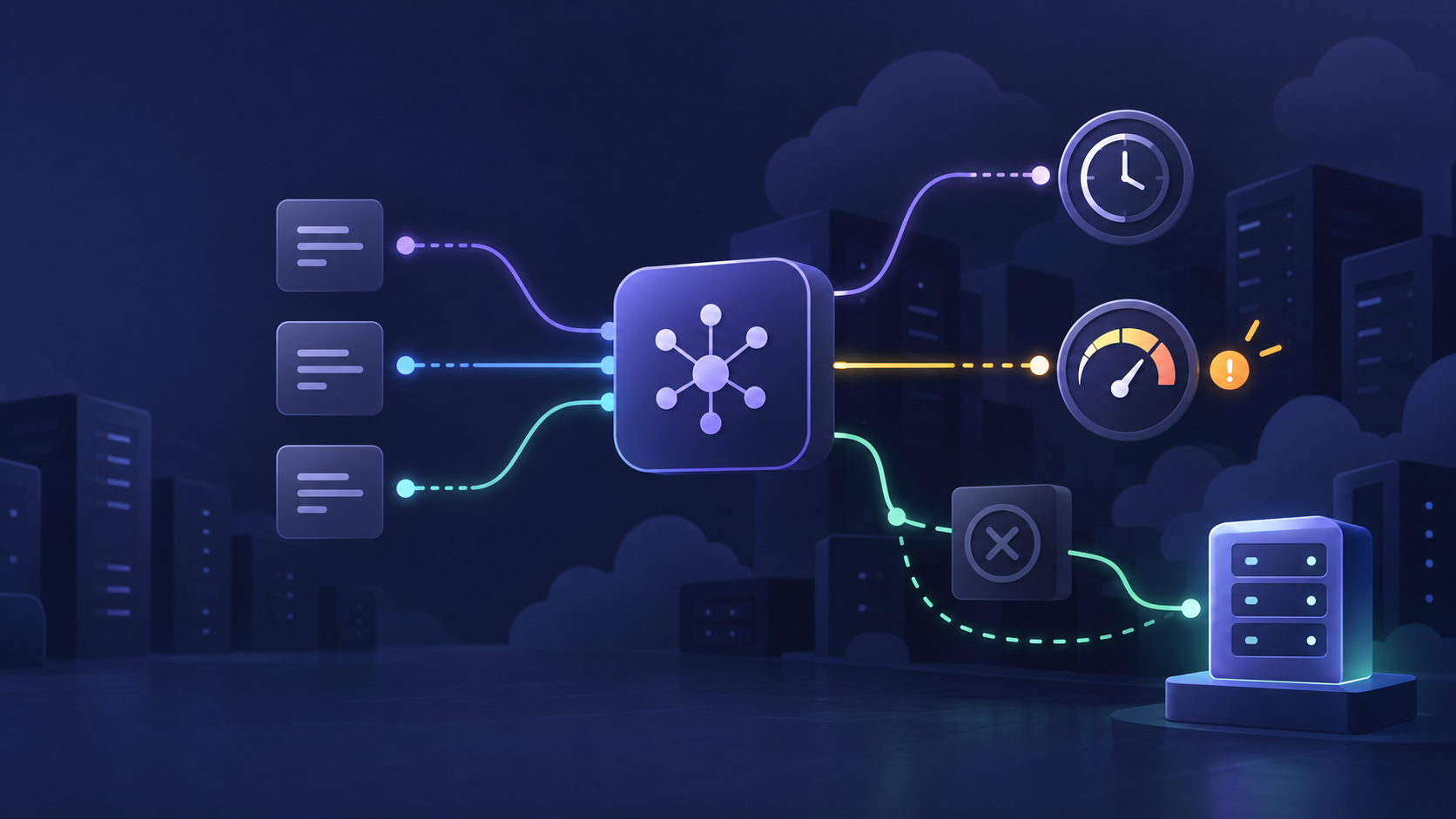
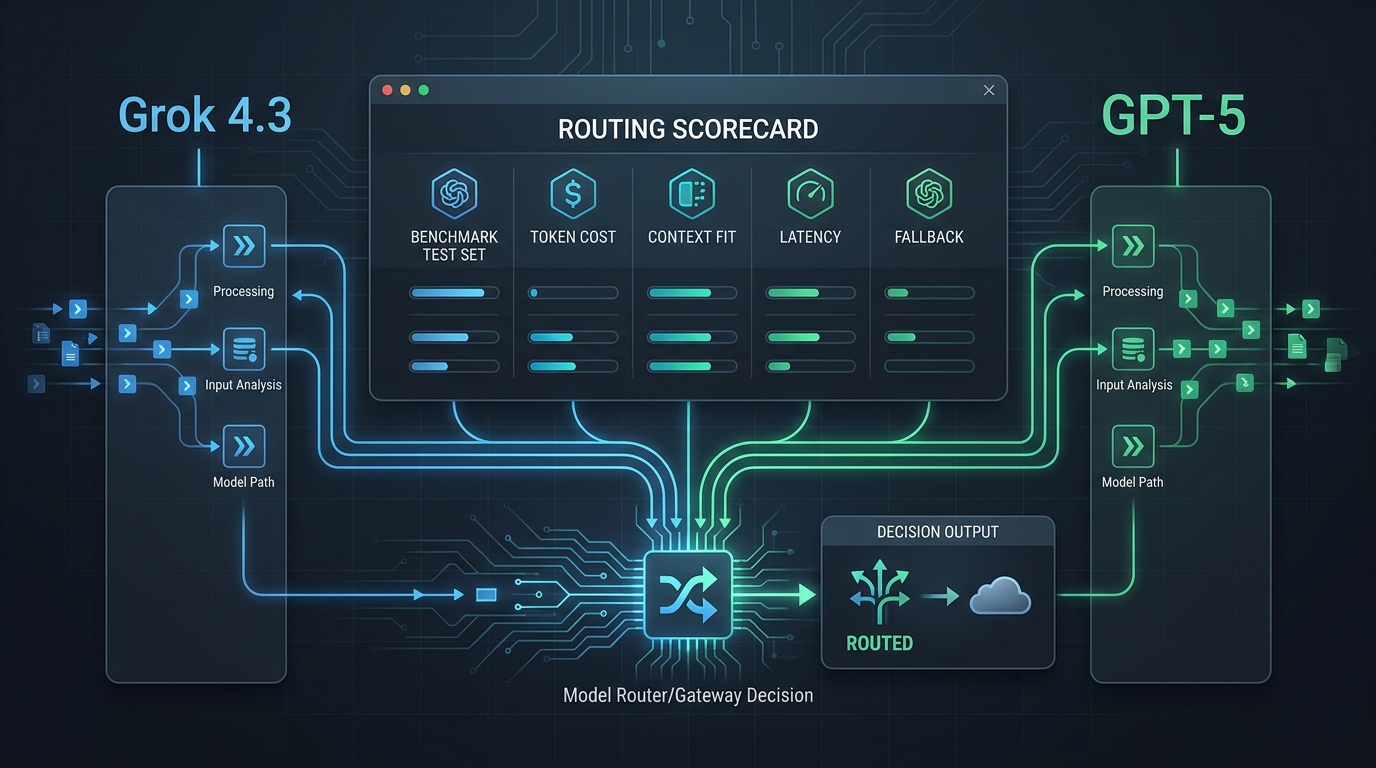
AI API gateway vs API management is not a generic gateway feature checklist. Traditional API management is built to expose, secure, publish, version, and observe application APIs. AI API gateway work starts when the API is model traffic: every request can carry a model choice, token cost, provider account, streaming behavior, tool-call shape, fallback rule, and finance record.
This comparison was checked on July 1, 2026 Asia/Shanghai against Flatkey's public home page, pricing page, model directory, live pricing API snapshot, Azure API Management docs, Amazon API Gateway docs, Google Apigee docs, and Cloudflare AI Gateway docs. Treat product wording, model rows, endpoint families, and pricing behavior as dated evidence. Verify the current Flatkey pricing row, provider console, and gateway behavior before routing production traffic.
Quick Answer: AI API Gateway vs API Management
The short version of AI API gateway vs API management is this: API management governs APIs as reusable business and platform assets. An AI API gateway governs model traffic as a cost, routing, quota, logging, and provider-access workflow.
| Decision Area | API Management | AI API Gateway | What Changes For Model Traffic |
|---|---|---|---|
| API surface | REST, HTTP, WebSocket, and internal or partner APIs exposed as products or operations. | Model endpoints, provider routes, endpoint families, and OpenAI-compatible clients. | The route has to know which model/provider is serving a request. |
| Cost unit | Requests, subscriptions, products, quotas, tiers, or backend cost allocation. | Tokens, images, seconds, endpoint family, model row, retry, fallback, and provider price basis. | Finance needs model-level and request-level cost proof. |
| Routing | Forward requests to backend services and apply policies, transforms, throttling, and caching. | Route by model, provider, endpoint family, availability, fallback rule, workflow, and cost guardrail. | A route can be a buying decision, not only a network decision. |
| Logs | Status, latency, caller, operation, policy, gateway, backend, and trace fields. | Model, key, route, provider, status, token type, request cost, usage, and fallback attempt. | Debugging and invoice review need the same evidence trail. |
| Migration | Publish, proxy, version, transform, and document an existing API contract. | Change a base URL, map model aliases, test response shape, verify logs, and keep rollback ready. | A small SDK diff still needs operational proof. |
API management does not become obsolete because AI model traffic exists. It remains useful for API products, developer portals, policy enforcement, network architecture, and enterprise governance. The question is where model-specific ownership should live.
What API Management Already Covers Well
Traditional API management platforms are strong at the stable API lifecycle. Microsoft's Azure API Management key concepts page describes API Management as a hybrid, multicloud platform for APIs across environments that supports the complete API lifecycle. It also describes a gateway, management plane, developer portal, products, subscriptions, policies, quotas, throttling, caching, and observability.
Amazon's API Gateway overview says API Gateway is used for creating, publishing, maintaining, monitoring, and securing REST, HTTP, and WebSocket APIs at scale. Google Apigee's introductory documentation frames Apigee around API proxies, API products, policies, security, analytics, developer workflows, and monetization.
That is the right center of gravity when your main problem is API lifecycle governance:
- Publishing: package backend APIs as products and make them discoverable.
- Access: issue subscription keys, JWT rules, certificates, groups, and developer portal access.
- Policy: apply rate limits, quotas, transforms, caching, request validation, and header rules.
- Operations: monitor requests, errors, latency, backend health, and policy behavior.
- Governance: manage API versions, environments, ownership, documentation, and consumer onboarding.
For ordinary API traffic, those controls often answer the most important questions: who can call this API, what contract is exposed, which policy applies, how much traffic is allowed, and where operators find failures.
What Changes When The Traffic Is Model Traffic
The AI API gateway vs API management difference appears when the API call is also a model purchase, model-routing decision, and usage record. A normal API response may be priced as a request or service tier. A model response may be priced by input tokens, output tokens, image count, audio duration, video seconds, cached tokens, reasoning tokens, retry attempts, or provider-specific units.
That changes the operating surface in seven ways:
- Model identity matters: the same route shape can call GPT, Claude, Gemini, DeepSeek, image, audio, or video models with different behavior and cost units.
- Provider ownership matters: teams need to know whether the request used direct provider credentials, gateway credentials, or a managed provider route.
- Token and modality cost matters: finance needs cost by model, token type, endpoint family, workflow, team, and environment.
- Fallback matters: a route may try another provider or model, but the log must prove what happened and when.
- Streaming matters: partial output changes retry and fallback behavior because the user may already have seen tokens.
- Tool and response shape matters: applications may depend on tool calls, structured output, embeddings, images, or provider-specific fields.
- Quota ownership matters: gateway limits, provider rate limits, prepaid balance, and account-level spend controls can all affect one workflow.
Cloudflare's AI Gateway documentation shows the shift clearly: the page highlights analytics, logging, caching, rate limiting, retries, model fallback, supported providers, tokens, and cost visibility. Those are model-traffic concerns, not only generic API lifecycle concerns.
Decision Matrix: AI API Gateway vs API Management
Use this AI API gateway vs API management matrix before adding another layer to production AI traffic.
| Question | API Management Fit | AI API Gateway Fit | Evidence To Request |
|---|---|---|---|
| Are we exposing a stable API to internal, partner, or public developers? | Strong fit. API products, subscriptions, docs, policies, and developer onboarding are core APIM workflows. | Useful only if the API is a model access route or AI workflow. | API catalog, product owner, consumer groups, auth policy, and version plan. |
| Are we routing between model providers? | Possible with custom policy and backend logic, but provider/model semantics are usually not native. | Strong fit. The gateway should track model aliases, endpoint families, provider routes, fallback, and status. | Route proof, model list, provider ownership, fallback log, and error behavior. |
| Does finance need request-level model cost? | APIM can show request usage, but token and provider-cost details may need custom integration. | Strong fit when logs include model usage, token types, request cost, balance impact, and invoice path. | One request traced from app key to model usage to cost record. |
| Do we need policy enforcement for every API, not only AI? | Strong fit. Centralized API policy and lifecycle governance are APIM strengths. | Limited fit. AI gateways should not become the only enterprise API management layer. | Policy scope, API ownership, non-AI traffic inventory, and platform boundaries. |
| Can a model route be changed without code churn? | APIM can abstract backends, but model IDs, SDK response shapes, and endpoint families still need AI-specific tests. | Strong fit when clients can keep one base URL while model selection moves to route or config. | Base URL diff, model alias map, smoke tests, logs, and rollback instructions. |
| Who owns quotas and spend caps? | APIM can enforce request quotas and rate limits for API products and operations. | AI gateway should add model-aware quota and spend review across providers and modalities. | Gateway quota, provider limit, prepaid balance, alert path, and owner escalation. |
Account Ownership Changes
API management usually starts from API provider and API consumer ownership. Who owns the backend service? Who publishes the API? Which developer, app, subscription, or product can call it?
AI model traffic adds provider-account ownership. A team may call OpenAI, Anthropic, Google, image providers, video providers, and regional model providers in the same product. Each provider can have its own organization, workspace, project, API keys, billing path, rate limits, support escalation, model access approval, and logs.
An AI API gateway should reduce day-to-day account sprawl without pretending provider responsibility disappears. The durable operating question is not "Do we have a gateway?" It is "Which system is the source of record for provider ownership, app key ownership, request usage, cost review, and rollback?"
Billing Changes
Billing is where AI API gateway vs API management becomes visible outside engineering. API management billing often centers on subscriptions, products, tiers, request counts, backend cost allocation, or monetization. Model traffic introduces unit economics that finance cannot infer from status codes alone.
For an AI workflow, finance may ask:
- Which model served the request?
- Which provider or provider group was used?
- How many input, output, cached, image, audio, or video units were consumed?
- Did retries or fallback create extra cost?
- Which team, app, environment, customer, or key owns the spend?
- Which invoice, prepaid balance, credit pool, or direct provider bill will include it?
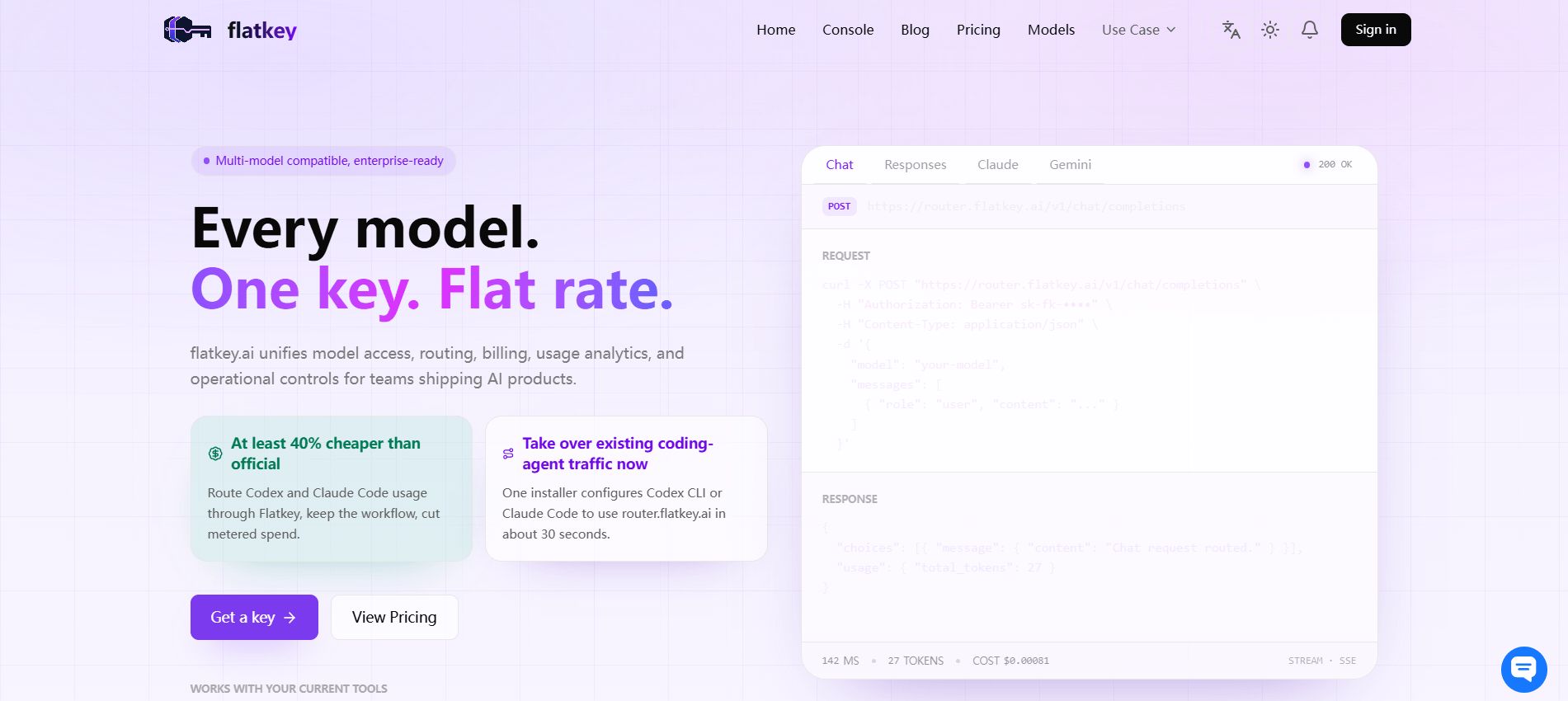
Flatkey’s pricing page shows how the billing model works: teams can top up a prepaid balance, use that balance across supported models, and review usage by model, token type, and request log. For larger teams, Flatkey also supports enterprise invoicing and procurement workflows, so finance does not have to reconcile a separate bill for every provider. When this article was checked, Flatkey’s live pricing data included 616 model rows across endpoint families such as OpenAI, OpenAI Responses, Anthropic, Gemini, and image generation. That number will change as models and routes change, so treat it as a current catalog snapshot rather than a permanent promise. Before production rollout, check the pricing page for the exact model, endpoint, availability, and price you plan to use.
Routing Changes
Traditional API routing answers where a request should go and which policy should run. Model routing also answers what kind of output the product will produce, what it will cost, and what fallback behavior is allowed.
For model traffic, a routing record should include at least:
- Endpoint family: chat completions, responses, messages, images, embeddings, or another model endpoint.
- Model alias: the application-facing model name and the actual provider/model row behind it.
- Provider route: whether traffic uses managed gateway access or a direct provider account.
- Fallback rule: which model or provider can be tried next and under what failure conditions.
- Compatibility test: streaming, tool calls, JSON shape, image output, timeout, and error format.
- Rollback path: the old base URL, model ID, API key owner, and config owner.
This is the reason a simple base URL change can still need a serious validation plan. The code diff may be small; the operating decision is not.
Logging Changes
API management logs help operators inspect request status, latency, caller identity, backend behavior, and policy failures. AI API gateway logs need to connect that same operational trail to model usage and cost.
A useful AI traffic log should help answer both incident and finance questions:
| Log Field | Why It Matters For Model Traffic |
|---|---|
| Gateway key or app label | Connects spend and incidents to an owner without exposing raw secrets. |
| Model and provider route | Shows what actually served the response, not only what the app requested. |
| Endpoint family | Separates chat, responses, messages, images, embeddings, and other cost shapes. |
| Token or modality usage | Explains the cost basis and helps catch unusual prompts or outputs. |
| Fallback attempt | Proves whether a retry or secondary route changed provider, model, latency, or cost. |
| Status and error class | Separates auth, quota, model unavailable, provider error, and client timeout cases. |
If those fields are split across provider consoles, app logs, billing exports, and gateway logs, the team should decide which record wins during an incident or invoice review.
Quota And Limit Changes
API management quotas usually control request volume by subscription, product, API, operation, caller, or time window. AI traffic needs those controls, but it also needs model-aware limits.
Common model-traffic limits include:
- Maximum spend per key, team, customer, or environment.
- Maximum requests per minute and tokens per minute.
- Separate limits for expensive model families, image/video routes, or batch jobs.
- Provider account limits that can still apply behind a gateway.
- Prepaid balance, invoice approval, or procurement thresholds.
- Fallback guardrails that stop a cheap route from silently becoming an expensive route.
The control plane should make those limits reviewable before launch. A limit that nobody can tie to a model, key, owner, and invoice path is hard to trust.
Migration Effort Changes
API management migrations often involve importing specs, building proxies, applying policies, publishing docs, and onboarding consumers. AI gateway migrations are often described as "change the base URL." That can be true for an OpenAI-compatible client, but it is not a complete migration plan.
Use this AI API gateway vs API management migration checklist for model routes:
- Record the current provider, model ID, endpoint family, base URL, key owner, timeout, retry, and fallback behavior.
- Confirm the target gateway base URL and model alias in the current account, not from old notes.
- Run a small prompt set that covers normal output, long output, streaming, tool calls, structured output, and expected errors.
- Compare response shape, usage fields, status codes, and timeout behavior.
- Verify request logs show the model, route, key label, status, token or modality usage, and cost fields finance needs.
- Set a conservative quota or spend cap for the first production slice.
- Keep the old provider key, base URL, and model ID ready for rollback until the route is stable.
- Document which provider-level controls still require direct provider account ownership.
Pair this workflow with the enterprise AI API gateway checklist when security, procurement, or finance needs a stronger evidence packet.
When API Management Is Still The Better Layer
Choose API management as the primary layer when the work is broader than model access:
- You need a developer portal, API products, subscriptions, and consumer onboarding.
- You are governing many non-AI APIs across teams, environments, partners, or regions.
- You need enterprise API policy controls such as JWT validation, certificates, transforms, throttling, caching, and versioning at a general API platform level.
- Your main evidence is API lifecycle governance, not model cost, model routing, or provider-account sprawl.
- Your organization already has APIM as the standard perimeter for public, partner, and internal APIs.
Some teams should run both layers: API management for enterprise API lifecycle governance, and an AI API gateway behind or beside it for model-specific routing and cost evidence.
When An AI API Gateway Is The Better Layer
Choose an AI API gateway as the primary layer when the pain is model-specific:
- Teams are juggling several provider accounts, keys, invoices, and model catalogs.
- Developers want one OpenAI-compatible base URL while evaluating multiple model providers.
- Finance needs usage by model, token type, request log, and invoice path.
- Platform engineers need centralized routing, fallback, quota, and model-access evidence.
- Procurement wants a smaller access and billing surface for AI model usage.
- Application owners need a rollback-ready migration path across models and endpoint families.
Flatkey's public homepage checked for this article positions Flatkey as one API gateway for production AI teams and says it unifies model access, routing, billing, usage analytics, and operational controls. That is why Flatkey belongs in this AI API gateway vs API management discussion: it is not trying to be a general-purpose enterprise API catalog. It is focused on model access, gateway keys, routing, usage review, billing, and operational controls for AI traffic.
Flatkey Validation Workflow
Use a measured pilot before moving production model traffic to any gateway.
- Choose one AI workflow, such as support chat, coding agent calls, batch summarization, image generation, or an internal automation.
- Open Flatkey pricing and confirm the current model row, endpoint family, availability status, and pricing unit for that workflow.
- Create a scoped key for the pilot route.
- Point a staging OpenAI-compatible client at the Flatkey base URL shown in the current console.
- Run the prompt set and capture response shape, latency expectation, status, usage, and error behavior.
- Confirm request logs and usage analytics show the fields engineering and finance need.
- Set a quota, owner, and rollback path before expanding traffic.
- Keep direct provider evidence for contracts, quota requests, native logs, or support cases that still require provider ownership.
If you are comparing gateway options, read the OpenRouter alternatives and LiteLLM alternatives guides for account ownership, billing, logs, quotas, migration, and managed versus self-hosted tradeoffs.
Decision Record Template
Use this template when a platform team needs a durable AI API gateway vs API management decision record.
AI traffic gateway decision record
Workload:
Owner:
Environment:
Primary layer: API management, AI API gateway, or both
Current API management route:
Current provider account:
Current base URL:
Target gateway/base URL:
Endpoint family:
Model aliases:
Provider routes:
Billing source of record:
Usage source of record:
Invoice owner:
Quota owner:
Fallback policy:
Streaming/tool-call tests:
Provider-native evidence required:
Rollback owner:
Review date:
Do not store raw API keys in the decision record. Store key labels, owners, rotation dates, and rollback instructions.
Common Mistakes
- Using API management as the only model-cost ledger: request counts are not enough when token, model, fallback, and modality costs matter.
- Using an AI gateway as a full API catalog: model routing does not replace enterprise API lifecycle governance for every API.
- Ignoring provider accounts: direct provider contracts, quotas, logs, support, and data terms may still matter.
- Skipping response-shape tests: OpenAI-compatible does not guarantee every model supports the same tools, streaming behavior, or structured output.
- Not separating gateway quota from provider quota: both can affect production traffic.
- Calling one invoice the only source of truth: some workloads still need provider-level billing or procurement evidence.
FAQ
What is the difference between an AI API gateway and API management?
API management governs the API lifecycle: publishing, securing, documenting, versioning, monitoring, and applying policies to APIs. An AI API gateway governs model traffic: model routing, provider access, token and modality usage, request logs, quotas, fallback, billing, and migration across model providers.
Does an AI API gateway replace API management?
No. In AI API gateway vs API management, the practical answer is often both. API management can remain the enterprise API governance layer, while an AI API gateway handles model-specific routing, logs, quotas, billing, and provider-access evidence.
When should a team use API management for AI traffic?
Use API management when AI endpoints are part of a broader API product, developer portal, partner API, or enterprise policy program. Add AI-specific gateway controls when the team also needs model routing, cost attribution, fallback, and provider-account review.
When should a team use an AI API gateway?
Use an AI API gateway when the team needs one key pattern, one base URL, model routing, usage logs, token or modality cost review, quotas, fallback, and a simpler billing path across several model providers.
How does Flatkey fit the AI API gateway vs API management decision?
Flatkey fits the AI API gateway side of the decision. Its public pages describe one API gateway for production AI teams, model access, routing, billing, usage analytics, operational controls, prepaid top-ups, request logs, cost controls, and one invoice across providers. Validate current model rows and pricing on pricing before rollout.
What should buyers ask for during evaluation?
Ask for one request traced from app key to model route, provider, endpoint family, status, usage fields, cost record, quota behavior, and invoice path. That proof is more useful than a generic feature list.
Final Recommendation
The right AI API gateway vs API management decision starts with the traffic. If the traffic is a stable API product with consumers, subscriptions, policies, documentation, and lifecycle governance, API management is the primary layer. If the traffic is model access with provider routing, token cost, logs, quotas, fallback, invoices, and base URL migration, an AI API gateway is the primary model-operations layer.
For many production teams, the answer is not either/or. Keep API management for enterprise API governance, and use Flatkey where model traffic needs one key, model routing, request logs, cost controls, and one billing workflow.
Get a key: start with Flatkey sign-up, then use pricing to verify the model row and endpoint family for your first gateway test.