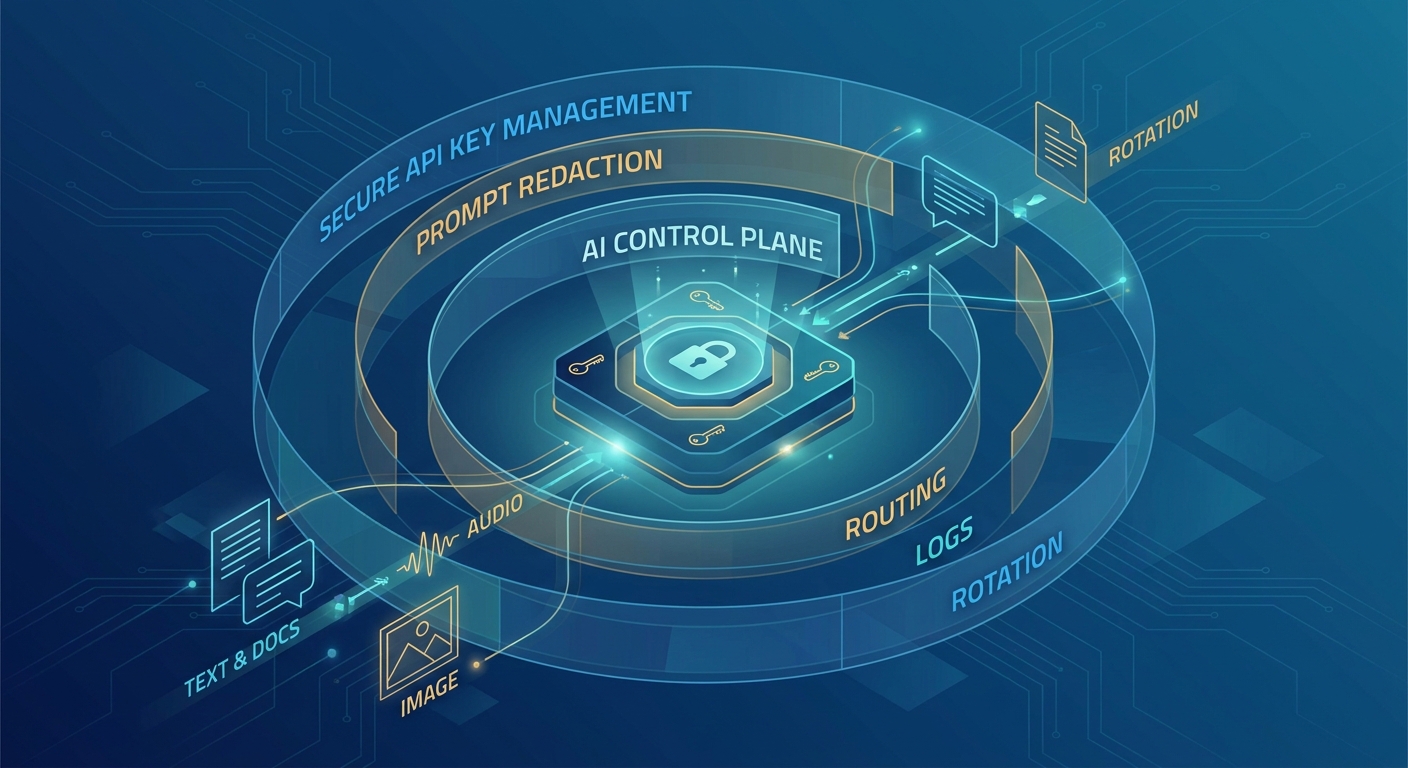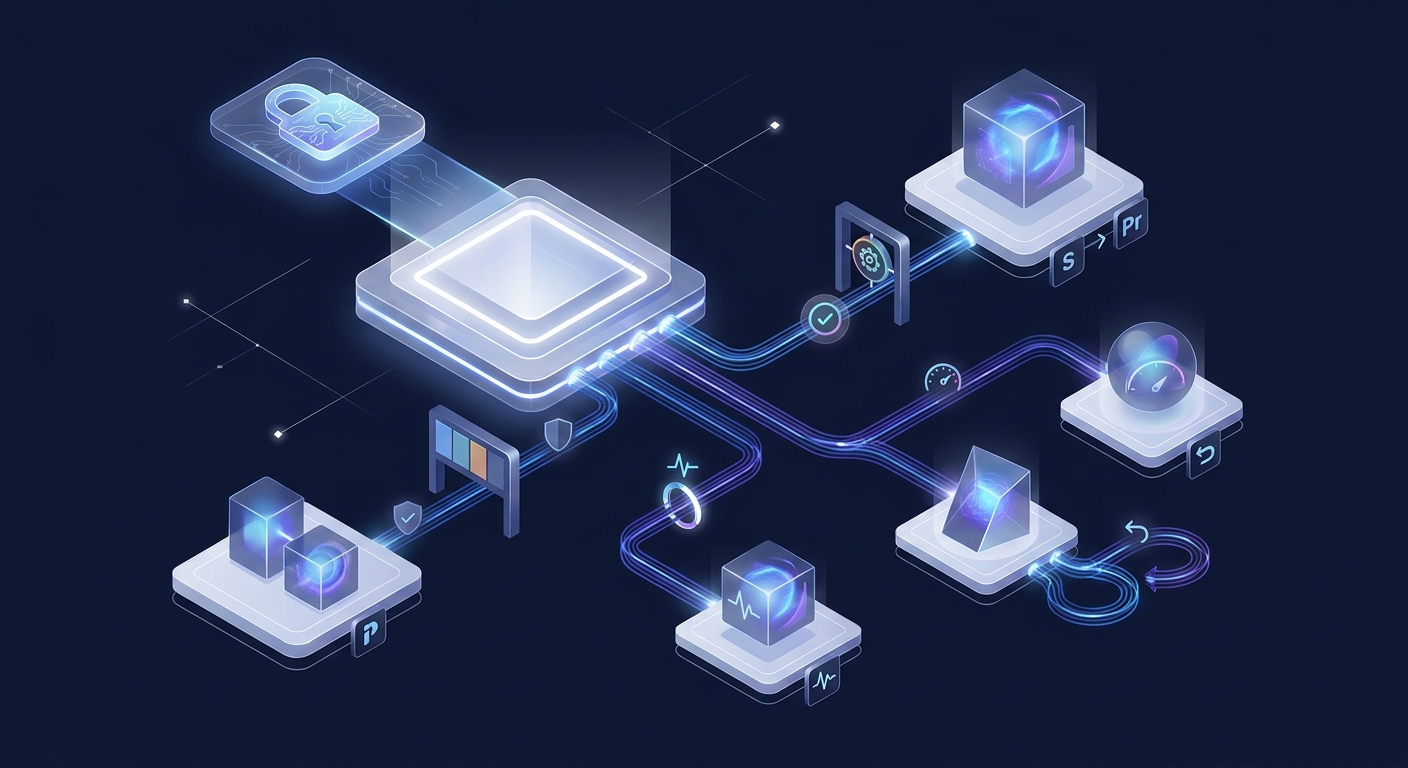
An AI gateway for teams should do more than place another endpoint between your application and a model provider. It should give engineering, platform, finance, and procurement one operating layer for access, billing, routing, and accountability.
That becomes especially important when a product team wants Claude API access but cannot organize every workload, buyer, and deployment around one provider account or one regional setup. The practical question is not simply, “Can we call Claude?” It is:
Can the team approve Claude access without creating a new collection of keys, invoices, client integrations, and undocumented routing decisions?
Flatkey is designed around that shared-gateway model: one key, an OpenAI-compatible gateway, broad model access, and one billing path. Start by reviewing the current Flatkey pricing and team options, then use the framework below to decide whether one gateway fits your operating model.
What each buyer needs from an AI gateway
A gateway purchase often looks technical, but the buying committee is usually cross-functional. Each role is trying to remove a different kind of friction.
| Buyer | What they need to approve | What a shared gateway should provide |
|---|---|---|
| Engineering manager | A fast path to Claude and other models without a rewrite for every provider | One stable client contract, documented model IDs, and a repeatable rollout path |
| Platform team | Fewer credentials and integration patterns to operate | Centralized keys, a consistent base URL, usage visibility, and controlled model exposure |
| Finance | Spend that can be reconciled without chasing multiple provider accounts | One balance or invoice path, current model pricing, and clearer ownership of usage |
| Security and procurement | A reviewable access model with named owners | Environment-specific keys, revocation procedures, permissions, and an enterprise procurement path |
No gateway eliminates the need to evaluate provider terms, data controls, supported regions, or workload risk. The value is operational: the team gets one place to implement the decisions it has already approved.
Claude API access outside a one-region operating model
“Outside one-region setups” can mean several different things:
- developers and production workloads operate from different locations
- the company has users or business units in multiple markets
- the team cannot centralize purchasing under one provider account
- an application needs Claude plus models from other providers
- finance needs one consolidated buying path while engineering needs model choice
These are access and operating-model problems, not permission to bypass provider rules. Anthropic’s current documentation remains the source of truth for Claude availability, pricing, regional or global endpoint behavior, and any data-residency requirements. A gateway should sit inside those policies, not pretend they do not exist.
Flatkey can simplify the application side of the design. Its public gateway uses Bearer-token authentication and an OpenAI-compatible base URL. Its public pricing feed also lists current Claude-family routes, with visible endpoint compatibility varying by model row. Teams should approve the exact model IDs and endpoint type they intend to use instead of assuming every Claude route behaves identically.
For the implementation details, see the existing guide to Claude API access outside one-region setups. This page focuses on the buying and control decision around that implementation.
The team architecture: one access layer, multiple responsibilities
A workable shared-gateway design separates application access from governance.
- Applications use a stable gateway contract. Clients authenticate with a Flatkey key and call the documented gateway base URL.
- Platform owners approve models and environments. Production, staging, internal tools, and experiments should not share one unmanaged credential.
- Engineering selects the workload route. Teams document the Claude model ID, fallback behavior, latency expectations, and test criteria for each feature.
- Finance reviews the commercial path. Buyers confirm current model rates, plan terms, expected volume, and whether self-serve or enterprise purchasing is appropriate.
- Security preserves provider-specific review. Data classification, retention expectations, regional requirements, and incident procedures stay explicit.
This is the key distinction between a gateway and a loose collection of proxy calls. The gateway is not only transport. It becomes the control point where technical and commercial decisions meet.
Four proof points to verify before a team rollout
1. Access: can the team standardize the client contract?
Flatkey documents https://router.flatkey.ai/v1 for OpenAI-compatible clients and Bearer-token authentication with a Flatkey API key. That can reduce migration work when an application already uses an OpenAI-compatible SDK or HTTP shape.
Before approving the rollout, verify:
- the exact SDK and endpoint pattern your application uses
- the Claude model IDs available to your account
- whether the selected model route supports the endpoint type your client expects
- how streaming, tool use, structured output, and error handling behave in your test suite
Do not approve “Claude support” as an abstract checkbox. Approve a tested model-and-client combination.
2. Billing: can finance see one buying path?
Flatkey’s public site positions the service around one key and one bill across supported models and tools. Its pricing page currently includes self-serve plans and an enterprise path for larger usage, invoicing, procurement, custom routing, or team-level controls.
Finance should still ask:
- Which price is current for each approved model?
- Are displayed rates list rates, effective rates, or plan-adjusted rates?
- Who owns top-ups, balance alerts, and monthly reconciliation?
- What happens when a key has no balance or lacks model access?
- At what volume should the team move from self-serve to an enterprise conversation?
The goal is not merely one invoice. It is one accountable process from forecast to reconciliation.
3. Routing: can platform owners explain why a request went where it did?
Routing should be a policy, not tribal knowledge. For every production workload, record:
| Routing decision | Required team answer |
|---|---|
| Primary model | Which exact Claude or alternative model ID is approved? |
| Fallback | Is fallback allowed, and what changes in quality, latency, or cost? |
| Protocol | Does the client use OpenAI-compatible or Anthropic-compatible behavior? |
| Region | Which provider or partner rules apply to the chosen route? |
| Failure handling | Which errors retry, fail closed, or trigger a different model? |
| Change ownership | Who may alter the model, route, or limit? |
If those answers live only in one engineer’s memory, the team does not yet have a production routing policy.
4. Controls: can the company contain a mistake?
Flatkey’s authentication documentation recommends environment variables, separate keys by deployment environment, immediate revocation of compromised keys, and periodic key rotation. Those are useful foundations, but a team rollout should make them operational.
Use this minimum control checklist:
- assign an owner to every key
- separate production, staging, and personal experimentation
- store keys in a secret manager, not source code or client-side bundles
- document approved models for each environment
- test revocation and key replacement before an incident
- define spend thresholds and escalation owners
- review usage after launches, migrations, and model changes
- require a named approver for production routing changes
Teams that need invoicing, procurement support, custom routing, or broader controls should evaluate the enterprise options on the pricing page rather than stretching an informal self-serve setup beyond its intended operating model.
Direct provider accounts versus one shared gateway
The right choice depends on what the team is optimizing.
| Operating model | Direct provider accounts | Shared AI gateway |
|---|---|---|
| One provider, one workload, one owner | Often simple and sufficient | May add an unnecessary layer |
| Claude plus multiple model providers | More keys, SDK patterns, and invoices | One access layer can reduce integration and buying sprawl |
| Multiple teams or environments | Requires strong internal coordination across accounts | Centralized conventions are easier to standardize |
| Provider-specific feature depth | First-party API may expose the newest native behavior first | Compatibility must be tested route by route |
| Consolidated finance workflow | Separate reconciliation by provider | One balance or invoice path can simplify ownership |
| Custom procurement and controls | Negotiated independently with each provider | Enterprise gateway path can centralize part of the process |
A shared gateway is most compelling when the cost of coordination has become larger than the cost of adding one controlled access layer.
A practical approval plan
Use a short, evidence-based rollout instead of a company-wide leap.
- Choose one real workload. Pick a feature with a clear owner, measurable quality criteria, and non-sensitive test data.
- Approve one Claude model route. Record the model ID, protocol, expected price, and provider-region assumptions.
- Create an environment-specific key. Keep the credential out of source control and assign a named owner.
- Run a compatibility test. Check response shape, streaming, tool calls, timeouts, retries, and failure behavior.
- Set a spend and usage review. Finance and engineering should compare expected versus observed consumption.
- Document the production decision. Include rollback, revocation, fallback, and change-approval procedures.
- Expand only after the first route is explainable. Add more models or teams when the operating evidence is strong.
Flatkey’s quickstart documents the basic gateway connection flow. The team’s job is to surround that connection with ownership and policy.
When Flatkey is a strong fit
Flatkey is worth a close evaluation when your team wants to:
- add Claude access without maintaining a separate application integration for every provider
- give product teams model choice behind one gateway contract
- consolidate billing and reduce provider-account sprawl
- support engineering, platform, and finance with one shared operating layer
- create a clearer path from self-serve testing to enterprise procurement
It is less compelling when you need only one provider, depend heavily on provider-native features that are not exposed through your chosen route, or cannot accept an intermediary in the request path.
Team buyer checklist
Before approving an AI gateway, require a “yes” to these questions:
- Do we know the exact Claude model and endpoint type we will use?
- Have we verified provider-region and data requirements separately?
- Can we isolate keys by environment and owner?
- Can finance explain the pricing and reconciliation path?
- Can platform owners explain primary routing, fallback, and failure behavior?
- Can security revoke access quickly?
- Do we know when self-serve stops fitting and enterprise controls become necessary?
If the answers are clear, the gateway is serving as a control plane. If they are not, it is only hiding complexity.
FAQ
Does an AI gateway make Claude available in every country or region?
No. A gateway does not override Anthropic policies, applicable law, provider availability, or data-residency requirements. Verify the current rules for each intended workload and location.
Can a team use its existing OpenAI client with Claude through Flatkey?
Flatkey publishes an OpenAI-compatible gateway, and its public pricing feed shows Claude-family rows with endpoint compatibility metadata. Test the exact Claude model row and features your application requires before production approval.
Should every team share one API key?
No. A shared gateway does not mean one credential copied everywhere. Use separate keys for environments and ownership boundaries, store them securely, and maintain a tested revocation process.
How should finance evaluate the gateway?
Review current model pricing, plan terms, expected usage, balance or invoice ownership, and reconciliation. For larger usage or formal procurement, compare the enterprise option with the operational cost of maintaining multiple direct provider accounts.
What is the next step?
Review Flatkey pricing, choose one approved Claude workload, and run a bounded technical and commercial evaluation. The best team gateway decision is not based on the longest model list. It is based on whether access, billing, routing, and controls become easier to explain and operate.