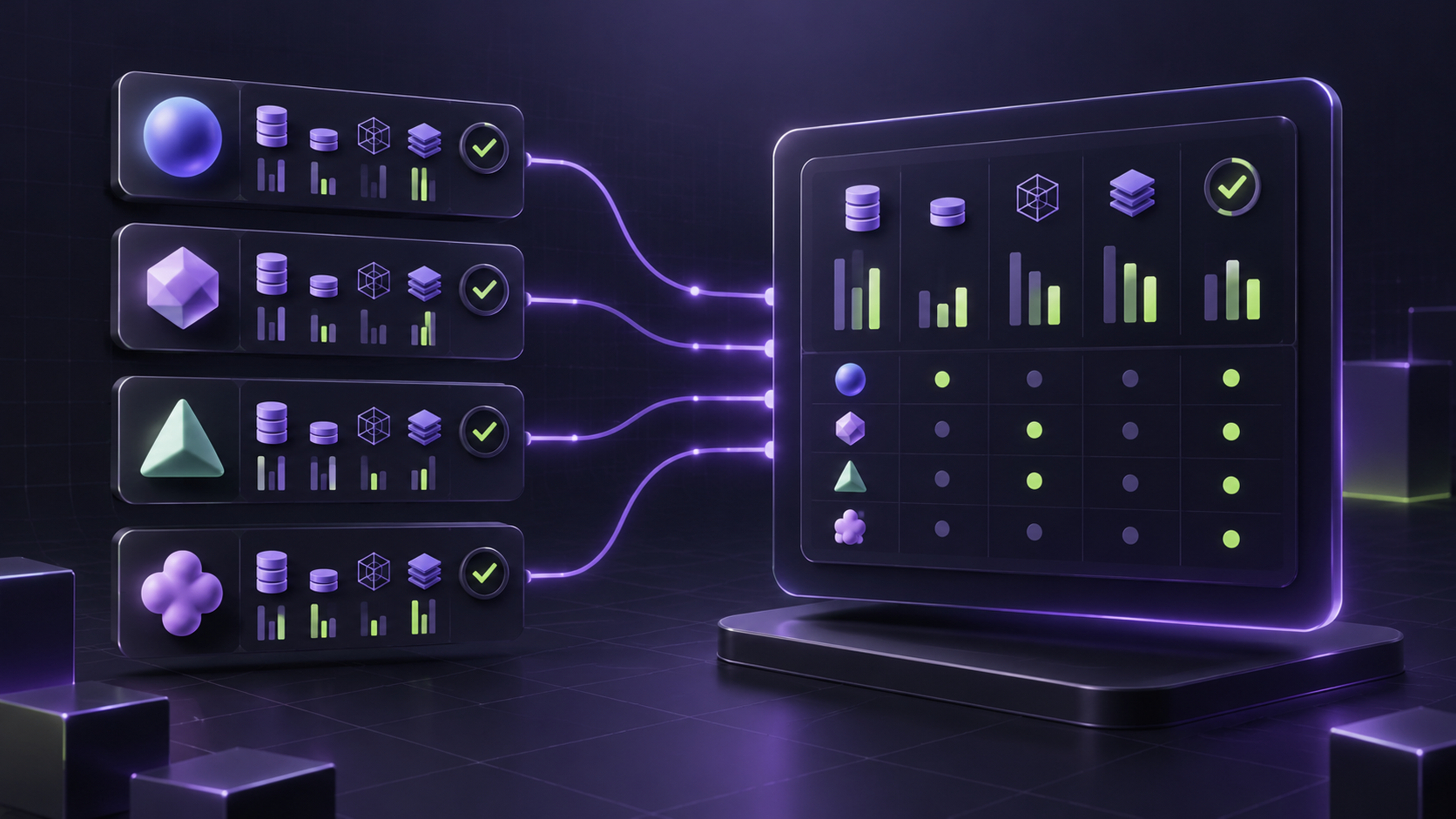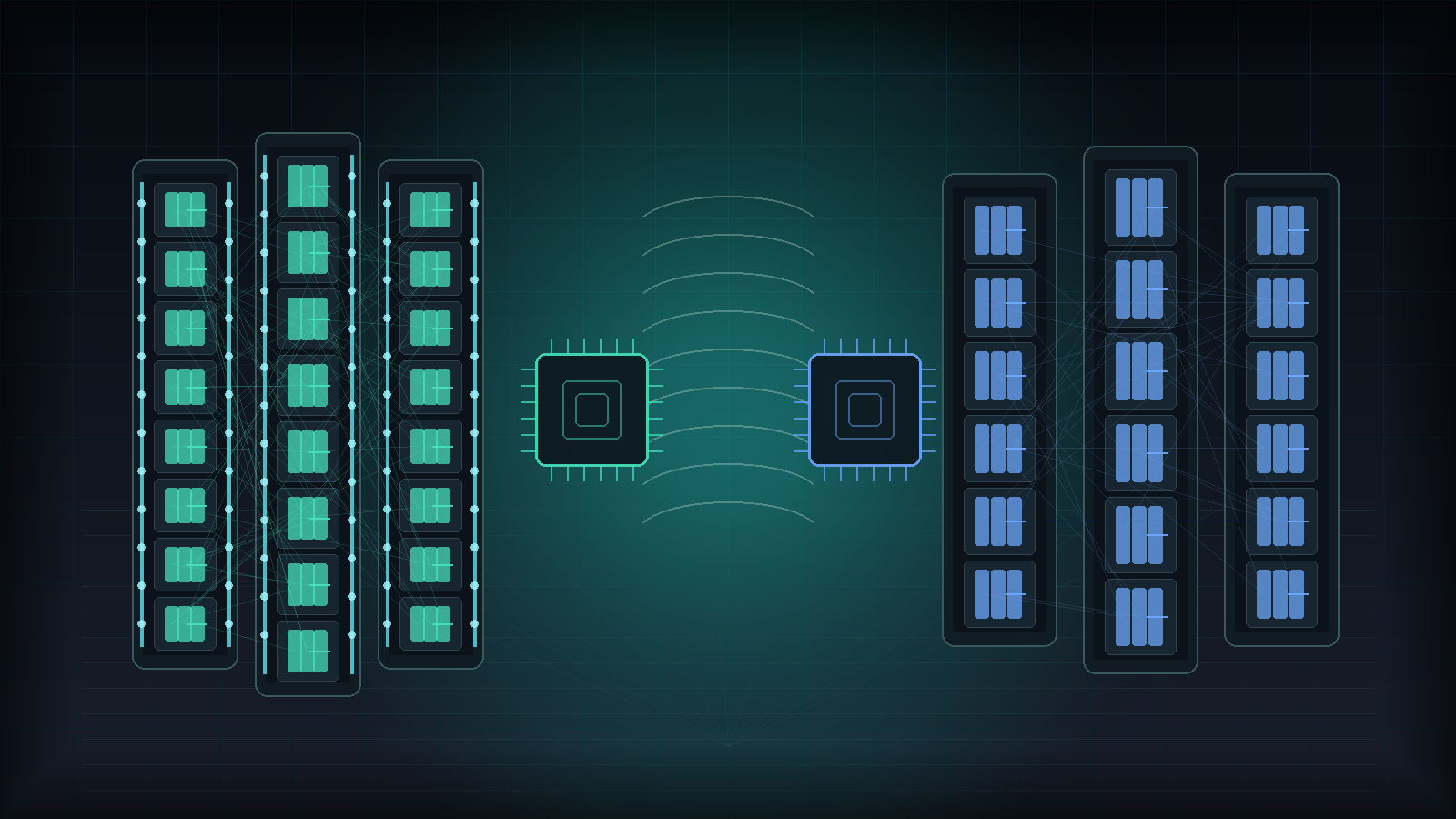
The short version: GB200 vs B200 is not a simple GPU-to-GPU comparison. B200 is the Blackwell GPU building block you will see in HGX-style x86 servers. GB200 is a Grace Blackwell superchip, and GB200 NVL72 is the rack-scale system that connects 36 Grace CPUs and 72 Blackwell GPUs into one large NVLink domain.
Choose GB200 NVL72 when the workload needs rack-scale memory, very high GPU-to-GPU communication bandwidth, and a tightly integrated CPU-GPU platform for large training, trillion-parameter inference, or heavy mixture-of-experts serving. Choose B200 HGX/x86 when you want Blackwell acceleration in a more conventional server procurement model, with more freedom over CPU platform, server vendor, node count, scheduler design, and incremental capacity planning.
For most buyers, the right question is not "which chip is faster?" The useful question is: which deployment shape gives your model the lowest cost per accepted output without creating an operations burden your team cannot own?
GB200 vs B200: the practical difference
The main GB200 vs B200 difference is the unit of purchase and integration.
| Decision point | GB200 / GB200 NVL72 | B200 / HGX B200-style systems |
|---|---|---|
| What you are really choosing | Grace Blackwell superchip and rack-scale NVL72 system design | Blackwell GPU capacity in modular HGX-style GPU servers |
| CPU architecture | NVIDIA Grace CPU is part of the GB200 superchip path | Typically paired with x86 CPU baseboards in HGX server designs |
| Scale-up fabric | Built around a large NVLink domain; NVIDIA describes GB200 NVL72 as a 72-GPU NVLink domain | Multi-GPU server fabric first, then cluster networking across nodes |
| Best fit | Very large models, high communication pressure, dense AI factory deployments, integrated rack-scale operations | Incremental Blackwell capacity, familiar server operations, mixed workloads, flexible cluster growth |
| Procurement question | Can we support rack-scale power, cooling, networking, and operational lockstep? | Can we get enough B200 nodes, networking, and utilization to beat alternatives? |
| Benchmark question | Does one large NVLink domain improve end-to-end training or inference enough to justify the platform commitment? | Does B200 improve latency, throughput, and memory fit enough inside our current cluster model? |
NVIDIA's GB200 NVL72 page states that the system connects 36 Grace CPUs and 72 Blackwell GPUs in a rack-scale, liquid-cooled design. It also lists a 72-GPU NVLink domain, 13.4 TB of HBM3e GPU memory, 576 TB/s GPU memory bandwidth, 130 TB/s NVLink bandwidth, and 2,592 Arm Neoverse V2 CPU cores at the rack/system level. Those numbers explain why GB200 is usually discussed as an AI factory building block, not as a single accelerator card.
B200, by contrast, is the Blackwell GPU foundation you evaluate inside HGX server designs. NVIDIA's HGX page describes HGX as a platform that brings together NVIDIA GPUs, NVLink, NVIDIA networking, and optimized AI/HPC software stacks for data-center workloads. In practice, that means a B200 decision usually looks like a server, cluster, scheduler, storage, and network design problem rather than a single rack-scale appliance decision.
The quick answer
Use this rule before you get lost in spec tables:
- If your model is communication-bound across many GPUs, start with GB200 NVL72.
- If your model is memory-fit or throughput-bound inside a smaller cluster, start with B200 HGX/x86.
- If your team mostly wants reliable access to model outputs, compare both against a managed model API path before buying hardware.
That last point matters. A GB200 vs B200 benchmark can tell you which platform runs a workload better under ideal utilization. It does not tell you whether your organization should own GPU infrastructure at all. For lower-control workloads, a model API can remove capacity planning, utilization risk, driver operations, queue management, and idle capacity from the equation. Flatkey is built for that path: one key, one balance, official models, usage visibility, and pay-per-successful-call routing across model APIs and AI tools.
When GB200 is the stronger choice
GB200 is strongest when scale-up architecture is the bottleneck. The GB200 Grace Blackwell Superchip connects two Blackwell GPUs and one Grace CPU with NVLink-C2C. GB200 NVL72 then turns those superchips into a rack-scale platform with a large NVLink domain.
That matters when your workload spends too much time moving data between GPUs, coordinating experts, synchronizing training steps, or serving a model whose active working set wants a bigger tightly coupled memory and compute envelope.
GB200 should be on the shortlist when:
- You are planning large-scale training or fine-tuning where inter-GPU communication has become a first-order constraint.
- You are serving very large models or mixture-of-experts models where expert routing, KV cache pressure, and high concurrency stress the fabric.
- Your buyer can treat the rack as an integrated AI factory component, including liquid cooling, power delivery, networking, and operational support.
- Your benchmark target is not just tokens per second per GPU, but system-level output under production concurrency.
- Your organization has enough demand to keep rack-scale capacity busy.
The downside is commitment. GB200 NVL72 is not a casual capacity add. It asks you to align facilities, procurement, cluster operations, workload scheduling, and model-roadmap planning around a rack-scale architecture. That is exactly the right trade when you need it. It is expensive complexity when you do not.
When B200 HGX/x86 is the stronger choice
B200 is the more flexible Blackwell path when your team wants new-generation GPU performance but does not need the full GB200 NVL72 rack-scale design. For many AI infrastructure teams, that flexibility is the point.
B200 HGX-style systems are a better starting point when:
- You want Blackwell capacity inside a familiar x86 server procurement and operations model.
- You need to grow capacity node by node instead of committing to a large rack-scale domain up front.
- Your workload fits well inside one server or a modest cluster with conventional high-speed networking.
- You need to support multiple teams, model sizes, serving stacks, or batch jobs on the same fleet.
- Your bottleneck is availability, cost, and utilization rather than maximum scale-up bandwidth.
In nvidia gb200 vs b200 planning, B200 often wins when the organization values optionality. You can stage capacity, compare vendors, reuse more of your existing cluster design, and keep scheduling policy closer to what your team already knows. You still need serious networking, storage, observability, and GPU operations, but the deployment shape is less monolithic than GB200 NVL72.
Decision matrix: Grace Blackwell superchip or x86 HGX?
Use this matrix for the procurement meeting.
| If this is true | Prefer | Why |
|---|---|---|
| Your model roadmap includes trillion-parameter serving, large MoE routing, or heavy multi-GPU synchronization | GB200 NVL72 | The large NVLink domain and Grace-Blackwell integration are the main value drivers |
| You are refreshing an existing GPU cluster with Blackwell nodes | B200 HGX/x86 | You can add Blackwell capacity without redesigning the whole estate around NVL72 |
| Your facilities team is ready for dense liquid-cooled racks | GB200 NVL72 | The platform is designed as dense rack-scale infrastructure |
| You need smaller procurement steps and vendor optionality | B200 HGX/x86 | Modular servers usually fit incremental buying and mixed cluster operations better |
| Your team does not need CUDA/runtime control and mostly needs model outputs | Managed model API | Hardware ownership may be the wrong layer to optimize |
| The workload has volatile demand or uncertain product-market fit | B200 rental, serverless GPU, or model API | Avoid locking capital and operations around an uncertain utilization curve |
The nvidia gb200 vs b200 difference is often less about raw Blackwell capability and more about the organizational shape around it. GB200 NVL72 assumes you can consume rack-scale infrastructure efficiently. B200 assumes you want Blackwell GPUs inside a more modular cluster.
Benchmark GB200 vs B200 by accepted output, not peak specs
A useful nvidia gb200 vs b200 comparison should measure the unit your business actually ships. For training, that might be stable tokens trained per day at a target loss curve. For inference, it might be accepted tokens, accepted completions, successful tool calls, or completed user sessions under latency SLO.
Track at least these metrics:
| Metric | Why it matters |
|---|---|
| Time to first token | Captures user-visible latency for interactive workloads |
| Inter-token latency | Shows steady-state generation quality under load |
| Tokens per second per GPU | Useful, but incomplete without utilization and acceptance rates |
| Cost per accepted output | Normalizes hardware, cloud, retries, queueing, and failed jobs |
| GPU utilization by phase | Separates prefill, decode, data loading, communication, and idle time |
| Queue delay | Exposes capacity contention that peak benchmarks hide |
| Failure and retry rate | Converts infrastructure instability into real cost |
| Power, cooling, and facilities headroom | Critical for GB200-class deployments |
| Engineering hours per month | Captures driver, kernel, scheduler, benchmark, and incident work |
Do not compare GB200 vs B200 with a single synthetic number. A small B200 cluster can look excellent on one throughput chart and still lose once queue delay, utilization, and operations are included. A GB200 NVL72 rack can look expensive on acquisition cost and still win if it collapses communication overhead for a workload that would otherwise spill across many smaller nodes.
Procurement checklist for GB200 vs B200
Before signing a GB200 or B200 order, ask these questions.
- What model sizes, context lengths, batch sizes, and concurrency targets must this platform support over the next 12 months?
- Is the workload training-heavy, inference-heavy, fine-tuning-heavy, or mixed?
- Does the current bottleneck show up as GPU memory, memory bandwidth, NVLink/interconnect pressure, CPU preprocessing, storage, or queue delay?
- Can the facilities team support the power and cooling assumptions of the platform being quoted?
- Are we buying for a known workload, or speculating ahead of demand?
- What utilization floor is required for the purchase to beat cloud GPU rental or model APIs?
- Which serving stack will be used: TensorRT-LLM, vLLM, SGLang, a vendor-managed endpoint, or an internal platform?
- How will we measure cost per accepted output after retries, failed jobs, and idle capacity?
- What is the fallback path if the hardware delivery date, driver stack, or model roadmap changes?
- Which team owns GPU operations after the initial deployment?
For the financial model, connect this checklist to a GPU cluster TCO worksheet, current GPU rental prices, and the build-versus-API logic in GPU cloud vs model API. If you are still deciding what class of accelerator fits your model, use a broader best GPU for LLM inference pass before narrowing to GB200 vs B200.
Common mistakes in GB200 vs B200 planning
The first mistake is treating GB200 as "a faster B200." GB200 is a Grace Blackwell superchip path and GB200 NVL72 is a rack-scale system. B200 is the GPU building block inside more modular server designs. They overlap because both are Blackwell-era infrastructure, but the purchase and operating model are different.
The second mistake is using list specs without workload profiling. If the model fits cleanly on fewer GPUs and does not spend much time communicating across devices, the larger NVLink domain may not pay for itself. If the model is communication-bound, a modular cluster can underperform even when each GPU looks strong on paper.
The third mistake is ignoring utilization. A high-end GPU platform only wins when it is kept busy with accepted work. Idle capacity, queue misconfiguration, failed jobs, and team-level contention can erase the expected advantage.
The fourth mistake is forgetting the model API alternative. Some teams need hardware control: custom kernels, private weights, compliance constraints, tuning, or predictable dedicated capacity. Others only need reliable outputs. In the second case, the fastest procurement path may be to route work through official model APIs and reserve hardware work for workloads that truly need it.
Where Flatkey fits
Flatkey does not replace GB200 or B200 when you need to own the hardware layer. If your team is training private frontier-scale models, tuning kernels, or operating a dedicated AI factory, you still need direct GPU infrastructure.
Flatkey helps when the goal is to ship model-powered product output without operating every layer yourself. With one key and one balance across official models and AI tools, teams can compare model API cost, route workloads, track usage, and pay for successful calls instead of managing scattered provider keys and invoices.
That makes Flatkey a useful benchmark baseline for gb200 vs b200 nvidia decisions: if a managed model API path can meet quality, latency, privacy, and cost requirements, hardware ownership has to beat that baseline after utilization and operations are included. If it cannot, GB200 or B200 capacity may be justified.
Final recommendation
For gb200 vs b200, choose GB200 NVL72 when the workload needs rack-scale Grace Blackwell integration, large NVLink domains, and dense AI factory operations. Choose B200 HGX/x86 when you want Blackwell acceleration with modular servers, incremental growth, and more conventional cluster control.
Then run the final comparison on cost per accepted output. That single metric forces the right conversation: not just which system is impressive, but which path turns your workload into reliable production output at the lowest total cost.
FAQ
Is GB200 the same as B200?
No. B200 is a Blackwell GPU building block. GB200 is a Grace Blackwell superchip that combines two Blackwell GPUs with a Grace CPU using NVLink-C2C. GB200 NVL72 is the rack-scale system built from those superchips.
What is the main NVIDIA GB200 vs B200 difference?
The main difference is integration level. GB200 NVL72 is a rack-scale Grace CPU plus Blackwell GPU system with a large NVLink domain. B200 is evaluated inside modular HGX-style server designs, often with x86 CPU baseboards.
Is GB200 always faster than B200?
Not for every workload. GB200 NVL72 is designed for workloads that benefit from large-scale CPU-GPU integration and high GPU-to-GPU communication bandwidth. A B200 server or smaller B200 cluster can be the better operational and economic choice when the workload does not need the full rack-scale domain.
Should I rent GB200 or B200 before buying?
If rental or reserved access is available for your workload, test before buying. Use the trial to measure queue delay, utilization, accepted-output cost, failure rate, and operational overhead, not just peak throughput.
When should I use a model API instead of GB200 or B200?
Use a model API when you do not need direct hardware control, private-weight hosting, custom kernels, or dedicated capacity. A model API can be simpler when your main requirement is reliable model output with usage visibility and predictable billing.
Sources checked
- NVIDIA GB200 NVL72 product page
- NVIDIA HGX platform page
- NVIDIA Blackwell architecture page
- NVIDIA Blackwell platform launch announcement
- Flatkey product overview and Cloud GPU campaign topic map