Image Generation API Metrics That Actually Matter
If you are evaluating an image generation API, the wrong question is usually the first one people ask: which model makes the prettiest demo image?
Production teams need a different answer. They need to know whether the image route is actually usable at scale, whether it fits the workflow, and whether the output turns into accepted assets instead of expensive retries.
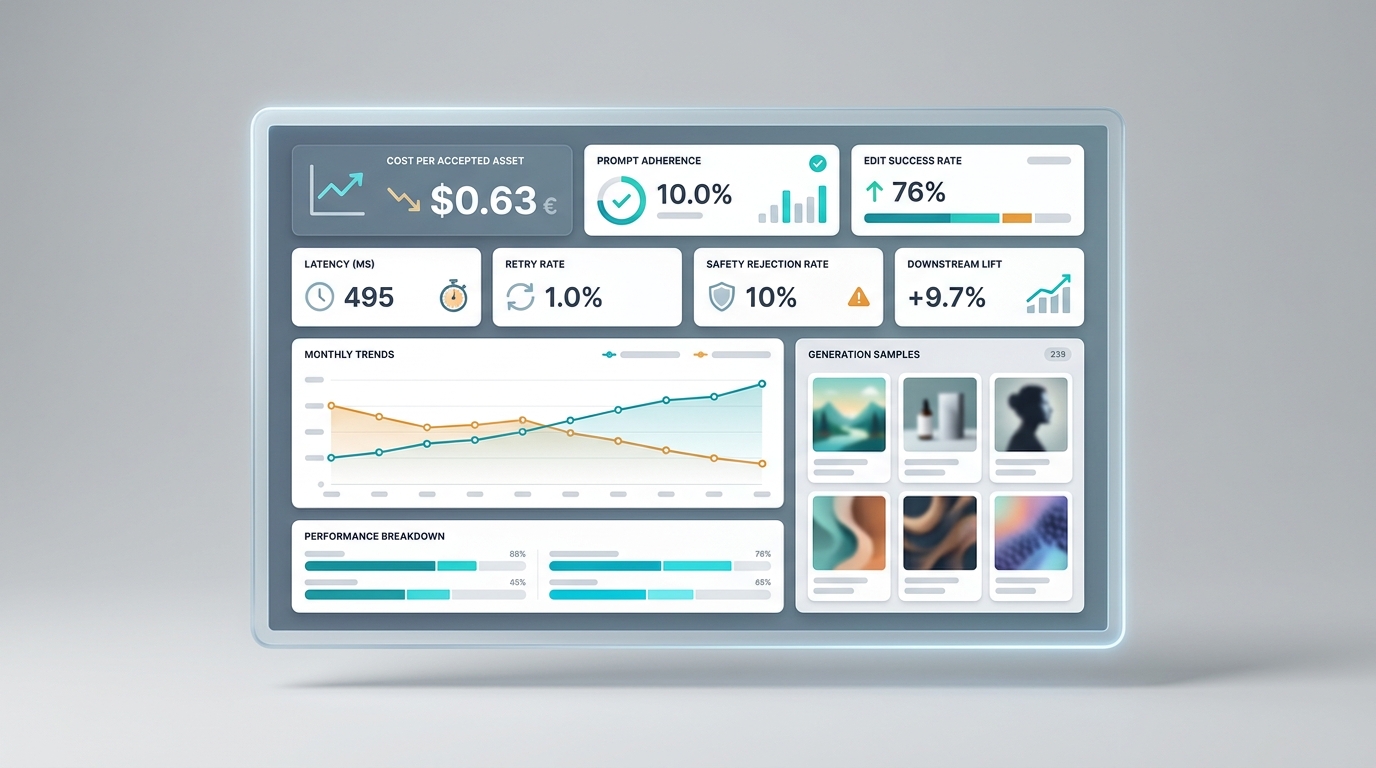
That means the useful metrics are not just image quality. They include cost per accepted image, prompt adherence, edit success rate, latency, retry rate, safety rejection rate, and downstream business lift.
What to measure first
The best image generation API metrics are the ones that predict whether a workflow will ship.
Start with these six:
| Metric | Why it matters |
|---|---|
| Cost per accepted image | A cheap first attempt can become expensive once retries and human review are included. |
| Prompt adherence | The model has to follow the creative brief, not just make something attractive. |
| Edit success rate | Many real workflows edit existing assets, not only generate new ones. |
| Latency | Slow image generation breaks review loops and batch throughput. |
| Retry rate | High retry rates are a sign of unstable prompts, poor routing, or weak model fit. |
| Safety rejection rate | Frequent rejections can stall production and hide real workflow failures. |
These are the metrics that tell you whether the pipeline is working.
Why image quality is not enough
Image quality is useful, but it is not a decision metric by itself.
An image generation system can produce impressive samples and still fail in production because:
- edits drift from the source asset;
- prompt changes create inconsistent output;
- latency makes human review too slow;
- retries push cost above budget;
- safety filters reject too many valid requests;
- teams cannot explain what happened after the fact.
That is why a serious image generation API review should use operational metrics, not only visual taste.
The production scorecard
Use the same scorecard for every route.
| Dimension | What to test | Pass looks like |
|---|---|---|
| Generation quality | Does the output match the brief? | The asset is usable without major correction. |
| Prompt adherence | Does the model follow constraints? | The result respects subject, style, and layout rules. |
| Edit fidelity | Does it preserve the original asset? | Required elements stay intact after editing. |
| Latency | How long does each job take? | Review and batch timing stay predictable. |
| Retry behavior | What happens after failures? | Retries are bounded and do not spiral. |
| Safety behavior | How often does the route refuse valid work? | Rejection is rare enough to operate. |
| Cost visibility | Can spend be traced to a workflow? | Finance can explain the bill by job type. |
| Business lift | Does the output help conversion or content velocity? | More accepted assets, more launched tests, or faster publishing. |
If a route cannot pass that scorecard, it is not ready.
What to compare in practice
For a real image generation API evaluation, compare these patterns:
- New image generation Measure prompt adherence, output quality, and cost per accepted image.
- Image editing Measure edit success rate, preservation of source structure, and manual correction time.
- Batch generation Measure latency, retry behavior, and queue stability.
- Review workflows Measure how long it takes a reviewer to approve or reject an asset.
- Production impact Measure whether image work improves launch speed, conversion, or content throughput.
That last point matters because a technically good route can still be a bad business choice if it does not reduce work.
Where Flatkey fits
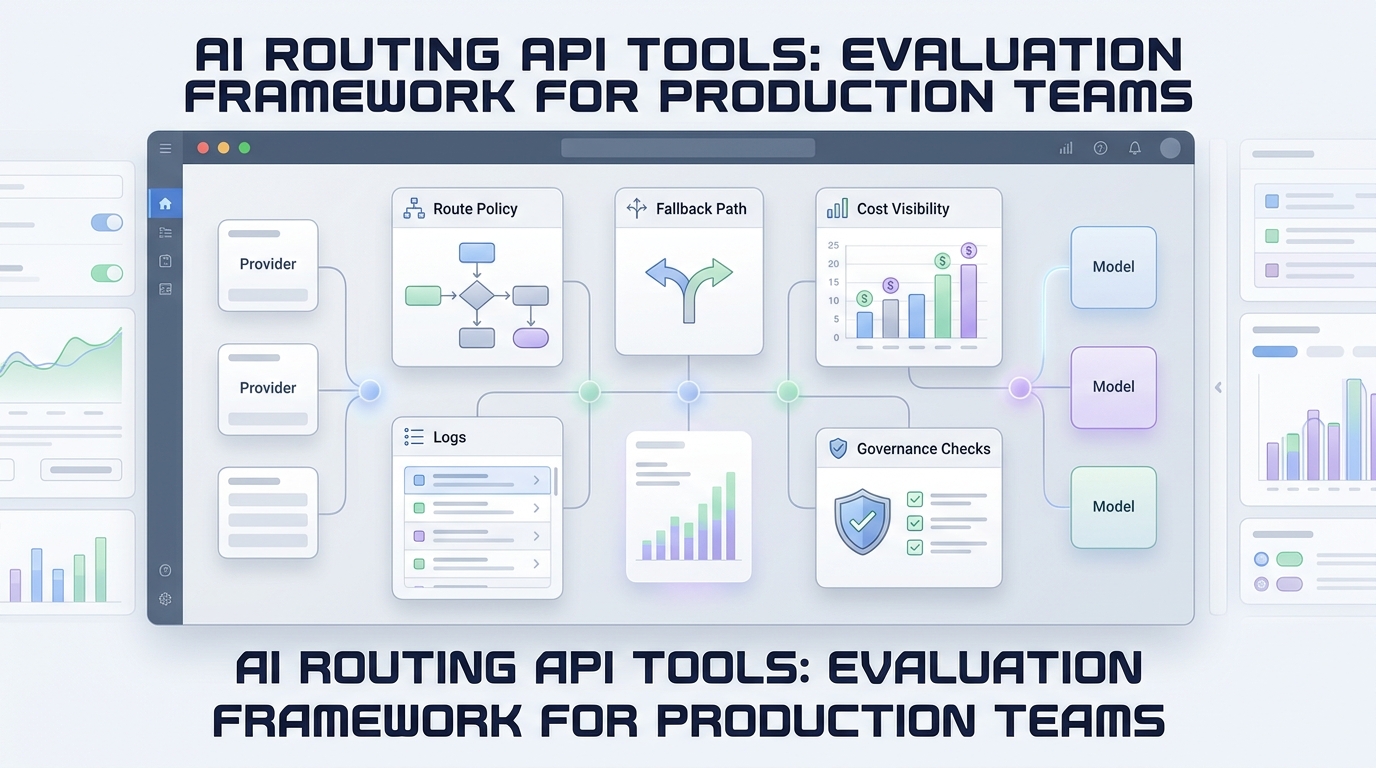
Flatkey is the useful comparison surface when image generation sits inside a larger AI workflow.
The current Flatkey homepage says the platform routes requests to official GPT, Claude, Gemini, DeepSeek, Qwen, and GLM APIs, with 100+ frontier models and 1,000+ AI tools behind one key. The pricing page frames the product around production usage controls and plan packaging.
That matters for image generation API selection because image traffic rarely stays alone for long. Teams usually pair image work with copy, routing, logging, and spend review.
If you want the broader gateway context, see the AI image generation API for ecommerce creative pipelines guide. If you want the control-plane framing, see AI API gateway architecture and the pricing page.
A simple decision rule
Pick the image generation API that gives you the best combination of:
- accepted-image rate;
- edit fidelity;
- predictable latency;
- bounded retry cost;
- low unnecessary rejection;
- visible spend;
- measurable workflow lift.
If one route looks impressive but fails those metrics, it is the wrong route.
FAQ
What is the most important image generation API metric?
Cost per accepted image is usually the most useful starting point, because it combines quality, retries, and review overhead into one number.
Should teams measure image quality directly?
Yes, but not alone. Quality needs to be paired with prompt adherence, edit success, and production throughput.
Why does latency matter so much?
Because image work is often reviewed by humans. Slow generation makes the approval loop expensive.
What should teams measure after launch?
Accepted-image rate, retry rate, review time, and downstream business lift from the article or workflow that used the image.
When is a gateway useful?
When image generation, routing, billing, and logs need to live in one operational surface instead of scattered provider consoles.