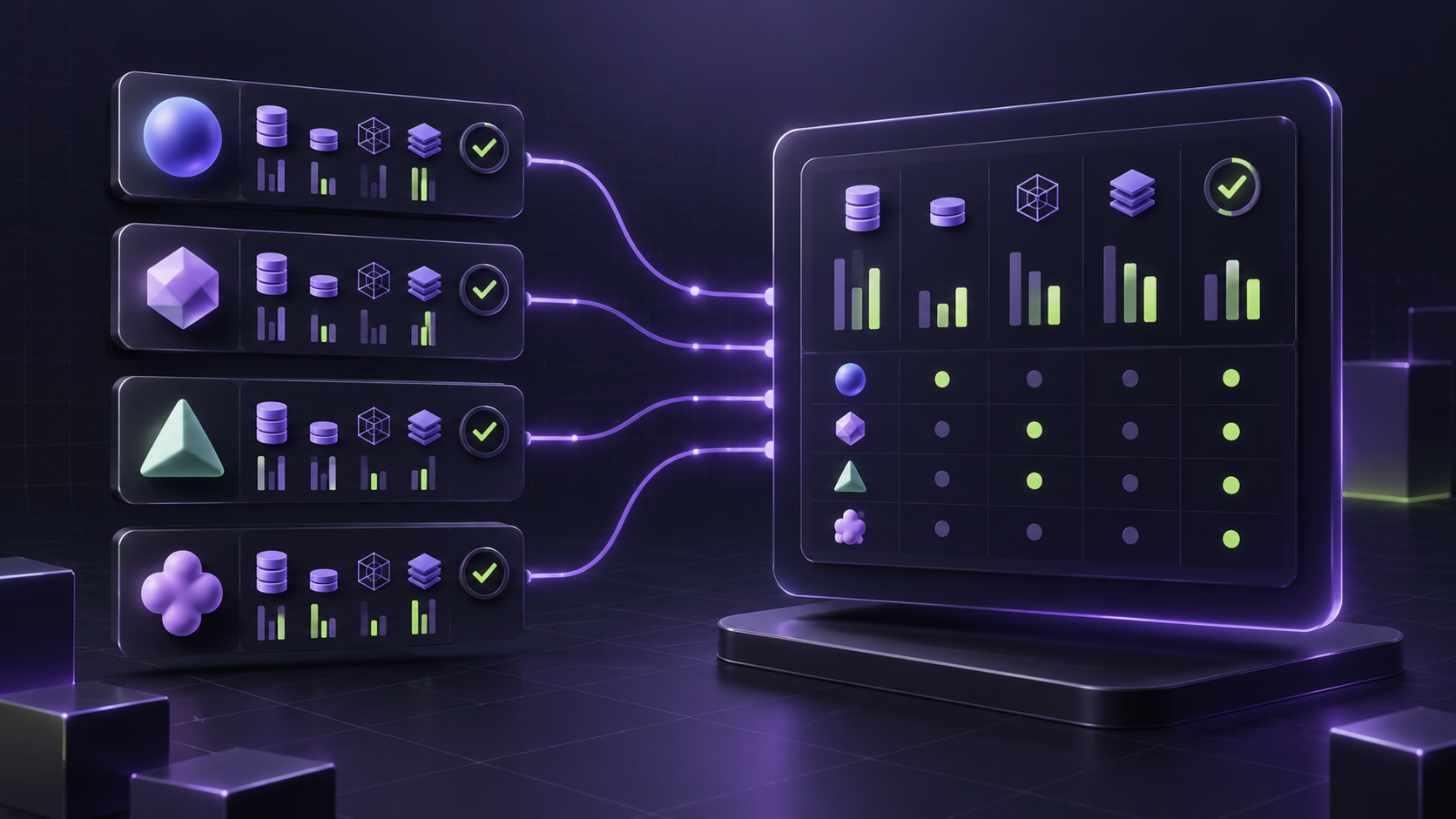
LLM cost tracking by environment is the practice of separating dev, staging, production, and customer AI API traffic before it reaches the invoice. Without that split, a single usage chart can hide test loops, staging load tests, retry storms, internal automation, and customer-facing requests in the same spend line.
That is why the useful question is not only “how much did we spend on LLMs?” The better question is “which environment, owner, key, workload, customer segment, model, and retry path created this spend, and should that traffic have been allowed?”
Flatkey matters in this workflow because its public site positions flatkey.ai as a unified AI API gateway for production teams with model access, routing, billing, usage analytics, and operational controls. Treat that as the operating surface to verify, not a substitute for your own account checks. Before production rollout, confirm your current Flatkey model catalog, pricing page, dashboard fields, key boundaries, request logs, and quota behavior for the exact routes you plan to use.
LLM cost tracking by environment: the quick answer
Use environment-aware keys and metadata so every request can be grouped before finance review. The core ledger should answer four questions: where did the traffic run, who owns it, whether it was customer-facing, and whether the usage belongs in the current billing period.
| Traffic slice | Primary boundary | Cost review question | Default action |
|---|---|---|---|
| Development | Dev-only API key or route profile | Is this expected engineering activity or an accidental loop? | Low hard cap, short retention, no customer data |
| Staging | Staging key plus release or test run ID | Did load tests, evaluations, or QA runs exceed the release budget? | Time-boxed budget, explicit owner, export after release |
| Production internal | Production key plus service/workload owner | Which product feature or automation created spend? | Alert on spikes, reconcile daily |
| Customer traffic | Customer/account tag plus production route | Which customer, plan, tenant, or segment should absorb or explain usage? | Tie to billing policy, support review, and quota rules |
The most durable setup is boring: one naming convention, one field dictionary, one budget policy per environment, and one monthly reconciliation path. LLM cost tracking by environment fails when teams rely on memory, dashboards with unlabeled rows, or a single shared key across every workload.
Why environment separation prevents billing surprises
AI spend is easy to misread because requests do not all carry the same business meaning. A prompt evaluation in staging, a cron job in production, and a customer support conversation can use the same model and token count while belonging to different budgets.
Environment separation gives each request a cost owner before it becomes a finance problem:
- Developers can run experiments without risking the production budget.
- Platform teams can prove whether a spike came from deployment, routing, retries, or model choice.
- Product teams can compare customer-facing usage against product plans and feature limits.
- Finance operators can reconcile usage, credits, top-ups, and invoices without guessing which team created the cost.
- Procurement reviewers can see whether unified gateway spend is replacing direct provider accounts or adding another uncontrolled layer.
OpenAI’s organization usage endpoints are useful pattern evidence here. The official OpenAPI spec for completions usage supports filters and grouping by project, user, API key, model, batch, and service tier. The costs endpoint supports project and API-key filters and cost grouping by project, line item, and API key. Those fields are not a Flatkey dashboard claim; they show the kind of dimensions a finance-ready cost system should preserve.
Build an LLM cost tracking by environment ledger
Start with a ledger that is independent of any one provider dashboard. You can fill it from gateway logs, provider usage APIs, application telemetry, or warehouse exports.
| Field | Required? | Why it matters | Example value |
|---|---|---|---|
environment |
Yes | Separates dev, staging, production, and customer traffic | dev, staging, prod, customer_prod |
api_key_id |
Yes | Connects spend to a controlled credential boundary | Redacted key ID or gateway key ID |
owner_team |
Yes | Gives finance and support a human owner | platform, growth, support-ai |
workload |
Yes | Explains why the request exists | eval-run, chatbot, summarizer |
customer_ref |
Conditional | Needed when cost is customer-facing | Tenant ID, plan ID, or hashed account ID |
model |
Yes | Required for cost, quality, and routing review | Current model or route alias |
endpoint_family |
Yes | Separates chat, responses, images, video, embeddings, and native routes | chat_completions, responses, images |
request_id |
Yes | Supports audit, support, retries, and incident review | Gateway or provider request ID |
status |
Yes | Prevents failed requests from disappearing | success, provider_error, timeout, blocked |
input_units and output_units |
Yes | Normalizes token, image, audio, or video units | Tokens, requests, seconds, generated assets |
cost_estimate |
Yes | Allows daily monitoring before invoice close | Estimated cost in account currency |
invoice_cost |
Monthly | Reconciles estimates with provider or gateway billing | Final invoice or ledger amount |
retry_of |
Conditional | Stops retries from looking like independent usage | Parent request ID |
policy_result |
Conditional | Shows whether budget, quota, or safety policy allowed the request | allowed, capped, blocked |
For LLM cost tracking by environment, the most important rule is consistency. A lightweight field set used on every request is more useful than a perfect taxonomy used only by one team.
Choose boundaries before choosing dashboards
There are three common ways to separate environments. Use more than one when the traffic is high-value or customer-facing.
| Boundary | Best use | Risk if skipped |
|---|---|---|
| Separate API keys | Clean separation for dev, staging, production, and customer routes | One shared key makes spend attribution depend on log enrichment only |
| Required metadata | Owner, workload, release, customer, or experiment tags | Logs show usage, but not business reason |
| Gateway or route policy | Budget caps, allowed models, retry limits, and fallback rules | Expensive models or retries can leak into the wrong environment |
| Application telemetry | Customer plan, feature flag, request path, and job ID | Gateway data cannot explain product intent |
| Warehouse reconciliation | Monthly invoice tie-out and trend analysis | Estimated cost and final cost drift without review |
Cloudflare AI Gateway documents a useful metadata pattern: requests can carry custom metadata such as user IDs or team names, and those values can appear in logs for search and filtering. Its docs also warn that only five metadata entries per request are saved and that metadata values must be simple types, not objects. That is a good general constraint for any environment tagging plan: keep tags small, stable, and non-sensitive.
Do not store sensitive content just to track cost
Cost operations should not require prompt or completion retention. Separate usage metadata from content payloads.
Cloudflare’s logging docs show the distinction clearly: request logs can include provider, timestamp, request status, token usage, cost, duration, and user agent, while a per-request header can skip storing prompt and response payloads but keep metadata such as token counts, model, provider, status code, cost, and duration. The same page lists filters for status, provider, model, cost, tokens, duration, metadata key, and metadata value.
That pattern maps well to LLM cost tracking by environment:
- Keep environment, key, owner, workload, customer reference, model, status, units, and cost.
- Avoid retaining raw prompts, completions, secrets, personal data, or full customer identifiers unless your policy explicitly permits it.
- Hash or tokenize customer identifiers where support and billing workflows allow it.
- Record whether payload storage was disabled so reviewers understand what evidence is available.
- Make exceptions explicit for regulated support, audit, or abuse workflows.
If a dashboard requires storing raw content to make cost useful, treat that as a governance decision, not an engineering default.
Separate policies for dev, staging, production, and customer traffic
LLM cost tracking by environment becomes operational when each environment has its own policy.
| Environment | Budget rule | Model rule | Alert rule | Review cadence |
|---|---|---|---|---|
| Dev | Small hard cap per key or team | Low-cost defaults unless explicitly approved | Alert owner on repeated failures or spend loops | Weekly engineering cleanup |
| Staging | Per-release or per-test-run cap | Same candidate models as production when validating behavior | Alert when QA/eval jobs exceed expected test budget | Before release approval |
| Production internal | Daily and monthly budget by workload | Approved model list with fallback rules | Alert on spike, retry storm, or fallback to expensive route | Daily platform review |
| Customer production | Plan-aware quota or account-level allowance | Product-approved model and endpoint family | Alert on customer anomaly, abuse signal, or cost-to-revenue mismatch | Daily support and monthly finance |
The customer production row deserves special care. A customer-facing request can be legitimate but still financially wrong if it belongs to an account, plan, or feature that should have a different allowance. That is why customer traffic needs both technical identifiers and commercial context.
A practical tagging contract
Use a short contract that every application and worker can follow. This is a general implementation pattern, not a Flatkey API contract:
{
  "environment": "prod",
  "owner_team": "support-ai",
  "workload": "customer-chat-summary",
  "customer_ref": "tenant_hash_or_plan_id",
  "release": "2026-07-10",
  "route_policy": "prod-customer-standard",
  "budget_scope": "customer-facing"
}
The contract should be validated before a request leaves your service boundary. If an environment, owner, or workload is missing, fail the request in dev and staging. In production, route the request to a quarantine owner and alert the platform team rather than silently billing it to “unknown.”
For high-volume customer traffic, put the contract in a shared client wrapper so engineers do not hand-build tags in every feature. Pair this with the per-key AI usage tracking pattern so credential boundaries and metadata boundaries reinforce each other.
Reconcile estimates with final cost
Cost estimates are useful for daily control, but they are not always the invoice. Cloudflare’s cost documentation says its cost metric is an estimate based on token counts and recommends referring to the provider dashboard for the most accurate cost details. That caveat is worth carrying into any gateway or warehouse view.
Your monthly LLM cost tracking by environment review should compare three layers:
- Request-layer estimate: model, units, status, environment, and route from logs.
- Gateway or provider cost view: grouped by project, API key, model, line item, or equivalent billing dimension.
- Finance close: invoice, top-up, credit, refund, recharge, or negotiated-rate evidence.
When the three layers disagree, do not patch the spreadsheet first. Find the missing dimension. Common causes include cached tokens, retries, failed generations, streaming interruptions, batch jobs, prompt-evaluation loops, model alias changes, and request-based billing for non-text modalities.
The token usage dashboard for AI APIs companion article is useful for token-unit review. For team allocation, pair this guide with AI API cost attribution by team.
Where Flatkey fits
Flatkey should be evaluated as the unified access, routing, billing, and usage review surface for teams that do not want separate provider accounts and disconnected dashboards. On July 10, 2026, the public homepage and pricing pages positioned flatkey.ai around one-key model access, routing, billing, usage analytics, and cost controls. The public models page also exposed model names, vendors, endpoint types, and pricing details in crawlable HTML.
Use that public evidence only as a starting point. Before sending production traffic through any gateway route, verify the current account-specific facts:
- The exact model and endpoint family are available to your key.
- Dev, staging, production, and customer traffic use separate keys or route profiles.
- Request logs preserve environment, owner, workload, model, status, usage units, and cost evidence.
- Quota and budget behavior is tested with low limits before production traffic.
- Failed, retried, streamed, and blocked requests appear in the review path.
- The pricing page, model catalog, dashboard readback, and invoice view agree closely enough for finance review.
Then connect the operational workflow to a buyer path: review current Flatkey pricing, run a low-risk staging smoke test, and only then expand customer traffic.
Common mistakes
| Mistake | What happens | Better approach |
|---|---|---|
| One shared key for every environment | All usage looks like one owner | Separate keys or route profiles by environment |
| Tags only in application logs | Finance cannot reconcile gateway or provider cost | Pass stable metadata into the gateway and warehouse |
| Raw customer identifiers in logs | Cost review creates privacy risk | Use hashed IDs, plan IDs, or account references |
| No retry parent ID | Retry storms look like normal demand | Record parent request and retry reason |
| Estimated cost treated as final cost | Month-end invoice surprises continue | Reconcile against provider, gateway, and invoice evidence |
| Production tests run with customer keys | Test spend contaminates customer economics | Use staging keys and time-boxed release budgets |
| Environment taxonomy changes monthly | Trends break | Freeze a field dictionary and deprecate fields deliberately |
FAQ
What is LLM cost tracking by environment?
LLM cost tracking by environment separates AI API usage for dev, staging, production, and customer traffic so spend can be reviewed by owner, key, workload, model, customer context, and billing period before it reaches finance.
Should dev and staging use different API keys?
Yes, whenever possible. Separate keys make LLM cost tracking by environment easier because budget caps, logs, alerts, and invoice review can start from a credential boundary instead of relying only on metadata.
How should customer AI API usage be tracked?
Customer usage should carry a safe customer reference, plan or entitlement context, workload name, model, endpoint family, request status, usage units, cost estimate, and final billing evidence. Avoid raw personal data unless your data policy explicitly allows it.
Are gateway cost numbers always final invoice numbers?
No. Gateway cost numbers are often estimates or operational views. Reconcile them against provider dashboards, gateway billing records, credits, negotiated pricing, invoices, and recharge records before treating them as final.
How does Flatkey help with AI API usage tracking?
Flatkey provides a unified gateway and public pricing/model surfaces for model access, routing, billing, and usage review. For production use, validate the current dashboard fields, route availability, key setup, logs, quota behavior, and invoice evidence in your own account.
Final checklist
Before customer traffic goes live, make sure your LLM cost tracking by environment setup can prove:
- Every request has an environment, owner, key, workload, model, status, and usage unit.
- Customer traffic has a safe customer or plan reference.
- Dev and staging have lower caps than production.
- Production has spike alerts, retry visibility, and route-fallback evidence.
- Cost estimates are reconciled with gateway, provider, and invoice records.
- Internal links from cost reviews point operators to the current pricing page, key tracking workflow, token dashboard, and team attribution process.
When you are ready to test the workflow on a unified AI gateway, review current Flatkey pricing, create environment-specific keys, and start with a staging route before expanding to production customer traffic.