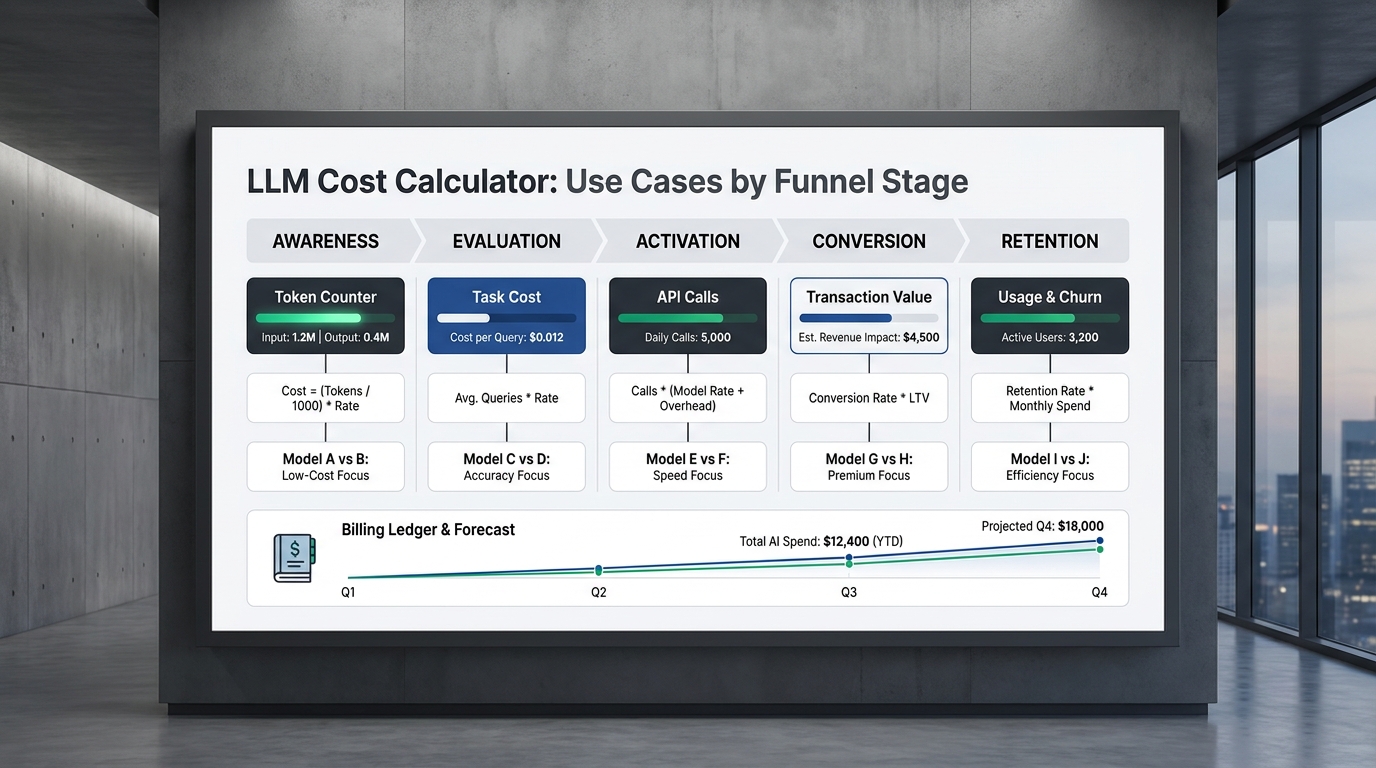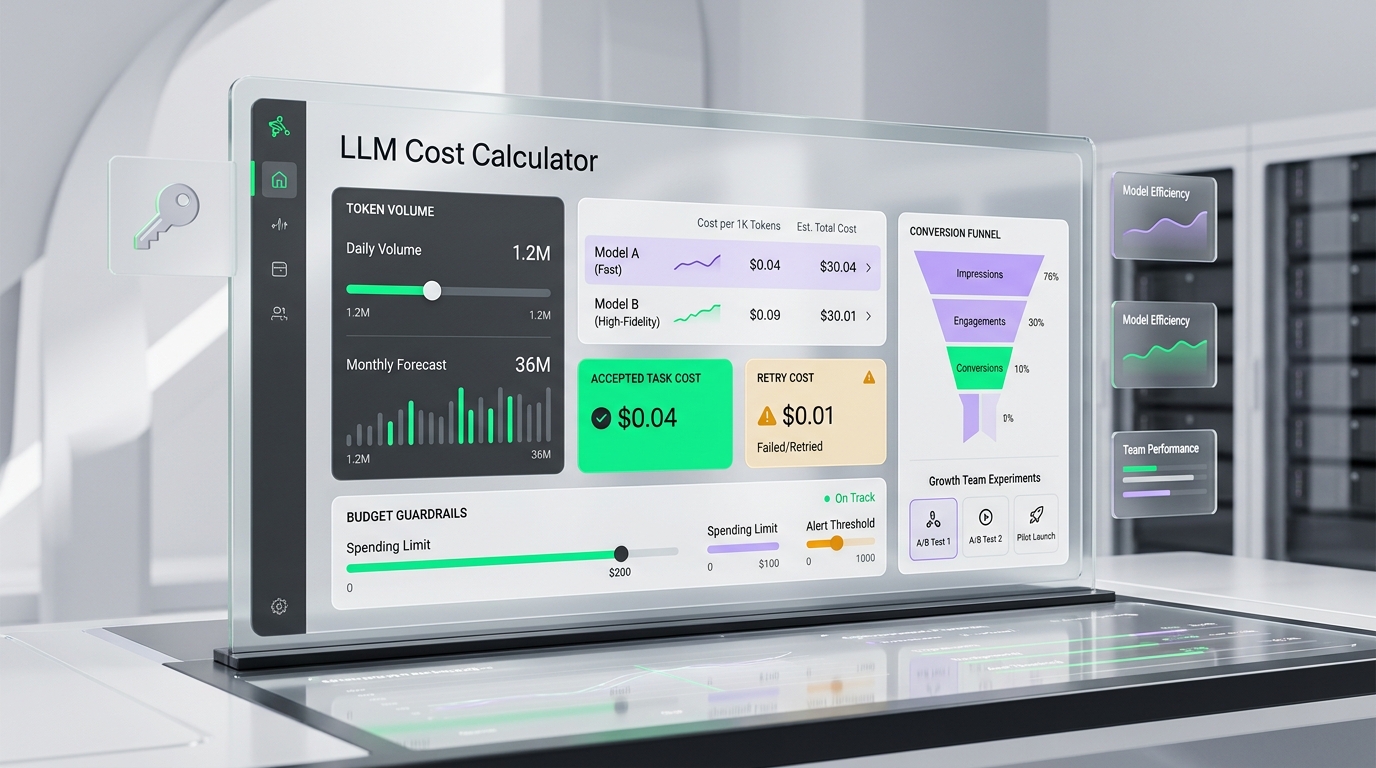
AI API cost attribution is the operating practice of connecting every model request and every billing unit to the team, product area, environment, workflow, or customer that created the spend. It turns "the AI bill went up" into "support automation, the evaluation pipeline, or one customer-facing feature caused the increase."
That distinction matters once a company moves from prototypes to production traffic. A single shared provider key may be fast at the start, but finance, operations, and platform teams eventually need owner-level usage records, cost centers, quota policy, and a repeatable review loop. The goal is not more spreadsheets. The goal is accountable usage before token, image, video, and fallback costs become impossible to explain.
This guide was checked on June 17, 2026 Asia/Shanghai against official OpenAI usage and cost guidance, Cloudflare AI Gateway metadata and logging documentation, Vercel AI Gateway observability documentation, FinOps allocation guidance, and a current Flatkey public site and pricing snapshot. Treat provider fields, pricing units, model rows, and dashboard labels as point-in-time evidence; verify the current details in Flatkey pricing and your live dashboard before production policy changes.
Quick Answer: AI API Cost Attribution Needs Three Layers
AI API cost attribution works when three layers agree with each other:
- Traffic ownership: each high-volume request path has a team, cost center, environment, workflow, and escalation owner.
- Request evidence: usage logs capture the model, endpoint family, key or route, metadata tags, usage units, status, retry/fallback behavior, and final cost.
- Billing review: finance and owners review a monthly showback or chargeback ledger before approving quota increases, prepaid top-ups, or provider-account expansion.
If any layer is missing, AI API cost attribution becomes guesswork. If the key has no owner, the invoice has no accountable team. If the request has no metadata, the log cannot separate production from evaluation traffic. If pricing is not timestamped, image and video jobs can be mixed into token spend with the wrong unit assumptions.
Why One Shared Key Breaks Cost Accountability
One key can simplify access, but one undifferentiated key does not automatically create AI API cost attribution. The cost problem usually appears in one of five ways:
- Team ambiguity: support, growth, data, engineering, and product all appear under the same credential.
- Environment ambiguity: development, staging, load tests, and production traffic share the same quota and billing line.
- Workflow ambiguity: agents, batch jobs, evals, chat, image generation, and video generation are reviewed as one number.
- Retry ambiguity: failed calls, route fallbacks, and repeated jobs create spend that is hard to assign after the fact.
- Unit ambiguity: token, image, video, cached input, and provider-specific billing units do not map cleanly unless the request record keeps the unit and pricing version.
For related control work, use per-key AI usage tracking to scope credentials, AI API quota management to limit runaway spend, and prepaid AI API billing to compare gateway balance control with direct provider accounts.
The Team Attribution Matrix
Use this matrix as the value asset for an AI API cost attribution rollout. The exact fields should match your product and finance systems, but every high-volume traffic path should have one accountable owner and one billing review path.
| Attribution Dimension | How To Capture It | Why Finance Or Ops Cares | Policy Example |
|---|---|---|---|
| Team or cost center | Team-owned API key, route label, or metadata tag such as an internal cost-center ID | Spend can be reviewed by the budget owner instead of the platform team guessing after invoice close | Growth owns campaign agents; support owns ticket automation; data owns evaluation jobs |
| Environment | Separate non-production keys or environment metadata | Staging experiments should not consume production headroom or trigger customer-facing budget alarms | Development and staging receive lower hard caps; production uses alert thresholds and owner approval |
| Workflow | Workflow tag for chat, eval, batch, agent, image, video, support, or internal tooling | Different workflows have different tolerance for cost spikes and retries | Batch retries require a post-incident review when spend exceeds the expected run window |
| Customer or workspace | Privacy-safe customer ID, workspace ID, plan tier, or segment metadata | Support and finance can separate internal spend from customer-driven usage | Enterprise workspaces get a monthly usage review; free trials receive stricter quota ceilings |
| Model and modality | Model ID, endpoint family, usage unit, price version, and final provider route | Token, image, and video costs need different normalization before showback | High-cost image and video routes require explicit team approval before quota increases |
| Retry and fallback behavior | Status code, retry count, fallback route, final status, and final cost | Failures and automatic fallbacks can create spend that product owners did not plan | Fallback-heavy routes are reviewed weekly until error rate and cost return to baseline |
A Practical AI API Cost Attribution Workflow
A durable AI API cost attribution workflow does not start with a finance report. It starts at request design.
1. Define The Ledger Before You Tag Traffic
Write down the fields finance will actually use: team, cost center, product, environment, workflow, customer or workspace, owner, quota window, and recharge or showback rule. FinOps allocation guidance emphasizes that cost allocation depends on structures such as accounts, tags, labels, and metadata. AI API traffic needs the same discipline, with model and usage-unit fields added.
2. Decide Which Boundaries Deserve Separate Keys
Do not split every request into its own credential. Split where ownership, risk, quota, or incident action differs. A small team may start with development, staging, production, batch, and evaluation keys. A larger team may add support automation, growth agents, customer-workspace traffic, and high-cost image or video routes.
This is where AI API cost attribution overlaps with access control. If two traffic classes need different owners or budgets, they probably should not disappear behind the same shared key without metadata.
3. Add Metadata Without Logging Secrets
Use metadata for owner and context, not for sensitive content. Cloudflare AI Gateway documentation shows metadata patterns for user IDs, team names, and test indicators, and its logging documentation includes metadata alongside cost, token usage, duration, provider, status, and request timing. The transferable lesson is simple: include stable operational identifiers, but do not store prompts, API secrets, raw customer content, or personal data that is not needed for cost review.
4. Capture A Standard Usage Record
Every meaningful AI API cost attribution record should be readable by engineering and finance. A minimum record can look like this:
| Field | Example Value | Why It Matters |
|---|---|---|
| request_id | Internal request or trace ID | Lets engineering inspect incidents without exposing secrets |
| team_id | support, growth, platform, data | Primary cost owner for showback |
| cost_center | Internal finance code | Maps usage to budget systems |
| environment | dev, staging, production, eval | Separates testing from customer traffic |
| workflow | support-agent, nightly-eval, campaign-copy, image-job | Explains why the request happened |
| model and endpoint family | Model ID plus text, image, video, or response family | Normalizes different pricing units |
| usage_units | Input tokens, output tokens, images, seconds, cached input, or provider unit | Prevents token-only reporting from hiding media spend |
| cost and pricing version | Final cost with the pricing snapshot date or version | Makes month-end reconciliation auditable |
| status and retry count | Success, error, fallback, retry count | Separates intended use from failure-driven spend |
5. Normalize Pricing By Model, Modality, And Date
AI costs are not one unit. Text calls may be token-based, image requests may be per image or quality tier, video may be duration-based, and gateway or provider pricing can change. That is why AI model pricing comparison belongs in the attribution workflow, not only in procurement.
For AI API cost attribution, record the model ID, endpoint family, usage unit, and pricing version at the time of the request or billing export. If you only store the final invoice total, you will not be able to explain why one team spent more when it changed model, resolution, duration, retries, or fallback policy.
6. Set Quotas After Ownership Is Clear
Quota management should follow ownership, not the other way around. A shared quota tells you that something hit the ceiling. A team-owned quota tells you who needs to approve the next step.
Use lower hard caps for development, staging, and risky evaluation jobs. Use soft alerts for normal production growth. For high-cost media workflows, require owner approval before increasing monthly allowance. For shared platform services, keep a documented allocation rule so each product team understands how common infrastructure spend is divided.
7. Close The Loop With Monthly Showback
The last step in AI API cost attribution is not a dashboard. It is the operating review. Each month, the owner should receive a compact report with total cost, model mix, top workflows, quota events, failed-call cost, fallback cost, and any unmatched spend. Finance can then decide whether the report is informational showback, budget approval, prepaid recharge planning, or formal chargeback.
If a team cannot explain a line item, do not hide it under a platform bucket. Fix the tag, key boundary, or workflow record before the next billing cycle.
Where Flatkey Fits
Flatkey is useful in this workflow because it is positioned as one API gateway for production AI teams, with public copy describing model access, routing, billing, usage analytics, and operational controls for teams shipping AI products. The June 17, 2026 public homepage also references operations teams, actual-usage billing, quota limits, and team consumption review. The current pricing API snapshot used for this article returned 638 model rows across 23 vendors and endpoint families for OpenAI-style, Anthropic, Gemini, image-generation, response, and video traffic.
That proof path is relevant to AI API cost attribution, but it should be used carefully. Do not assume a model row, route status, pricing unit, or dashboard label is permanent. Before production traffic, verify current pricing, model availability, endpoint support, key or route segmentation, quota behavior, and any export fields you need for finance review.
A practical Flatkey rollout can look like this:
- Use View Pricing to confirm current model families, pricing units, and availability before assigning budget.
- Create team or workflow boundaries that match your owners: production app, support automation, evaluation, batch, customer workspace, image/video routes.
- Attach owner metadata or key naming conventions so logs can map usage to teams and cost centers.
- Set quota policy by owner and workflow, then review exceptions in the dashboard.
- Export or summarize usage into a monthly showback ledger for finance, product, and platform owners.
What To Avoid
Bad AI API cost attribution is usually caused by overconfidence in one surface:
- Do not rely only on invoices. The invoice proves total spend, not why the spend happened.
- Do not rely only on team names in code comments. The billing workflow needs structured records.
- Do not store customer prompts just to explain spend. Use privacy-safe IDs and operational metadata.
- Do not mix staging and production quotas. A test run should not exhaust customer-serving budget.
- Do not treat token spend as all AI spend. Image, video, cached input, retries, and fallback paths need their own unit handling.
FAQ
What is AI API cost attribution?
AI API cost attribution is the process of assigning model usage and cost to a team, cost center, product, environment, workflow, or customer so finance and operations can review ownership instead of only seeing one shared bill.
Should every team get a separate API key?
Not always. Separate keys are useful when teams need different owners, quotas, environments, or incident actions. For lower-volume or shared routes, metadata can be enough if it is reliable, searchable, and included in the billing review.
What is the difference between showback and chargeback?
Showback reports usage and spend to the responsible team without necessarily moving budget. Chargeback assigns the cost to that team or cost center. Most teams should start with showback so data quality problems are fixed before formal budget transfers.
How does AI API cost attribution differ from token tracking?
Token tracking measures part of usage. AI API cost attribution connects token, image, video, cached-input, retry, and fallback costs to the owner responsible for the work. Token tracking is one input, not the full finance workflow.
Start With The Attribution Boundary
The fastest way to improve AI API cost attribution is to stop asking finance to interpret a single shared AI bill. Define the owner, separate the traffic paths that need different policies, attach privacy-safe metadata, capture cost with the right unit, and review unmatched spend every month.
Flatkey can support that workflow when your team wants one gateway surface for model access, routing, billing, usage analytics, and operational controls. Start by confirming current pricing and model availability, then build the team-level usage ledger around the way your organization actually owns AI spend. View Pricing.