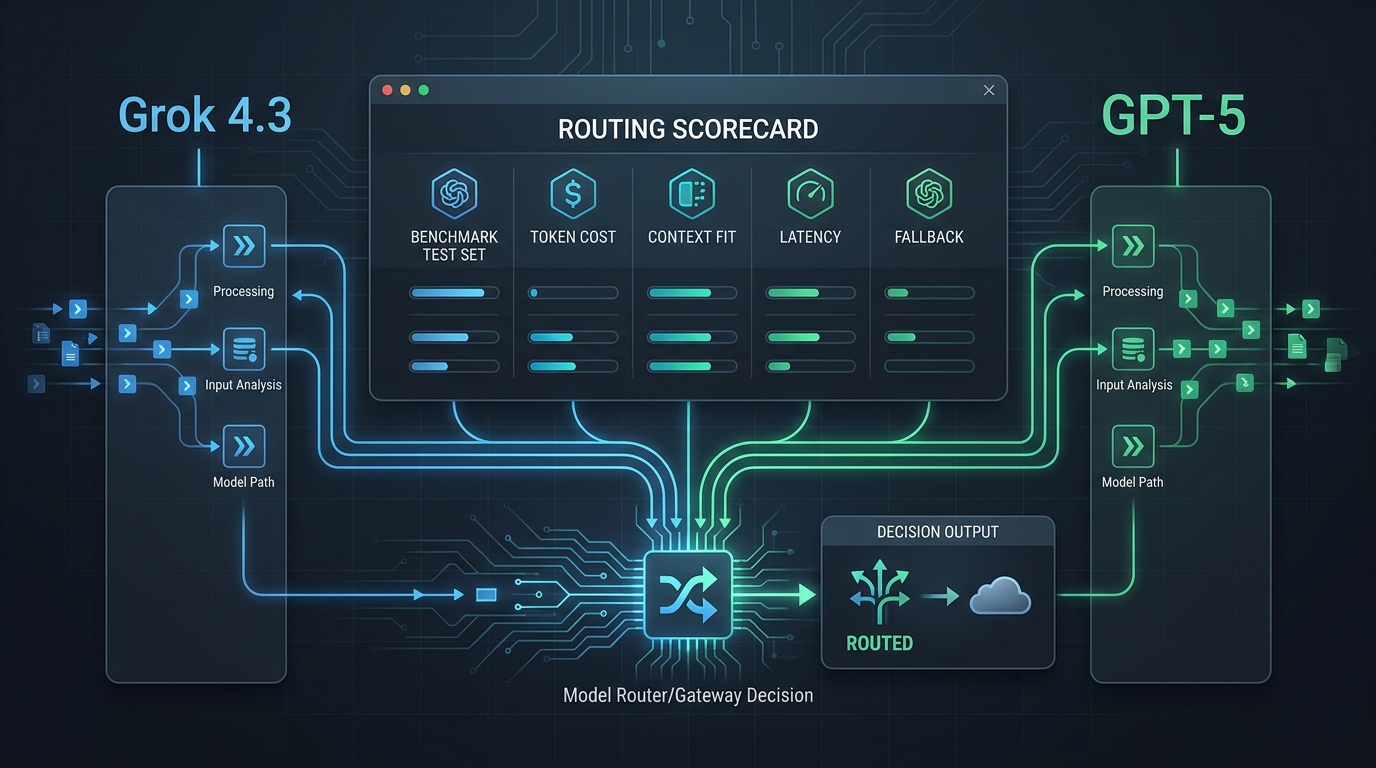
A managed AI API gateway and a self-hosted LLM proxy can both put one endpoint in front of multiple model providers. That similarity is where many buyer checklists stop. The harder decision is who owns provider accounts, upstream keys, budget enforcement, request logs, model routing, cost evidence, upgrades, incidents, and finance review after the first request succeeds.
This comparison is for developers, AI product teams, automation builders, platform engineers, finance operators, and procurement reviewers deciding whether to buy a hosted AI gateway or run an internal proxy stack. The short version: use a self-hosted proxy when control and platform ownership are the main requirement. Use a managed AI API gateway when the team needs faster multi-model access, billing evidence, usage review, and a lower operations burden.
Source note: this guide was checked on July 1, 2026 against live Flatkey public pages and official LiteLLM documentation as a representative self-hosted LLM proxy source. Product packaging, model catalogs, deployment guidance, prices, provider support, budgets, and routing behavior can change. Use this as a buyer checklist, then verify the current console, docs, contract, and route before production cutover.
Quick answer: managed AI API gateway vs self-hosted LLM proxy
Choose a managed AI API gateway when your immediate problem is unified AI access with usable billing and operational evidence. Flatkey fits that path because its public pages position it around one gateway for model access, routing, billing, usage analytics, operational controls, prepaid balance, request logs, cost controls, and one invoice across providers.
Choose a self-hosted LLM proxy when your platform team intentionally wants to operate the gateway layer. A representative option such as LiteLLM describes a self-hosted OpenAI-compatible proxy with virtual keys, per-key/team/user budgets, centralized logging, guardrails, caching, routing, fallback, load balancing, admin UI, spend tracking, and model access controls. Those are real controls. They also create real ownership work.
| Buyer situation | What to compare first | Likely direction |
|---|---|---|
| You need one hosted key, one balance, request logs, and finance-visible usage quickly. | Base URL, model catalog, prepaid balance, request-log cost, invoice path, and quota workflow. | Evaluate Flatkey as the managed AI API gateway path. |
| You want to own gateway deployment, model config, access policy, logs, and custom integrations. | Proxy architecture, database, secrets, SSO, virtual keys, rate limits, routing, observability, and incident owners. | A self-hosted LLM proxy may fit better. |
| Your team already has platform capacity for Kubernetes, Postgres, Redis, secret management, and on-call. | Operational runbook, upgrade cadence, backup plan, cost database, auth model, and support path. | Self-hosting may justify the added control. |
| Developers need to validate an OpenAI-compatible workflow this week without separate provider onboarding. | Current Flatkey base URL, model alias, API key owner, usage row, balance owner, and rollback diff. | A managed AI API gateway is the lower-setup pilot. |
What a managed AI API gateway is built for
A managed AI API gateway is built to reduce the amount of gateway infrastructure the buyer has to assemble before model traffic can move. The buyer still needs security review, key ownership, workload naming, route tests, cost review, and rollback. The difference is that provider access, hosted routing surface, usage records, billing workflow, and support path are packaged as a service instead of becoming an internal platform project.
Flatkey's homepage checked for this guide is titled One API gateway for production AI teams. Its meta description says flatkey.ai unifies model access, routing, billing, usage analytics, and operational controls for teams shipping AI products. That public positioning is important because the buyer task is not just "send a chat completion." It is to prove who owns spend, which request used which model, and how the team reviews operational evidence.
The Flatkey pricing page checked the same day is titled Transparent AI model pricing and describes model access, routing, and billing options for production AI workloads. It says self-serve plans are prepaid top-ups, that balance is consumed when API requests use models, and that one balance can route across GPT, Claude, Gemini, DeepSeek, image, audio, and video models through one OpenAI-compatible gateway. It also says usage is metered by model, token type, and request logs so teams can review spend and control cost.
Flatkey’s model directory is built to make model access easier to check before a team starts routing traffic. When this article was reviewed on July 1, 2026, the directory listed pricing for 629 models across 23 providers, with model names, vendors, endpoint types, availability, and pricing shown in crawlable HTML. The catalog covered endpoint types such as Anthropic Messages, Gemini, image generation, OpenAI Chat Completions, OpenAI Responses, and OpenAI video routes. Those numbers will change as providers add, remove, or update models. Before you move a workflow into production, use the current model directory and your own account to confirm the exact model, endpoint type, availability, pricing, key access, and route behavior.
That makes Flatkey a practical managed AI API gateway option when your team wants one evaluation path across app code, finance, and operations. The pilot can start with a current base URL from the console, a Flatkey API key, a selected model alias, one measured request, request-log review, cost review, and a go/no-go note.
What a self-hosted LLM proxy is built for
A self-hosted LLM proxy is built for teams that want to own the gateway layer. LiteLLM's official docs describe the proxy as a self-hosted OpenAI-compatible gateway where any client that works with OpenAI can work with the proxy. The docs also describe LiteLLM as an open-source library and gateway that provides a unified interface to 100+ LLMs using the OpenAI format.
LiteLLM's proxy documentation lists the operational surface that makes self-hosting appealing: virtual keys with per-key, team, and user budgets; centralized logging; guardrails; caching; an admin UI; spend tracking; routing and load balancing; model fallbacks; and model access controls. The virtual keys docs say teams can track spend and control model access via virtual keys, with a UI for key generation and SSO.
The same docs show why the word "self-hosted" matters. For virtual key and budget workflows, LiteLLM requires a database setup. The Docker tutorial says Docker or CLI users need a Postgres database for generating keys, users, and teams, and it shows a database_url setting in config.yaml or a DATABASE_URL environment variable. It also requires a master key for proxy administration.
Budget controls can be sophisticated. LiteLLM's budgets and rate limits docs describe personal budgets, team budgets, team member budgets, and agent budgets. The same page covers RPM and TPM limits, budget durations, rate limits per user or key, model-specific limits, and an expected budget-exceeded error for team spend. The architecture docs describe virtual-key validation, budget checks, rate limiting, Redis or in-memory cache checks, LiteLLM Router forwarding, logging callbacks, and database spend updates.
Those controls can be exactly what a platform organization wants. But they are not free just because the software is open source. The team must operate the proxy, database, secrets, provider accounts, deployment pipeline, observability, budget policy, upgrades, and incident process. A fair managed AI API gateway comparison should respect the control while pricing the ownership.
Comparison matrix: cost, control, and operations
The strongest decision comes from comparing operating evidence for the same workflow. Ask both paths to show the request path, billing path, quota path, log path, and support owner.
| Decision area | Managed AI API gateway evidence to request | Self-hosted LLM proxy evidence to request | Why it matters |
|---|---|---|---|
| Cost model | Prepaid top-up, current model price row, request-log cost, balance impact, invoice path, and billing owner. | Cloud hosting, database, cache, observability, engineering time, upstream provider bills, and support coverage. | Self-hosting can avoid vendor gateway markup but adds infrastructure and labor cost. |
| Control | Workspace permissions, key owner, model aliases, provider groups, route status, and support path. | Config files, provider credentials, virtual keys, auth policy, secret manager, database, and custom hooks. | More control is useful only when the team can own the decisions and failure modes. |
| Provider access | Account-enabled model list, endpoint family, current model catalog, and request-level route proof. | Upstream provider accounts, provider API keys, model configs, fallback targets, and provider-specific parameters. | Access ownership drives procurement, incident response, rate limits, and key rotation. |
| Routing and fallback | Selected model alias, endpoint family, route status, response shape, error format, and fallback expectations. | Router config, load balancing rule, retry policy, fallback chain, cache behavior, and failure logging. | Routing claims need request-level proof before production traffic moves. |
| Budgets and quotas | Prepaid balance, quota controls, cost controls, usage analytics, request logs, and owner escalation path. | Virtual key budget, team budget, rate limits, RPM/TPM rules, model-specific limits, and budget-exceeded behavior. | A quota is useful only if teams know whether it blocks, alerts, falls back, or needs manual action. |
| Logs and analytics | Request logs, model and token fields, cost visibility, usage analytics, route status, and export needs. | Proxy database spend updates, logging callbacks, external observability integration, retention, and access controls. | Debugging, finance review, and security review depend on the fields visible after a request. |
| Migration effort | OpenAI-compatible base URL change, Flatkey API key, model alias mapping, smoke test, usage review, and rollback diff. | Proxy deployment, database setup, master key, provider config, virtual keys, auth, routing, monitoring, and runbooks. | A small SDK change can hide a large platform project. |
| Operations owner | Vendor support, workspace admin, billing owner, key owner, and production verification owner. | Platform on-call, database owner, secret owner, upgrade owner, policy owner, and provider escalation owner. | The winning path is the one your organization can operate reliably. |
When a self-hosted LLM proxy is the better fit
A self-hosted LLM proxy is likely the better fit when your platform team needs deep control over the request path. That includes custom auth, custom routing policy, internal secret manager requirements, region-specific deployment, private network controls, custom observability callbacks, strict data residency architecture, and internal chargeback rules that must live inside your platform.
Self-hosting also fits when the organization already has operational capacity. If your team routinely runs Postgres, Redis, Kubernetes or container services, secret rotation, SSO, logging pipelines, incident response, and upgrade windows, the additional ownership may be acceptable. In that case, the proxy becomes another platform component rather than a one-off tool.
Finally, a self-hosted proxy can be right when the gateway itself is part of your product architecture. If you need to expose AI access to many internal teams with custom keys, custom model restrictions, per-team budgets, audit expectations, and routing policy controlled by your own engineers, the added setup can buy useful leverage.
When Flatkey should be on the shortlist
Flatkey should be on the shortlist when the team wants a managed AI API gateway rather than a gateway operations project. The strongest use cases are multi-model product workflows, internal automation, agents, coding tools, and finance-reviewed pilots where the key questions are: which key sent the request, which model served it, what did it cost, where is the log, and who approves the next usage step?
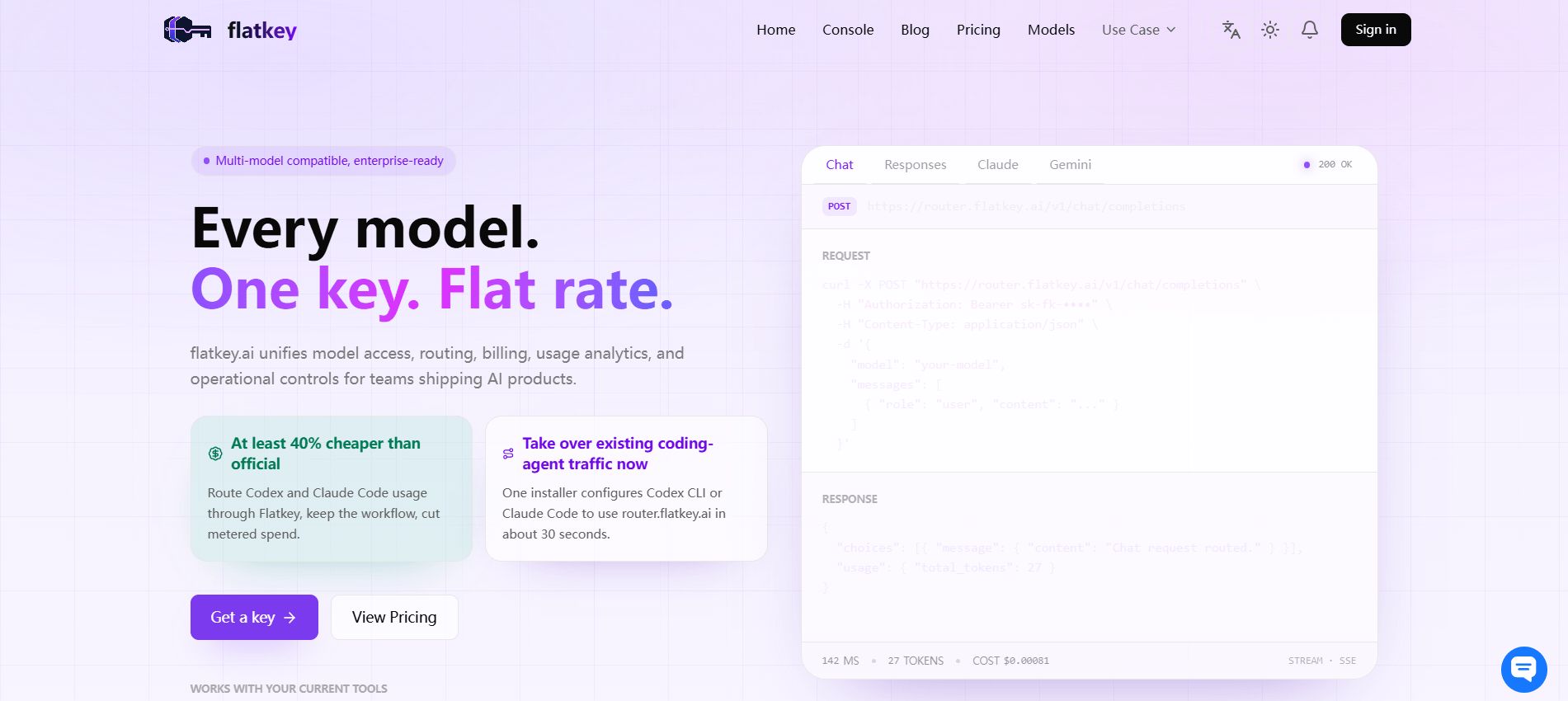
Flatkey is also relevant when the migration path is OpenAI-compatible. Instead of deploying a proxy, provisioning a database, setting a master key, configuring upstream providers, issuing virtual keys, and wiring logs before a developer can test one workflow, the Flatkey pilot can begin with a base URL, API key, model alias, request test, usage review, and rollback note.
The buyer should still verify the current account state. Before production, check the Flatkey console base URL, endpoint family, selected model alias, model pricing row, account permissions, request logs, cost fields, quota behavior, balance owner, and support path. The useful claim is not that a managed service removes all review work. It is that the review work starts closer to the AI workflow and farther away from gateway assembly.
Pilot checklist for the same workflow
Use this checklist before choosing a managed AI API gateway or self-hosted LLM proxy. It keeps the decision grounded in evidence developers, platform owners, finance, and procurement can inspect.
- Name one workflow. Choose one support agent, coding assistant, batch job, image/video workflow, or internal automation path. Do not evaluate the entire model estate at once.
- Freeze the current route. Record current provider, key owner, model, endpoint, request shape, retry behavior, average usage, and rollback owner.
- Map account ownership. For Flatkey, identify workspace, API key owner, balance owner, model alias, provider group, and request-log reviewers. For self-hosting, identify proxy owner, provider accounts, database owner, secret owner, virtual key owner, and on-call owner.
- Run one minimal request. Capture status, response shape, model used, usage fields, error format, latency, and whether the request appears in the expected log.
- Run a budget test. Confirm limit scope, reset window, enforcement behavior, alert path, and who acts when the limit is reached.
- Run a billing test. Confirm cost unit, price source, request cost, balance or provider bill impact, invoice path, and finance review owner.
- Run a failure test. Simulate invalid model, auth failure, upstream rate limit, provider error, exhausted budget, and fallback. Record what happens and who is notified.
- Write the go/no-go note. Include the exact code diff, environment variable diff, route proof, log proof, billing proof, owner map, and rollback path.
Cost model: do not compare only vendor fees
Cost comparison is where teams often make the wrong spreadsheet. A self-hosted proxy may look cheaper if the only line item is gateway software. A fair model also includes compute, database, cache, observability, security review, engineering setup time, on-call, incident handling, upgrades, and provider-account administration. If those costs are already absorbed by a platform team, self-hosting can still be efficient. If they are new work, they should be counted.
A managed AI API gateway has a different cost shape. The buyer should inspect model pricing, prepaid balance, request-log cost, invoice behavior, and any account-specific terms. The value is not just a lower line item. It is reducing the number of systems a team must assemble before finance and operations can trust the workflow.
If you are also comparing named gateway products, use the same evidence standard. The OpenRouter alternatives, LiteLLM alternatives, and enterprise AI API gateway checklist guides all center on account ownership, billing, routing proof, logs, quotas, migration effort, and operational evidence. Use Flatkey pricing for the current model access and billing page, then get a key when you are ready to run a measured pilot.
FAQ
What is a managed AI API gateway?
A managed AI API gateway is a hosted access layer for AI model traffic. It typically gives teams a shared API surface, model routing, usage visibility, billing workflow, and operational controls without requiring the buyer to deploy and operate the gateway infrastructure themselves.
Is a self-hosted LLM proxy cheaper than a managed AI API gateway?
Sometimes, but only if your team can absorb the infrastructure and labor. Self-hosting can reduce dependence on a gateway vendor and increase control, but it adds deployment, database, secret management, observability, upgrades, and on-call work. A managed AI API gateway packages more of that work into the service.
Does self-hosting give more control?
Yes. A self-hosted proxy usually gives deeper control over provider credentials, routing policy, virtual keys, budgets, logs, and integrations. The tradeoff is that your team owns those controls in production. More control is valuable when you also have the people and process to operate it.
Can Flatkey replace every self-hosted proxy use case?
No. Flatkey should be evaluated as an alternative operating model, not a clone of every proxy. If your requirements include custom deployment topology, internal-only networking, custom auth plugins, or proprietary routing logic, self-hosting may be the better fit. If your priority is managed multi-model access with billing and usage evidence, evaluate Flatkey.
How should finance evaluate the choice?
Finance should ask for one concrete workflow and trace it from request to bill. Confirm expected monthly requests, model mix, token types, retries, fallbacks, quota behavior, invoice path, balance or provider bill impact, log access, and approval owner. A feature list is not enough.
What should developers test before migration?
Developers should test the exact base URL, API key, model alias, endpoint family, streaming behavior, tool behavior, error format, timeout behavior, usage fields, and rollback path. One successful chat request does not prove the whole workflow is production-ready.
Final decision rule
Choose a self-hosted LLM proxy when the gateway layer is strategic infrastructure your platform team wants to own. Choose a managed AI API gateway when your team wants one key, OpenAI-compatible access, published model pricing, prepaid balance, usage analytics, request logs, cost controls, and a faster path to validate model workflows.
To test Flatkey in that managed operating model, review the current pricing and model access, then get a key and run one measured workflow before moving broader traffic.